 DAVID PEEL
PUSHCART
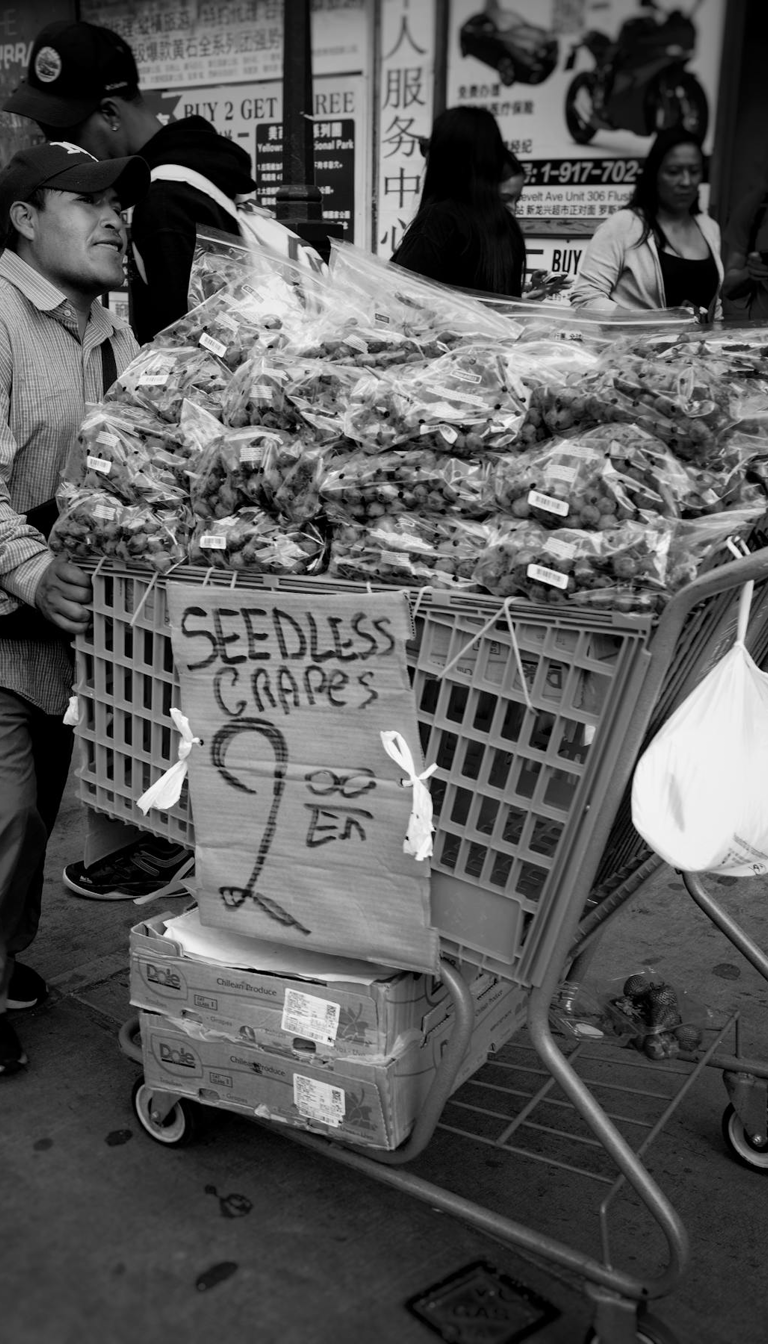
You want to know what the Lower East Side smelled like before they cleaned it up. It smelled like pushcarts. Garlic and onions and fish and leather and fabric and fruit that was one day past perfect which is the day it tastes the best. Hester Street. Orchard Street. Essex Street. Every block had fifty pushcarts lined up against the curb and every pushcart had a man behind it yelling prices at people who were already looking at the merchandise. You did not need to advertise on the Lower East Side. You needed a loud voice and a cart with wheels.
You could buy anything from a pushcart. Pickles from a barrel. Shoes that did not match. Shirts with one sleeve longer than the other. Pots and pans. Eyeglasses. Herring wrapped in newspaper. A woman on Essex Street sold buttons. Just buttons. Every button you could imagine. She knew every button by name and she could match a button to a coat she had never seen. That is expertise. That is the opposite of a search engine. A search engine gives you ten thousand buttons. The pushcart woman gives you the right one.
The city hated the pushcarts. The city said the pushcarts blocked traffic. The city said the pushcarts were unsanitary. The city said the pushcarts were a blight. The city built an indoor market and told the pushcart vendors to move inside and the pushcart vendors said no because a pushcart on the street gets a thousand people walking past it and a stall inside a building gets the people who already decided to come inside. The pushcart understood foot traffic before anybody invented the word.
My mother bought fruit from a pushcart on Rivington Street every Friday. The man knew her order before she opened her mouth. Apples. Oranges. A bunch of grapes if they looked good. He picked the fruit himself and put it in a bag and told her what she owed and she paid him and he said see you next week and that was the transaction. No receipt. No loyalty card. No app. A man with a cart and a woman with a bag and the trust between them was the entire economy of the block.
They are gone. The pushcarts are gone. The city won. The indoor markets closed. The fruit stands turned into bodegas and the bodegas turned into juice bars and the juice bars charge eleven dollars for something that a pushcart sold for a dime. But the pushcart was the original startup. No rent. No lease. No business plan. A man. A cart. A street. And the willingness to stand outside in February selling apples to people who were cold and hungry and alive. That is commerce. Everything else is overhead.