 DAVID PEEL
Push Cart
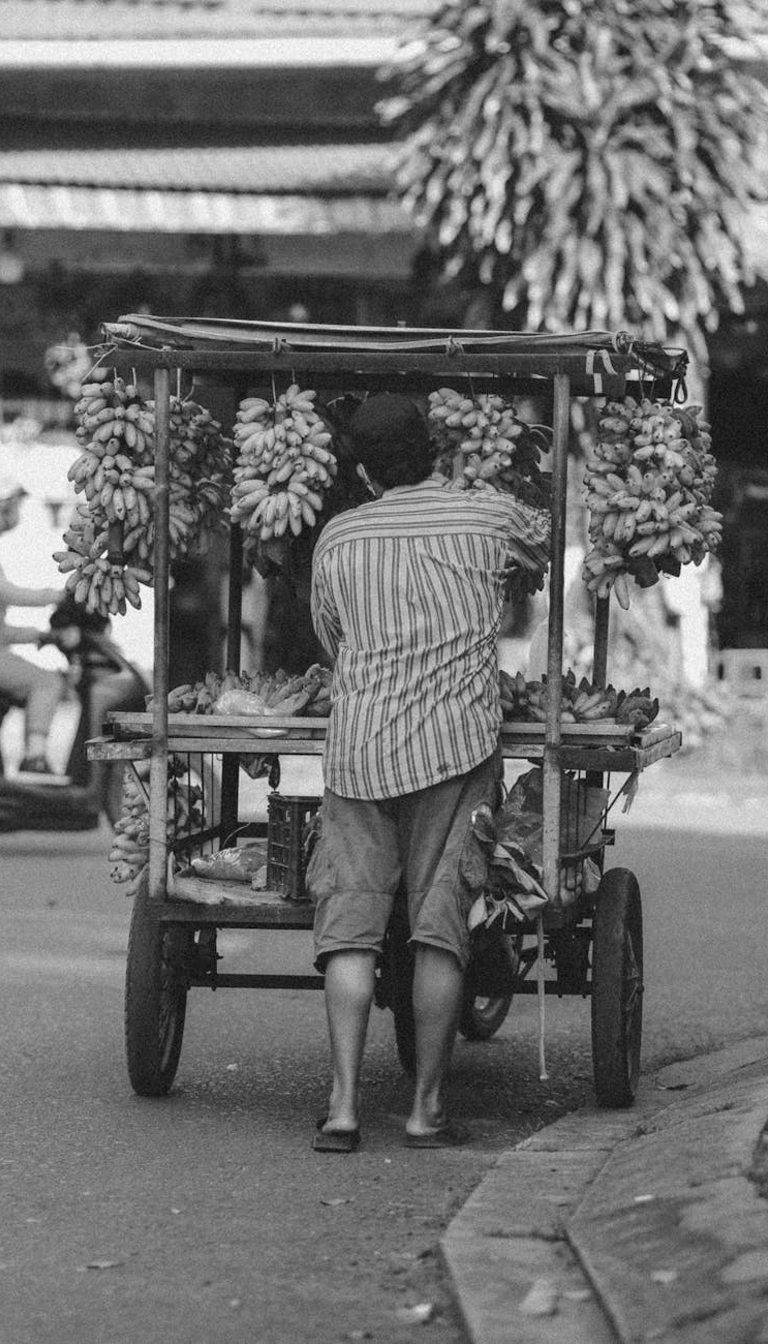
The push cart was the first store on the Lower East Side. Four wheels. A wooden platform. A canvas awning if you were lucky. The push cart vendor stood behind his cart on Orchard Street and sold whatever he had. Pickles. Shoes. Fabric. Knishes. The push cart was the department store of the immigrant.
Orchard Street on a Sunday morning was a hundred push carts in a row. You could not see the street. You could not see the curb. You saw carts and vendors and customers and the negotiations were loud and the prices were negotiable and the merchandise was right there in front of you. No packaging. No barcode. No return policy. You squeezed the tomato and if the tomato was good you bought the tomato.
My grandfather had a push cart on Hester Street. He sold handkerchiefs. He told me the push cart taught him everything about America. He said America is a place where a man with nothing can stand on a corner and sell something. He said the push cart was the first rung of the ladder. He said the ladder goes up but you have to bring your own cart.
The city killed the push carts in the nineteen thirties. Robert Moses said they were unsanitary. Robert Moses said they blocked traffic. Robert Moses moved the vendors into indoor markets. The Essex Street Market. The First Avenue Market. The vendors went inside and the streets went quiet and the sidewalks got wider and something was missing. The something was the push cart.
The food truck is the push cart with an engine. The food truck has a generator and a ventilation system and a health department grade and an Instagram account. The food truck does what the push cart did but the food truck costs sixty thousand dollars. My grandfather's push cart cost twelve dollars. He made it back in a week selling handkerchiefs on Hester Street.
See also: Hand Truck, Penny Candy