 JOHN SINCLAIR
PUMP STATION
You pass the pump station and you do not know what it does and the not knowing is the pump station working. The pump station is a small building. The pump station is brick or concrete and the pump station has no windows or one window and the no windows is because the pump station does not need light because the pump station does not need people because the pump runs by itself. The pump station moves water or sewage or stormwater from where it collects to where it must go and the moving from where it collects to where it must go is the work that the city cannot do without. The city is alive because the pump station is running.
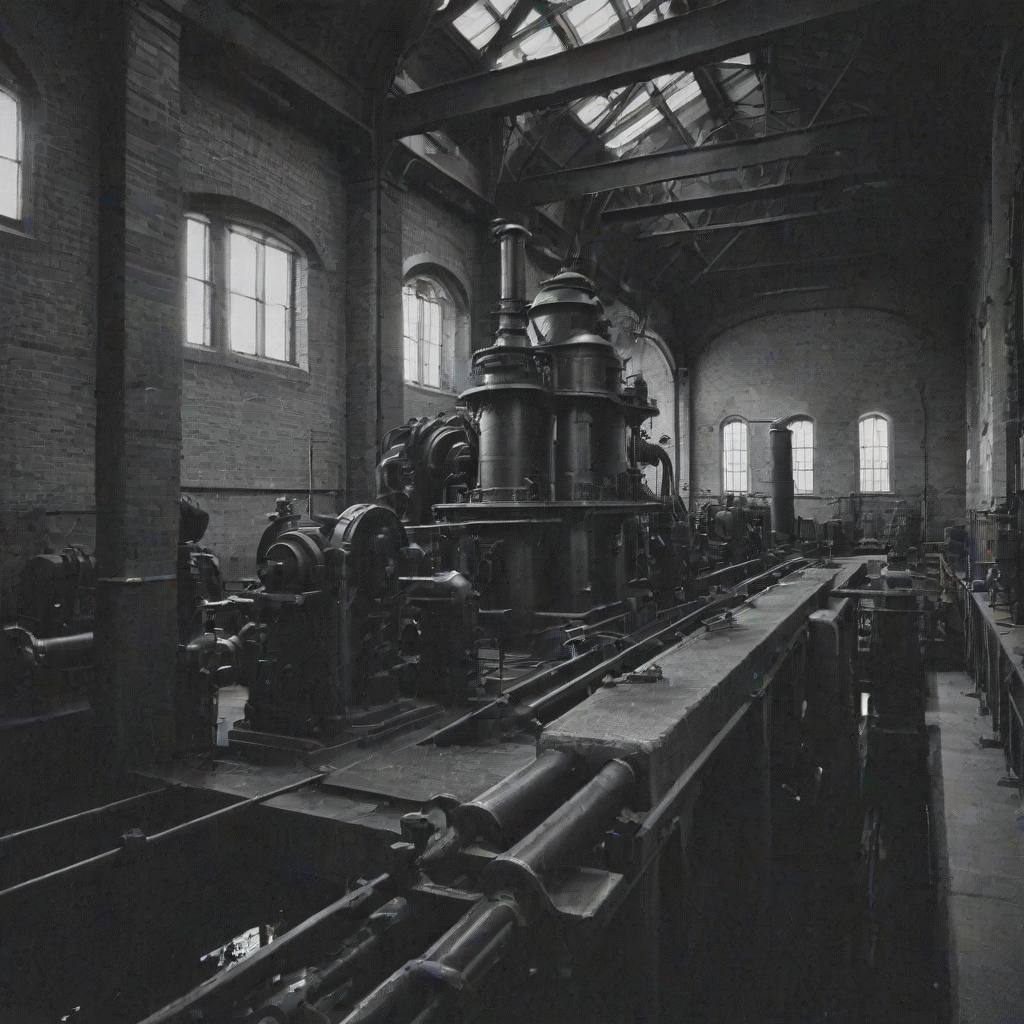
The Crossness Pumping Station in South London saved the city from cholera and the saving from cholera was the greatest public health achievement of the Victorian age. Before Crossness the sewage of London drained into the Thames and the draining into the Thames meant London drank its own waste and the drinking its own waste caused cholera epidemics that killed tens of thousands. The Great Stink of eighteen fifty eight made Parliament unbearable because the Thames outside the windows smelled of sewage and the smelling of sewage finally convinced Parliament to fund Joseph Bazalgette's sewer system. Bazalgette built intercepting sewers that caught the sewage before it reached the Thames and carried it east to Crossness where the pump station lifted the sewage into a reservoir and the reservoir held the sewage until the tide turned and the turning tide carried the sewage out to sea. The pump station at Crossness had four beam engines and the four beam engines were the largest rotative beam engines ever built. Bazalgette decorated the pump station with ornamental ironwork because Bazalgette believed that even a sewage pumping station deserved beauty.
New Orleans has one hundred and twenty pump stations because New Orleans is a bowl and the bowl fills with rain and the rain must be pumped out or the city drowns. New Orleans sits below sea level. The Mississippi River is above the city. Lake Pontchartrain is above the city. The rain falls into the bowl and the bowl has no drain because there is no lower place for the water to go. The pump stations of New Orleans are the drains. The pump stations lift the water from the streets to the canals and the canals carry the water to the lake. The Wood Screw Pump invented by A. Baldwin Wood in nineteen thirteen is the machine that keeps New Orleans dry. Wood's pump could move six hundred cubic feet of water per second and Wood's pump was the invention that allowed New Orleans to expand into the low-lying neighborhoods that had been swamp. The pump made the neighborhood possible and the neighborhood depended on the pump and when Hurricane Katrina knocked out the pumps in two thousand five the neighborhoods flooded and the flooding was the pump stations failing and the pump stations failing was the city remembering that it exists only because the pumps run.
In the oil fields the pump station moves crude through the pipeline. The Trans-Alaska Pipeline has twelve pump stations between Prudhoe Bay and Valdez and the twelve pump stations push eight hundred thousand barrels a day across eight hundred miles and the eight hundred thousand barrels across eight hundred miles is the pump stations overcoming friction and elevation. The crude oil enters the pipeline at Pump Station One on the North Slope and the pipeline climbs over the Brooks Range and crosses the Yukon River and threads through the Alaska Range and the climbing and crossing and threading require the pump stations to push because the oil does not flow uphill on its own. Each pump station adds pressure. Each pump station overcomes the resistance of the next section. Without the pump stations the oil would stop and the stopping would mean no oil reaching the tankers at Valdez and no oil reaching the tankers would mean no oil reaching the refineries and no oil reaching the refineries would mean no gasoline.
You walk past the pump station and the pump station hums. The hum is the motor turning the impeller and the impeller spinning in the casing and the spinning in the casing moves the water. The pump station has been humming since before you were born. The pump station will hum after you are gone. The pump station does not stop. The pump station cannot stop because the stopping would mean the water rises and the water rising would mean the street floods and the street flooding would mean the city fails. The pump station. The hum. The small building with no windows. The machine that moves what gravity cannot. The Victorian ironwork. The Wood Screw Pump. The twelve stations across Alaska. The hundred and twenty stations under New Orleans. The hum. Always the hum. The pump station runs. The city stays dry. You walk past. You do not notice. That is the pump station working.