 JOHN SINCLAIR
PUBLIC POOL
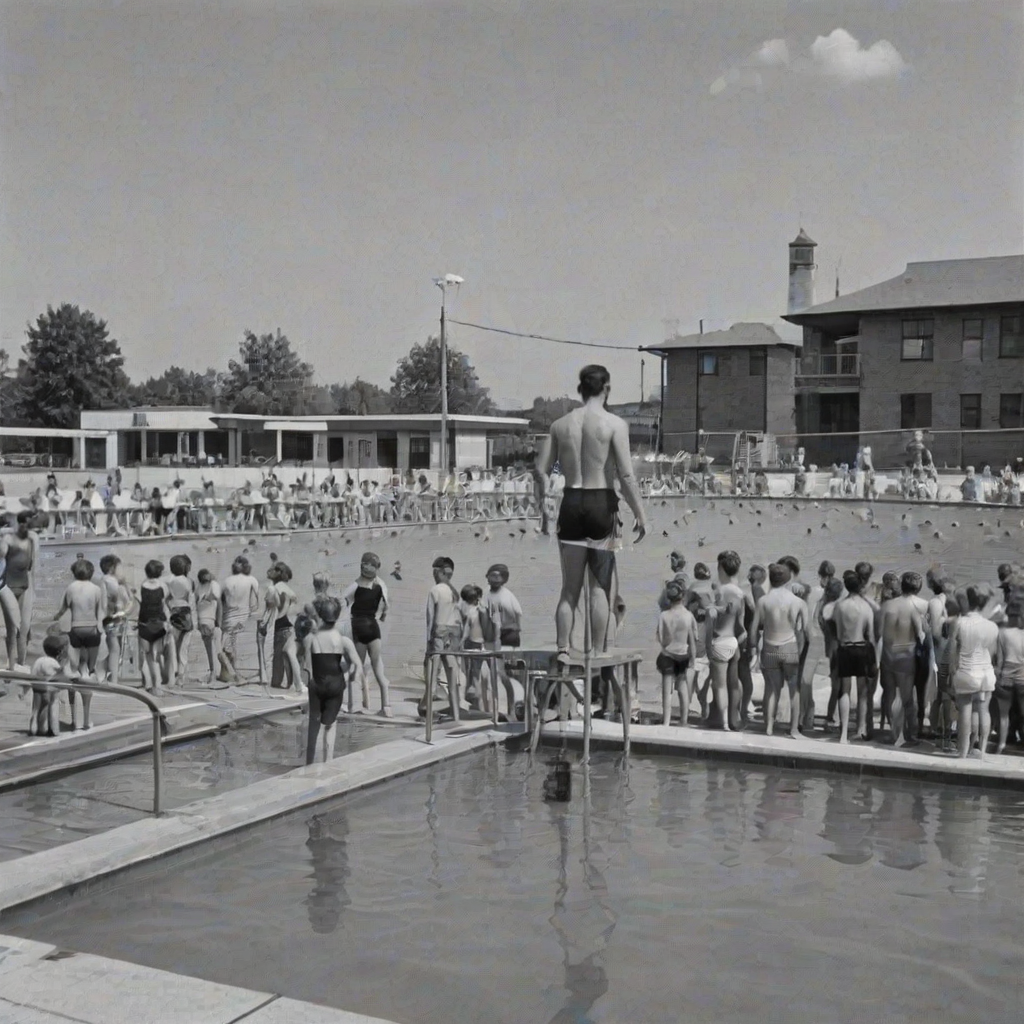
You stood at the edge and the water was the same temperature for everyone. The public pool did not have a shallow end for the rich and a deep end for the poor. The public pool had a shallow end and a deep end and you chose which one based on whether you could swim and the whether was the only class that mattered. The chlorine burned your eyes the same way it burned everyone's eyes and the burning was the democracy. You wore a bathing suit and the bathing suit was the uniform and the uniform meant that the doctor's son and the janitor's daughter looked the same in the water and the looking the same was the terror that built the public pool and the terror that destroyed it.
The Works Progress Administration built hundreds of public swimming pools between nineteen thirty five and nineteen forty three. The WPA pools were monuments. The WPA did not build a hole in the ground and fill it with water. The WPA built bathhouses with columns and locker rooms with tile and diving platforms with concrete that looked like it would last a thousand years and the looking like a thousand years was the promise. The promise was that the public deserved beauty and the beauty was not reserved for people who could afford a country club. The WPA pool in Astoria Queens opened in nineteen thirty six and held three thousand two hundred and twenty nine people and the holding of three thousand two hundred and twenty nine people was the ambition of a government that believed the public should swim together. Robert Moses built eleven pools in New York City in the summer of nineteen thirty six and the eleven pools opened on the same day and the same day was the spectacle and the spectacle was the politics and the politics was that Moses wanted to be remembered as the man who gave New York its summers.
The public pool was the battleground of the civil rights movement that no one writes about. The swimming pool was the place where segregation was most fiercely defended because the swimming pool was the place where bodies were most exposed. The lunch counter required you to sit next to someone. The pool required you to be in the same water. The same water was the intimacy that white America could not tolerate and the not tolerating built two systems. The first system was separate pools. The second system was no pools. When courts ordered public pools to integrate in the nineteen fifties and sixties cities across the South and the Midwest chose to close their pools rather than share the water. Saint Louis closed its pools. Montgomery closed its pools. Jackson Mississippi filled its five public pools with concrete rather than let Black children swim in them and the filling with concrete was the monument to the hatred that would rather destroy a public good than share it. The private pool and the backyard pool boom of the nineteen sixties was not a coincidence. The private pool was the escape from the public pool and the escape was the segregation that did not require a law.
The lifeguard sat in a chair that was taller than any other chair at the pool and the tallness was the authority. The lifeguard was seventeen years old and the seventeen year old had a whistle and the whistle was the law. No running. No diving in the shallow end. No holding anyone's head under water. The rules were painted on a sign and the sign was the constitution of the public pool and the constitution applied to everyone equally which was more than you could say about the other constitution. The snack bar sold frozen Snickers bars and the frozen Snickers bar was the currency of the public pool. You ate the frozen Snickers bar on the hot concrete and the hot concrete burned your feet and the burning of your feet was the price of the frozen Snickers bar and the price was worth it. The public pool closed at six o'clock and the closing at six o'clock was the end of the day and the end of the day meant you walked home with wet hair and the wet hair was the evidence that you had been somewhere and the somewhere was the public pool and the public pool was the best place you had ever been.
The public pool is vanishing. There were two thousand five hundred public pools built in America between nineteen twenty and nineteen seventy. Hundreds have closed. The closing is not because people stopped wanting to swim. The closing is because the pool costs money to maintain and the money comes from taxes and the taxes come from a public that no longer believes in public things. The public pool requires a city to say we will pay for a place where strangers swim together and the saying requires a belief in strangers and the belief in strangers is the thing that America is losing faster than it is losing its pools. The public pool that remains is underfunded and understaffed and the underfunding is the slow murder that looks like neglect. The water is still the same temperature for everyone. The chlorine still burns your eyes. The lifeguard is still seventeen. The whistle still means the same thing. The public pool is still the place where the doctor's son and the janitor's daughter look the same and the looking the same is still the terror and the terror is still the reason the pool exists and the reason the pool is dying.