 JOHN SINCLAIR
PUBLIC LIBRARY
The public library was the only room in America where you could be poor and warm at the same time without buying anything. The door was unlocked and the unlocking was unconditional. You did not need a card to enter. You needed a card to leave with a book. The entering was free. The leaving with knowledge was free. The free was the founding and the founding was radical and the radical has been normalized into invisibility. You do not notice the most radical institution in your city because you have walked past it every day since you were six years old and the walking past is how radical things become furniture.
Andrew Carnegie built sixteen hundred libraries with money he made from steel and the steel was made by men who could not afford books and the not affording was the irony and the irony was the philanthropy. The library was an apology made of marble. The marble said I took your labor and I converted it into a building where your children can read for free and the free is the restitution. The restitution was insufficient. The building was beautiful. Both things were true at the same time and the same time is where America lives.
The card catalog was a piece of furniture that contained the world. The drawers were small and the small was the organization. Each drawer held cards and each card described a book and each book described an idea and each idea was filed by subject and the subject was the only hierarchy. The card catalog did not rank the books. The card catalog said this book exists and here is where it lives and the living was a shelf number and the shelf number was an address and the address was democratic. A book by a president and a book by a prisoner lived on the same shelf if the subject was the same and the same shelf was the equality that the country outside the library could not achieve.
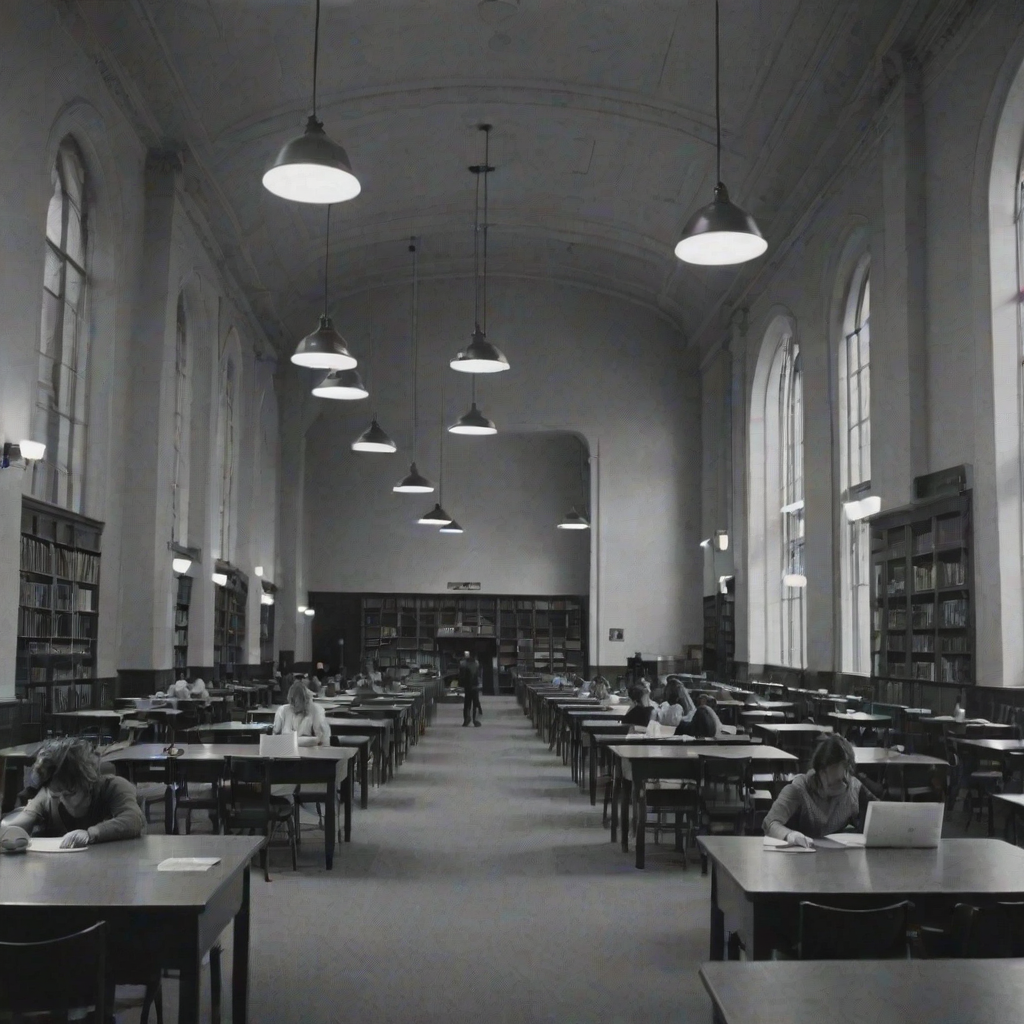
The reading room was silent and the silent was not the absence of sound. The silent was the presence of attention. Forty people reading in the same room generate a silence that is louder than one person reading alone. The collective silence was a frequency. The frequency said we are all doing the same thing separately and the separately is the together. The reading room was the opposite of a concert. The concert gathers people to hear the same sound. The reading room gathers people to hear different sounds in the same silence.
The librarian was the most dangerous person in America. The librarian said yes to every question. Can I read this book about communism. Yes. Can I read this book about bomb-making. Yes. Can I read this book about sex. Yes. The yes was unconditional because the reading was unconditional and the unconditional was the First Amendment made into a job description. The librarian did not judge the question. The librarian judged the collection. The collection was the answer and the answer was everything. Everything was the policy.
The children's section had small chairs and the small was the welcome. The small chair said you belong here and the belonging started at age four and the starting at four was the investment. A child who sits in a small chair in a library at age four has been given the most expensive gift in America for free. The gift is the habit of entering a public building and expecting to be treated with dignity and the expecting is the citizenship. The library card was the first card a child carried that was not a toy and the not toy was the seriousness and the seriousness was the respect and the respect was mutual. The library respected the child by giving them a card. The child respected the library by bringing the book back. The bringing back was the contract and the contract was the civilization.
The public library is not gone. The public library is open right now in your city. But the public library that was a gathering place is different now because the gathering moved from the reading room to the computer terminal. The computer terminal faces a wall and the wall is the opposite of the reading room. The reading room faced inward. The terminal faces outward. The outward is the internet and the internet is not a room. The internet is a hallway with infinite doors and the infinite is the opposite of the reading room's silence. The silence required a room. The room required walls. The walls required people choosing to be inside them together and the choosing was the gathering. The library still has the room. The room still has the silence. Whether anybody chooses the silence over the screen is the question the library asks every morning when it unlocks the door and the unlocking is still unconditional and the unconditional is still radical and the radical is still invisible and the invisible is still the most important room in your city.