 JOHN SINCLAIR
PRINTING PRESS
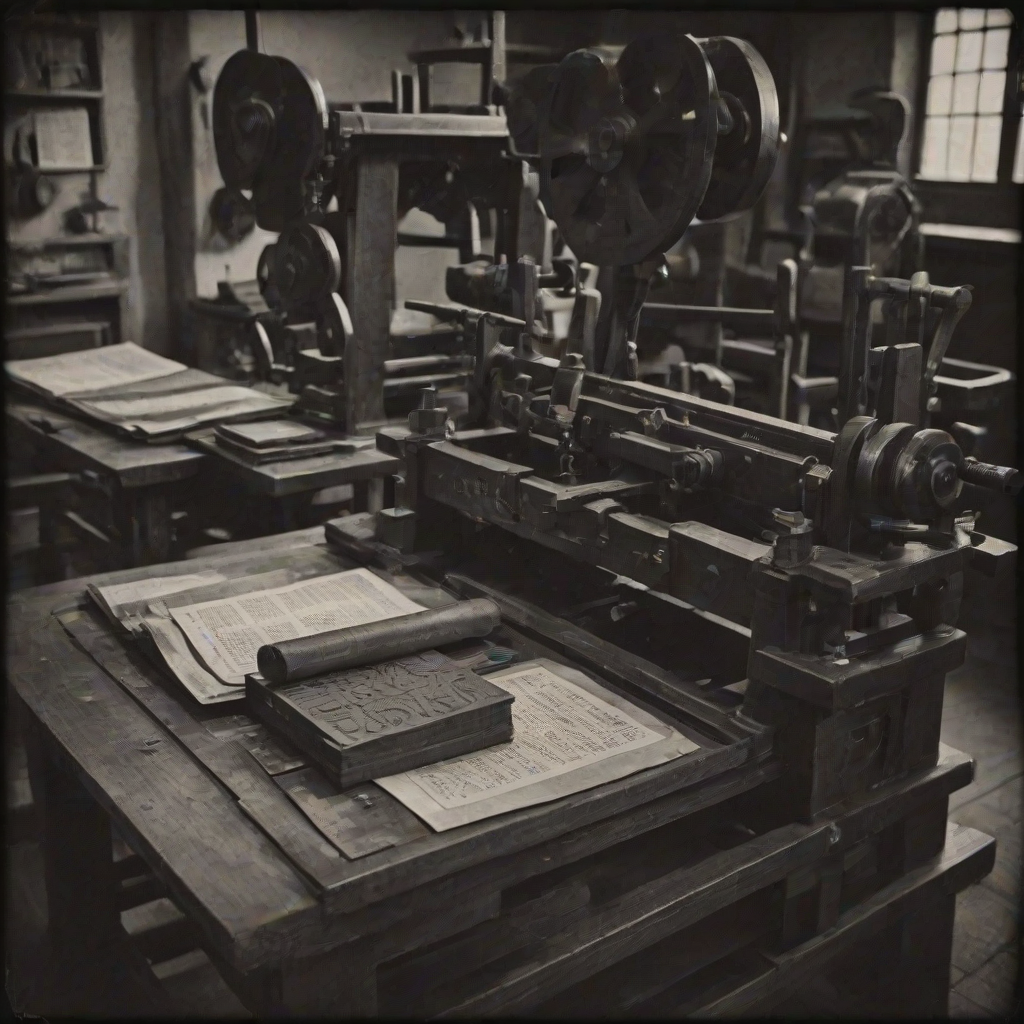
You are reading this because of a machine that was built to destroy the monopoly on knowledge. Gutenberg did not invent printing. The Chinese had movable type four hundred years before Mainz. Bi Sheng carved individual characters into clay in ten forty and baked them hard and arranged them in an iron frame and pressed paper against the inked surface. Four hundred years before Gutenberg. What Gutenberg invented was not the idea. What Gutenberg invented was the system. The press and the ink and the alloy type and the paper supply chain and the speed that made it impossible to keep ideas locked in monasteries. The monastery had the only copies. The monastery decided what you could read. The printing press took that decision away from the monastery and gave it to anyone with a press and some type and something to say.
The first book off the press was the Bible and the first book being the Bible was not a spiritual choice. It was a business decision. The Bible was the book everyone wanted and the wanting was the market and the market was what paid for the machine. Gutenberg printed a hundred and eighty copies of the forty two line Bible between fourteen fifty two and fourteen fifty five in Mainz and each copy took the same amount of labor as a scribe would need for a single handwritten manuscript. A hundred and eighty copies in three years versus one copy per scribe per year. The math destroyed the old world. Forty eight copies survive. A single leaf sells for a hundred thousand dollars. The machine that democratized knowledge became the most valuable object in the history of collecting. You cannot own the revolution but you can own a piece of the paper it was printed on.
Martin Luther nailed his ninety five theses to the door of the Castle Church in Wittenberg on October thirty first fifteen seventeen and the nailing to the door was symbolic but the printing was operational. Within two weeks the theses were printed in pamphlet form and distributed across Germany. Within two months they had reached every corner of Europe. Luther did not start the Reformation by hammering a nail. Luther started the Reformation because a printer in Wittenberg saw a market for outrage and set the type. The printer was the first amplifier. The printer took one man's argument with one church and turned it into a continental crisis that split Christianity in half. Every revolution since has required a printer. Tom Paine's Common Sense sold a hundred and fifty thousand copies in seventeen seventy six because a printer in Philadelphia named Robert Bell understood that people would pay two shillings to read someone telling them what they already felt. The printer does not create the anger. The printer distributes it.
Frederick Douglass bought a printing press in eighteen forty seven and published The North Star from Rochester New York and the publishing from Rochester was the act that proved the argument. A formerly enslaved man operating a printing press was the refutation of every claim that Black people could not think or write or reason. The press did not just carry his words. The press was his words. The machine itself was the message. When they burned the printing offices of abolitionist newspapers in the eighteen thirties and forties they were not burning paper. They were trying to un-invent the technology. You cannot un-invent the technology. That is the lesson of the printing press. Once the machine exists the monopoly is over. Once the first copy is made the original is irrelevant. Once the pamphlet is in the street the king cannot recall it.
You hold a device in your hand right now that is more powerful than every printing press ever built combined. You can publish to the entire world in the time it takes to press send. Gutenberg needed three years for a hundred and eighty copies. You need three seconds for eight billion potential readers. The technology changed. The function did not. The function is the same function it has always been. Someone has something to say. Someone builds a machine to say it. The monastery loses its monopoly. The king cannot recall the pamphlet. The fire cannot un-print the page. You are the press now. The question is the same question it has always been. What are you going to print.