 JOHN SINCLAIR
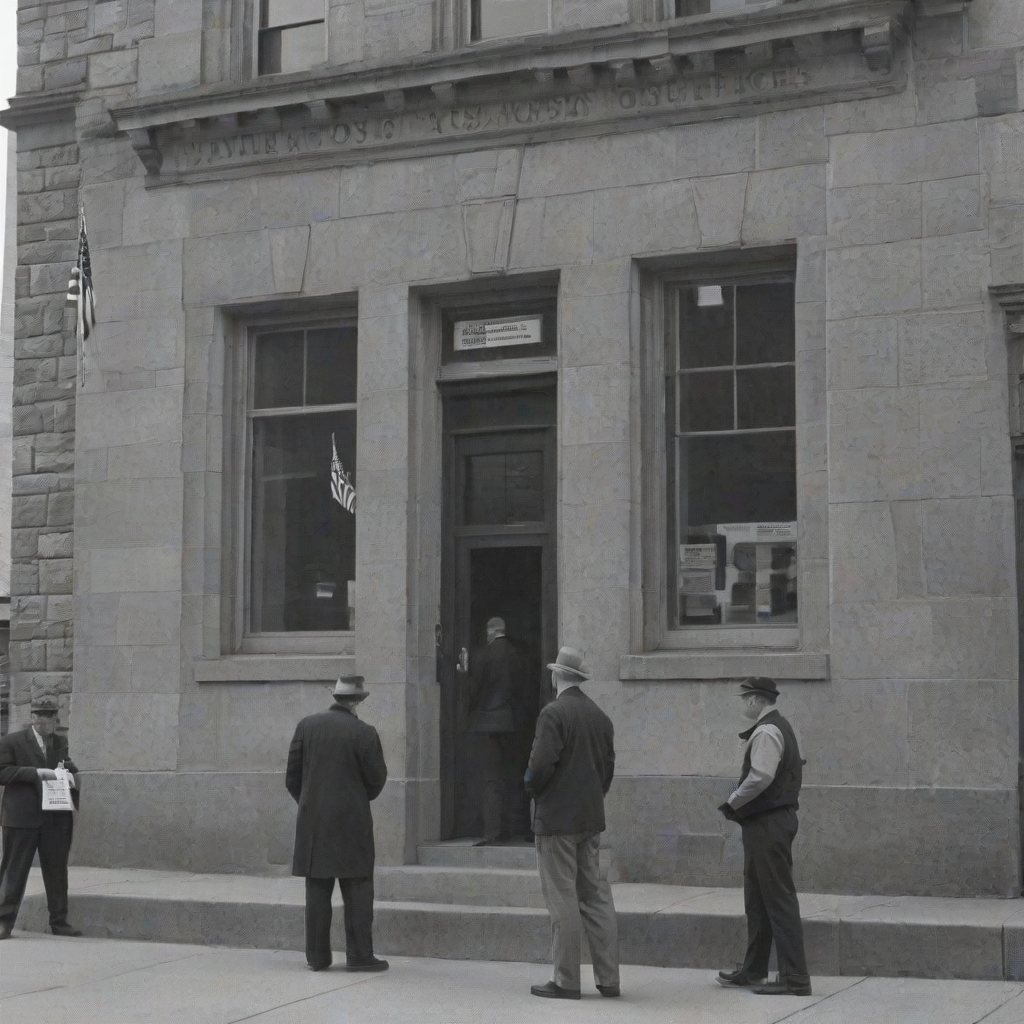
POST OFFICE
You walk into the post office and the line is long and the long line is the post office's condition. The post office has always had a line. The line is the democracy. The line does not care if you are mailing a birthday card or a legal document or a package to your mother. The line treats everyone the same which is slowly. The post office is slow and the slow is the pace of the government and the pace of the government is the pace of a building that must serve everyone and the serving everyone means no one gets served fast. The post office is the most patient building in the city because the post office has been waiting since seventeen seventy five.
Benjamin Franklin was the first Postmaster General in seventeen seventy five and the first thing the new country built after the army was a way to send letters because a country that cannot send letters is not a country. The post office was the internet before the internet. The post office connected Boston to Philadelphia to Charleston and the connecting was the nation. Without the post office there is no nation because without the post office there is no communication and without communication there is no union and without union there is no United States. Franklin understood this. Franklin who was a printer understood that the word must travel and the traveling of the word is the post office's purpose and the purpose has not changed in two hundred and fifty years. The word must travel.
The post office in the Jim Crow South was the first federal job a Black person could hold and the holding of a federal job was the dignity. The postal service was federal and the federal overrode the state and the overriding of the state meant that the man sorting mail in Mississippi was a federal employee and the federal employee had protections that the state would not give. The Black postman in the Jim Crow South walked through neighborhoods where he could not eat at the lunch counter but he carried the mail and the carrying of the mail was the authority and the authority was the uniform and the uniform was the government and the government was the Constitution and the Constitution said he could carry the mail. The post office was the civil rights movement before the civil rights movement had a name.
The post office building is the most beautiful government building in any small town. The WPA built post offices in the nineteen thirties with murals on the walls and the murals showed farmers and factories and the local landscape and the showing of the local landscape was the government saying we see you. The mural in the post office in your town was painted by an artist who came to your town and looked at your town and painted your town on the wall of your post office and the painting of your town on the wall is the honor and the honor is still there. The mural is still there. Above the PO boxes. Behind the counter. The government put art in the post office because the government believed that the people who buy stamps also deserve beauty and the deserving beauty is the most radical thing the government has ever said.
You stand at the counter and the clerk weighs your package and the weighing is the transaction and the transaction is forty seven years old. The clerk has been here forty seven years. The clerk knows the zip codes by heart. The clerk does not need the computer but the computer is there and the clerk uses the computer because the computer is the rule. The post office has rules and the rules are the forms and the forms are the customs declarations and the return addresses and the certified mail receipts and the receipts are the record and the record is the proof that the word traveled. The post office keeps records because the post office is the memory. The post office remembers that you sent the letter and the remembering is the service and the service is the government doing the small thing. The small thing. The stamp. The envelope. The carrying of the word from here to there. The post office. The last place where the government still touches your hand when it gives you your change.