 JOHN SINCLAIR
POOL HALL
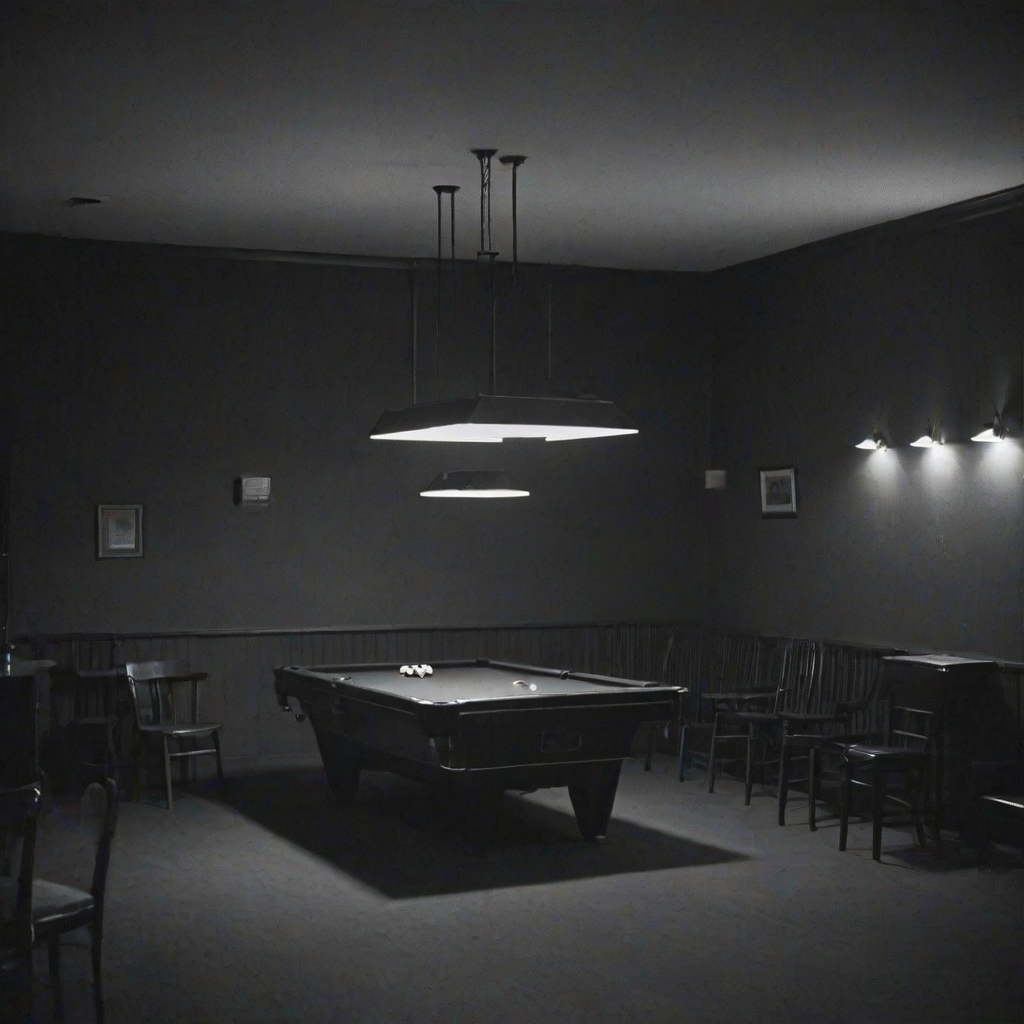
The pool hall was the room where men went to be quiet together. The quiet was not silence. The quiet was the sound of balls clicking and chalk dusting and the low murmur of conversation that never rose above the level of the game. The game set the volume and the volume was low. You could talk during someone else's shot but you could not talk during your own because the shot required the kind of attention that conversation destroys. The pool hall taught you when to speak and when to shut up and the lesson was worth more than the game. The pool hall was geometry and patience and the management of your own silence and the three things together made a man who could sit with a problem without panicking.
Michael Phelan published The Game of Billiards in eighteen fifty and the book was the first American manual on the game and the book made pool respectable for exactly one generation. Phelan designed tables and organized tournaments and convinced the wealthy that billiards was a gentleman's sport and the wealthy built billiard rooms in their mansions and the rooms had mahogany rails and Tiffany lamps and the lamps cast circles of light on the green felt that looked like spotlights on a stage. The game was art in those rooms. The game was physics made visible. The cue ball struck the object ball and the object ball traveled in a direction that could be calculated and the calculation was beautiful and the beauty attracted money and the money built rooms. Then the game moved downtown and the downtown rooms charged by the hour and the hourly rate attracted a different crowd and the different crowd did not have mahogany rails and the respectability that Phelan had built was dismantled in a single generation by the democracy of the hourly rate.
The hustler was the poet of the pool hall. The hustler played badly on purpose until the money was on the table and then the hustler played well and the transition from bad to good was the performance. Minnesota Fats was born Rudolf Wanderone in New York City in nineteen thirteen and Fats did not earn his name from Minnesota. He earned it from the nineteen sixty one movie The Hustler where Jackie Gleason played a character named Minnesota Fats and Wanderone claimed the name and the name stuck because Wanderone understood that in the pool hall the story is worth more than the skill. Fats could play. But Fats could talk. And the talking filled seats and the seats filled rooms and the rooms stayed open because of a fat man in a vest who understood that pool is a spectator sport if the spectators have someone to watch.
The Music Man warned America about the pool hall in nineteen fifty seven. Robert Preston stood on a stage and sang that the arrival of a pool table in River City Iowa was a sign of moral decay and the song was a comedy and the comedy was also the truth. The pool hall was suspect. The pool hall was where boys learned to gamble and swear and smoke and the learning was unsupervised and the unsupervised learning was what made it effective. The pool hall was the classroom that parents feared because the pool hall taught things that school did not. The pool hall taught you how to lose money gracefully. The pool hall taught you how to read a person's face while they bent over a table. The pool hall taught you that the person who talks the most is usually the person who plays the worst. The pool hall was a school of human behavior disguised as a game room and the disguise worked for a hundred years.
There were forty two thousand pool halls in the United States in nineteen twenty. There are fewer than five thousand today. The pool halls closed because the rooms were expensive to maintain and the tables were expensive to refelt and the crowd was shrinking because the crowd had found other rooms. The video arcade took the teenagers. The sports bar took the adults. The internet took everyone else. The pool table migrated from the pool hall to the basement and the migration was the death. The pool table in the basement is furniture. The pool table in the pool hall was a stage. The difference is the audience. The difference is the stranger at the next table who watches your shot and nods or does not nod and the nod is the review. You cannot get the nod in your basement. You cannot get the silence of six men watching you line up a bank shot in a room where the only sound is the ventilation system and your own breathing. The pool hall was the room where the quiet was the point and the quiet is gone and nothing that replaced it is quiet enough.