 DAVID PEEL
Pointing Trowel
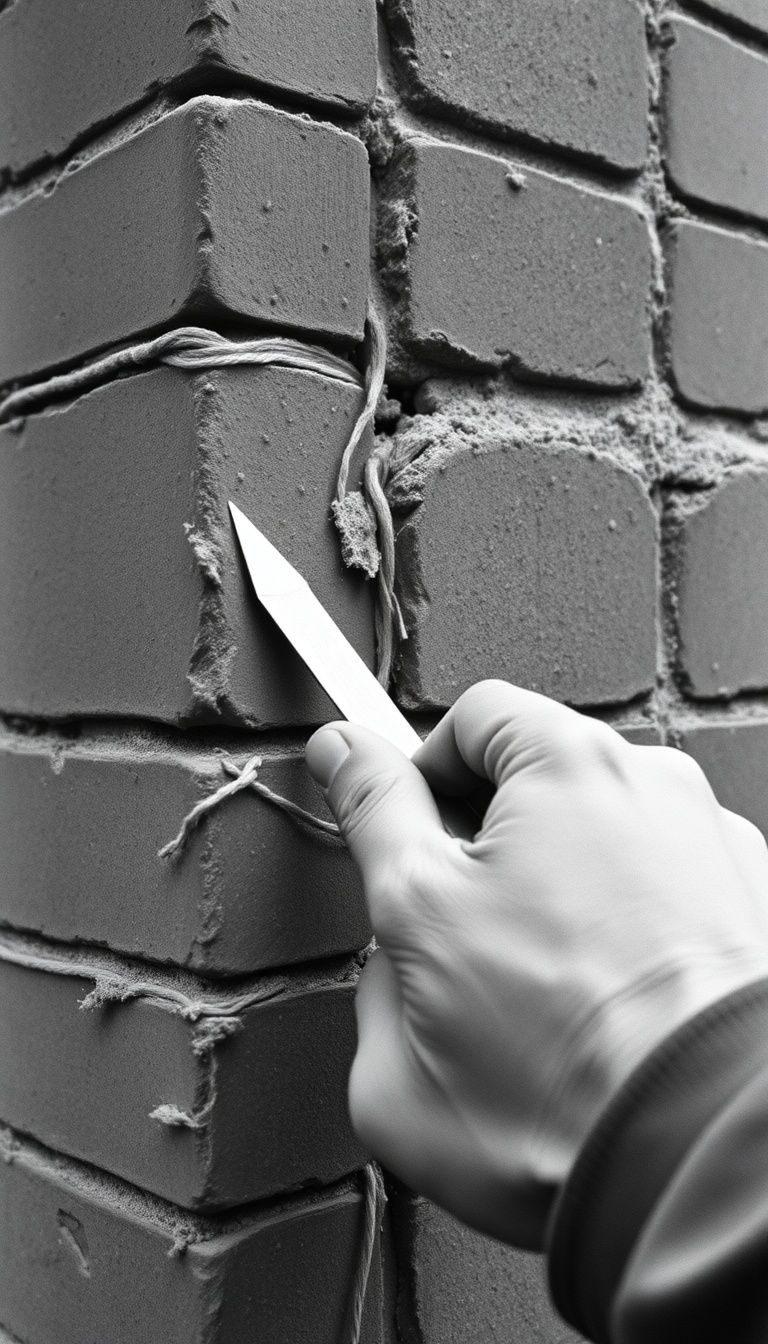
The pointing trowel was a small narrow trowel used to fill mortar joints. The blade was five inches long and half an inch wide. The blade was the width of a mortar joint. The mason held the pointing trowel like a pen and drew mortar into the joint the way a calligrapher draws ink across paper. The joint was the line. The mortar was the ink. The pointing trowel was the nib. The wall was the page. The mason who pointed well wrote a wall that people read without knowing they were reading.
The pointing trowel was the last tool to touch the wall. After the brick was laid and the mortar was spread and the wall was plumb and level the pointing trowel came out and finished the joints. The finish was the profile. Concave. Flush. Struck. Raked. Weathered. Each profile changed the shadow on the wall and the shadow changed the look of the wall. The concave joint made a deep shadow. The flush joint made no shadow. The raked joint made a horizontal shadow that emphasized the courses. The mason chose the profile and the profile chose the character of the wall. The same brick with different pointing looked like a different wall.
The pointing trowel was personal. The mason bought his own and used the same one for years. The blade wore down. The tip rounded. The edge thinned. The worn pointing trowel fit the mason's hand and the mason's hand fit the joint and the joint fit the wall. A new pointing trowel was stiff and awkward. The mason broke in a new trowel the way a pitcher broke in a new glove. The tool learned the hand and the hand learned the tool and the learning took a season. The mason who lost his pointing trowel lost a season of work because the replacement needed a season to become his.
Power tools do not point. Grout bags squeeze mortar into the joint like frosting from a pastry bag. Tuck-pointing wheels grind out old mortar with a diamond blade. But the filling of the joint is still done by hand with a pointing trowel because the joint is too narrow and too variable for a machine. The joint follows the brick and the brick is not perfectly straight and the mortar must adjust to the imperfection of the brick and only a hand can adjust to imperfection. The machine is too precise for imprecise work. The pointing trowel is the last hand tool standing on the modern job site because the wall still needs a human touch.
See also: Pointing, Tuckpointing