 DAVID PEEL
Pointing
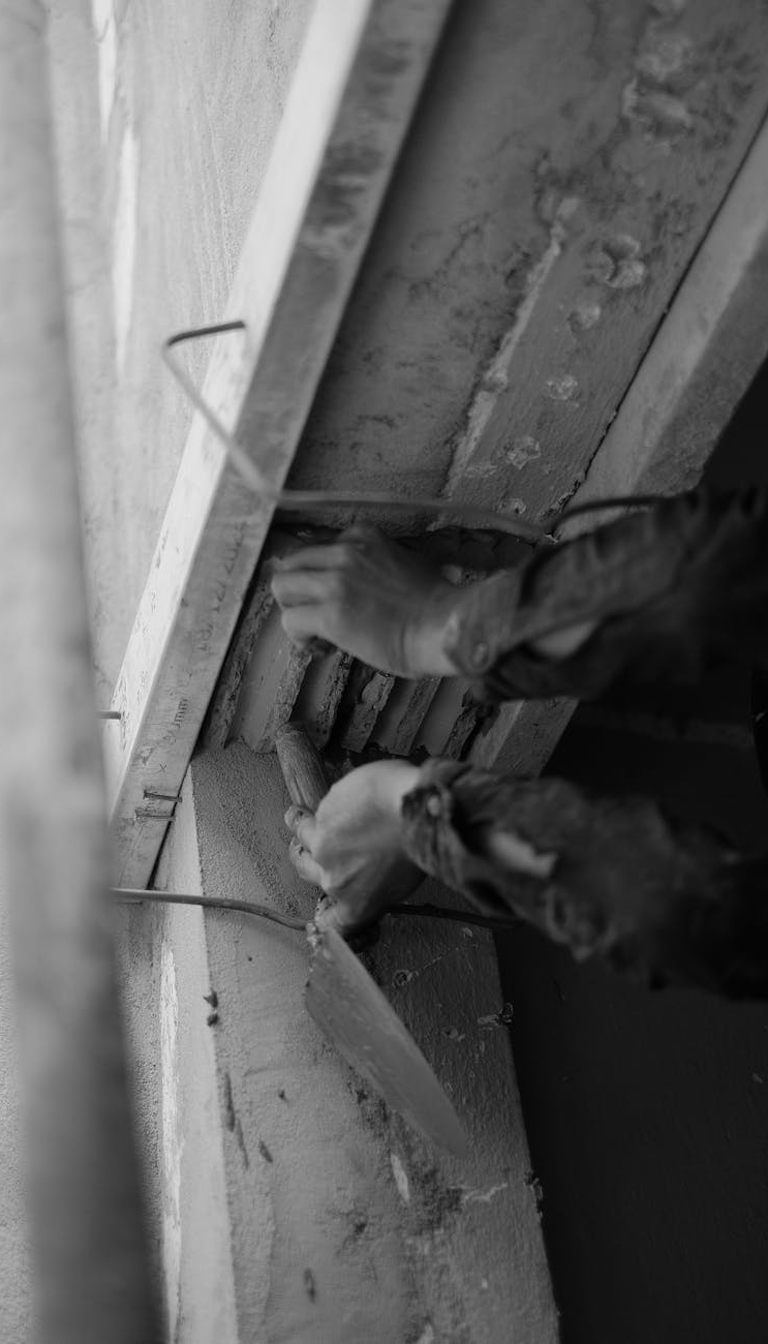
Pointing was the mortar between the bricks. Not the original mortar. The replacement mortar. The mason raked out the old crumbling mortar with a chisel and pressed new mortar into the joint with a pointing trowel and the new mortar sealed the joint and the joint kept the water out for another fifty years. Pointing was the wall's second chance. Every wall gets old. Not every wall gets pointed.
Pointing was slow. You raked one joint at a time. You filled one joint at a time. You tooled one joint at a time. A brownstone facade had ten thousand joints and every joint was pointed by hand. A week's work for two men on a scaffold. The caulk gun squeezes a bead into the crack in thirty seconds. Thirty seconds is not enough time to understand the crack. The mason who raked the joint understood the crack. The mason knew how deep the damage went because the mason felt it with the chisel. The caulk gun does not feel.
The mortar had to match. The old mortar was lime-based and soft. The new mortar had to be lime-based and soft. If you pointed a lime wall with Portland cement mortar the hard cement would crack the soft brick because the cement would not flex and the brick would try to flex and the brick would lose. The mortar was supposed to be the weak link. The weak link is not a flaw. The weak link is the plan. The mortar cracks so the brick does not. The fuse blows so the house does not burn.
The pointing trowel was thin. A quarter inch wide. The width of the joint. The mason held the trowel like a pen and drew mortar into the joint the way a calligrapher draws ink into a stroke. The concave joint. The flush joint. The weathered joint. The struck joint. Each finish shed water differently and each finish looked different and the mason chose the finish the way a writer chooses a word. The wrong word ruins the sentence. The wrong joint ruins the wall.
Nobody points anymore. They grind and tuckpoint with power tools and the power tool opens the joint wider than the chisel and the wider joint needs more mortar and the more mortar changes the face of the wall. The face of the wall is the wall's identity. Change the joints and you change the face. The pointed wall looked like the pointed wall not the repointed wall. The difference is small from the sidewalk. The difference is everything from the scaffold. The mason worked on the scaffold. The opinion that matters is the one from the scaffold.