 DAVID PEEL
Pocket Watch
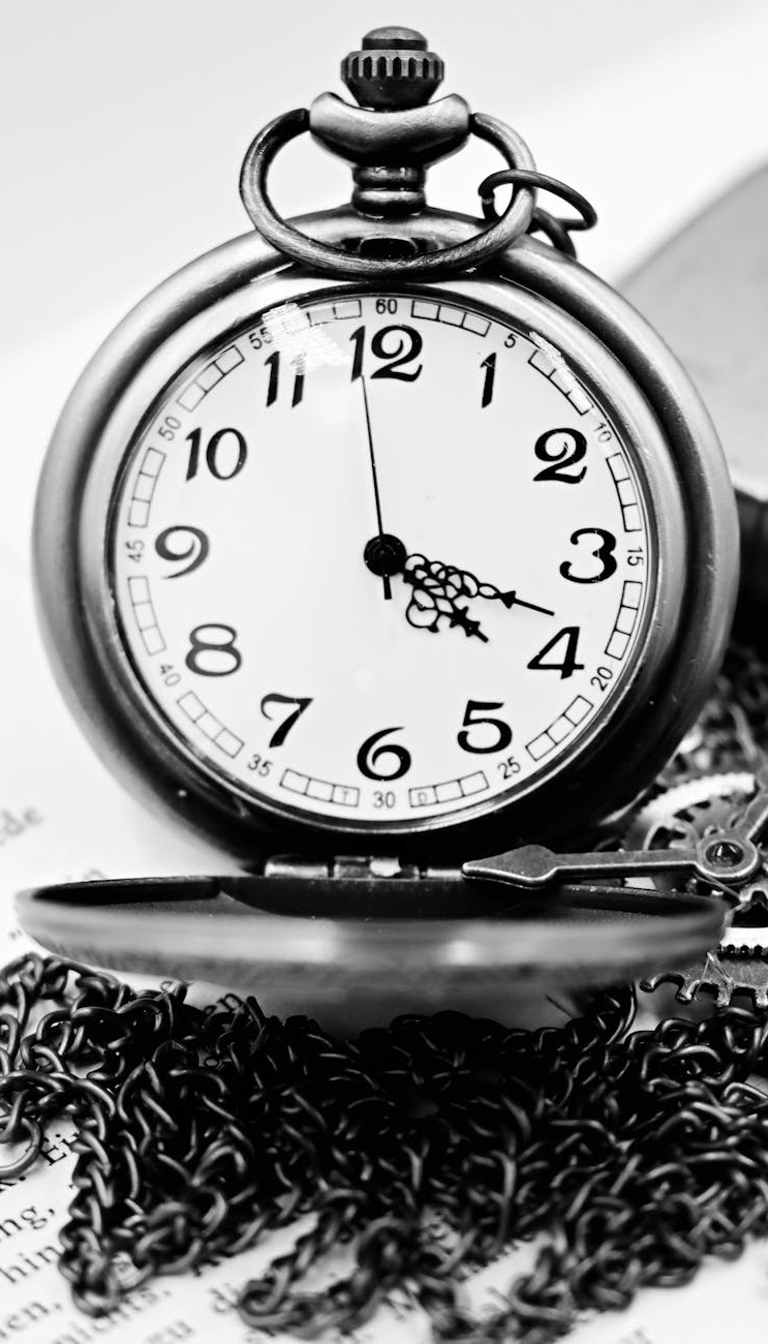
The pocket watch lived in your vest. You reached in and you pulled it out and you opened the case and you looked at the time and you put it back. Looking at the time was a deliberate act. You decided to know what time it was. The wristwatch changed that. The wristwatch put the time on your body where you could see it without deciding. The phone changed it again. Now the time is everywhere and you cannot escape it.
The pocket watch had a chain. The chain connected the watch to your vest and the chain was the leash and the watch was the pet and you kept the pet close because the watch was expensive and the watch was personal. A man's pocket watch was his most intimate possession after his wedding ring. The watch was given to you by your father or your grandfather and the watch carried time from one generation to the next. The watch did not just tell you what time it was. The watch told you whose time you were carrying.
My grandfather had a pocket watch from the old country. He wound it every night before bed. The winding was the last thing he did before sleep. He turned the crown and the spring tightened and the watch stored the energy and the energy lasted exactly twenty-four hours. The watch needed him every day. The watch and my grandfather had an appointment. The battery watch has no appointment. The battery dies and you replace it. The pocket watch died when you forgot to wind it and you brought it back by remembering.
The pocket watch is in a drawer now. Nobody carries a pocket watch except as a costume. The watch that lived in a vest pocket lived close to the heart. The phone that tells you the time lives in your back pocket. The time moved from your chest to your hip. The time is no longer close to the heart. The time is close to the wallet. That is where the time went.
See also: Skeleton Key, Radio Dial