 JOHN SINCLAIR
PLINTH
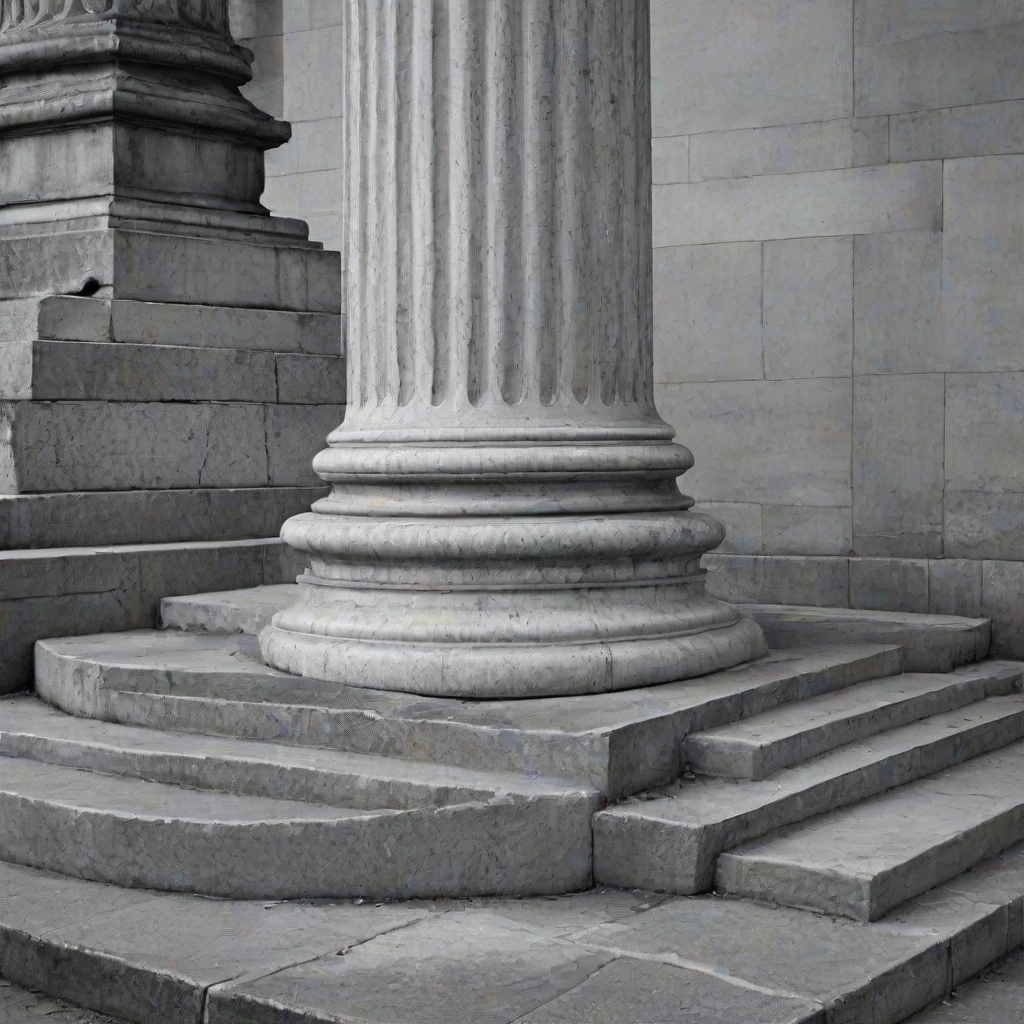
You stand on the plinth and the plinth is the base that lifts the building off the ground. The plinth is the lowest visible element of the structure and the lowest visible means the plinth is the first thing the building says to the earth. The plinth sits between the foundation and the wall and the sitting between means the plinth translates the foundation into architecture. The foundation is underground and invisible. The plinth is above ground and visible. The foundation is engineering. The plinth is engineering that knows it is being watched. The plinth lifts the building out of the mud and the rain and the snow and the lifting out of the mud is the original purpose. Water pools at the base of a wall. The plinth raises the wall above the pooling. The building stays dry. The plinth gets wet instead.
The plinth of the Parthenon is three steps of Pentelic marble and the three steps lift the temple ten feet above the summit of the Acropolis. The three steps are the stylobate and the stylobate is not flat. The stylobate curves upward by two and a half inches at the center and the curving upward by two and a half inches is an optical correction because a truly flat base appears to sag in the middle when seen from a distance. The builders of the Parthenon in four thirty eight BC understood that the human eye lies and the understanding that the eye lies meant they built a curve into the plinth to make it look straight. Every column on the Parthenon tilts slightly inward and every column has a slight swelling called entasis and the tilting and swelling are more corrections for the same lying eye. The plinth is where it starts. The plinth is the first correction. The plinth establishes the level from which every other adjustment is measured. Twenty five centuries later the plinth remains. The marble has weathered. The curve is still there.
The granite plinth of the Washington Monument extends twenty three feet below ground and thirty six and a half feet above and the extending below and above means the plinth is both foundation and base. The monument is five hundred and fifty five feet tall and the five hundred and fifty five feet weighs eighty one thousand tons and the eighty one thousand tons must be transferred to the soil beneath the plinth. The original foundation designed by Robert Mills in eighteen forty eight was inadequate and the inadequacy meant the monument tilted during construction and the tilting stopped construction for twenty three years. The Army Corps of Engineers strengthened the plinth in eighteen seventy nine by pouring a concrete apron around the original stone base and the pouring the concrete apron spread the load across a wider area. The monument resumed. The monument was completed in eighteen eighty four. The plinth that holds the Washington Monument is the largest block of masonry in the district and the largest block means the plinth is itself a monument to the problem of weight on soft ground.
Every brownstone stoop in Brooklyn sits on a plinth that keeps the parlor floor above the mud. The brownstones were built in the eighteen sixties and seventies and the building in the eighteen sixties meant the streets of Brooklyn were unpaved and the unpaved meant the streets were mud in rain and dust in drought. The plinth raised the first occupied floor a full story above the street. The stoop climbed from the sidewalk to the parlor and the climbing from the sidewalk was the transition from public to private. The basement below the plinth was the service floor where the kitchen operated and the coal was stored and the servants worked. The plinth was the class line. Above the plinth was the family. Below the plinth was the labor. The brownstone plinth in Brooklyn was quarried in Portland Connecticut and barged down the Connecticut River and across Long Island Sound and up the East River and the barging from Connecticut meant every plinth in Brooklyn is a piece of Connecticut deposited in New York. The quarry closed in nineteen thirty six. The brownstones remain. The plinths hold them above the ground.
You look down at the plinth and the plinth is solid and plain and the solid and plain is the honesty of a thing that knows its job. The plinth. The base. The lift. The three steps at the Parthenon that correct the lying eye. The twenty three feet underground at the Washington Monument. The brownstone stoops that kept the parlor above the mud. The first thing the building says to the ground. The ground pushes up. The building pushes down. The plinth is where they meet. The plinth is the handshake between the earth and the wall.