 JOHN SINCLAIR
PLAYGROUND
You hear the playground before you see it. The screaming is the sound of joy and the sound of joy in a city sounds like an emergency to anyone who has forgotten what joy sounds like. The playground is behind a fence or it is not behind a fence and the fence is the city's way of saying this joy is contained. The swings swing. The slide slides. The seesaw does what a seesaw does which is teach you that balance requires another person. The seesaw is the first lesson in cooperation. If the other person gets off you hit the ground and the hitting the ground is the lesson and the lesson is that you need each other.
The first public playground in America opened in Boston in eighteen eighty six in the sand gardens at the Parmenter Street Chapel and the sand was the technology. Sand. Someone decided that children deserve a place to fall and that the falling should not hurt and that the not hurting required sand. Before the playground children played in the street and the street was dangerous because the street belonged to horses and then to cars and the belonging to cars was the theft and the theft was the city taking the street from the children and giving the children a fenced rectangle as compensation. The playground is the apology the city makes for the street.
Aldo van Eyck built over seven hundred playgrounds in Amsterdam between nineteen forty seven and nineteen seventy eight and the building was the rebuilding because Amsterdam had been bombed and the bombed-out lots were empty and the empty lots needed children more than they needed buildings. Van Eyck put a sandbox here and climbing bars there and the putting was not random. Van Eyck studied how children move and children move in spirals and circles and the spirals and circles became the playgrounds. The playgrounds had no signs. The playgrounds had no fences. The playgrounds were just shapes in the city and the shapes said play here and the children understood because children always understand the invitation to play. Seven hundred invitations. In a city of canals and bicycles. The playgrounds are still there.
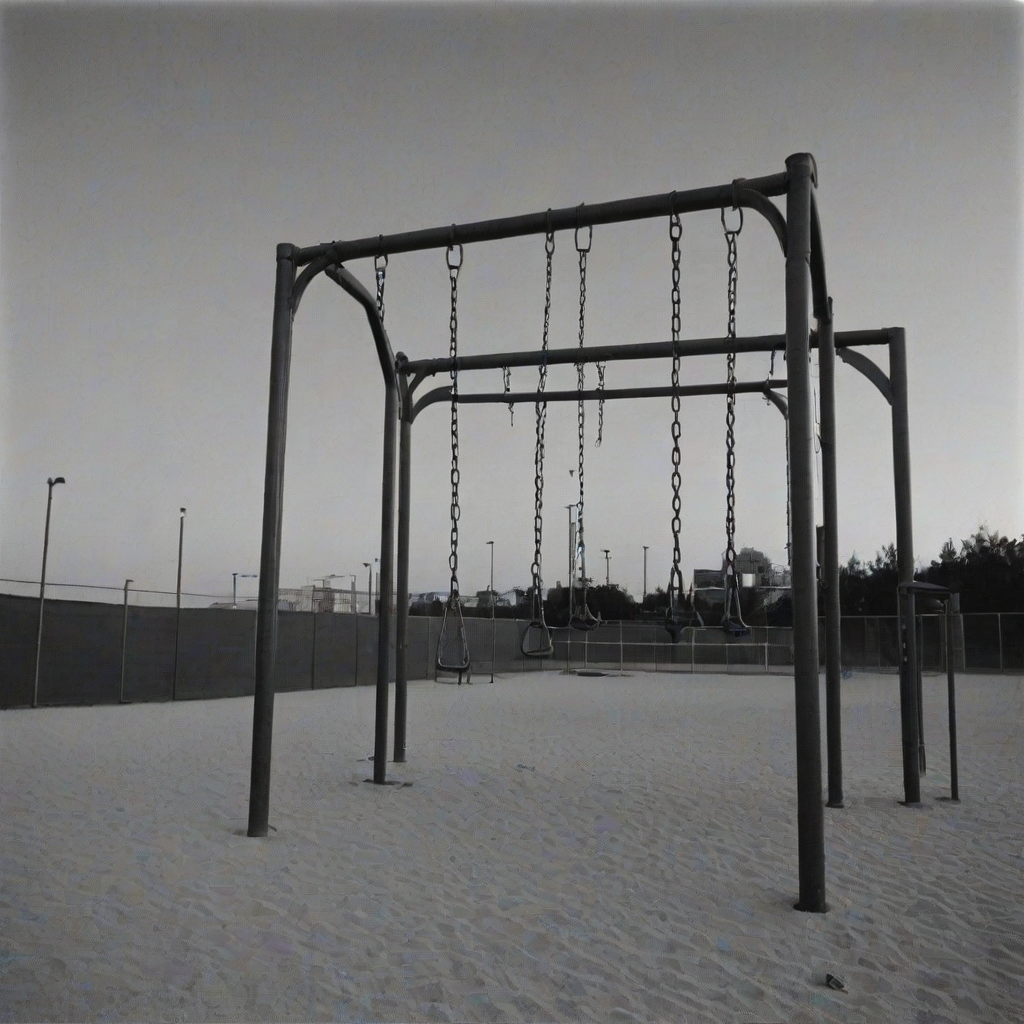
The monkey bars are the most dangerous equipment on the playground and the danger is the point. The monkey bars teach you to hang and the hanging teaches you that your arms can hold your weight and the holding your weight is the first time your body surprises you. You did not know you could do that. The playground is full of things you did not know you could do. The spinning until dizzy. The jumping from the top of the slide. The pumping the swing until the chain goes slack at the top of the arc and for one second you are weightless and the weightless is flight and the flight lasts one second and one second is enough when you are seven.
You walk past the playground at dusk and the playground is empty and the empty playground is the saddest geometry in any city. The swings hang still. The slide reflects the streetlight. The sandbox has a footprint from this morning and the footprint will be there tomorrow because no one comes to the sandbox at night. The empty playground is the clock that tells you what time it is. If the playground is full it is daytime and the world is working the way it should. If the playground is empty it is nighttime or it is winter or the neighborhood has changed and the changed neighborhood does not have children anymore and the not having children is the silence and the silence on a playground is the loudest silence in any city.