 DAVID PEEL
Plaster Hawk
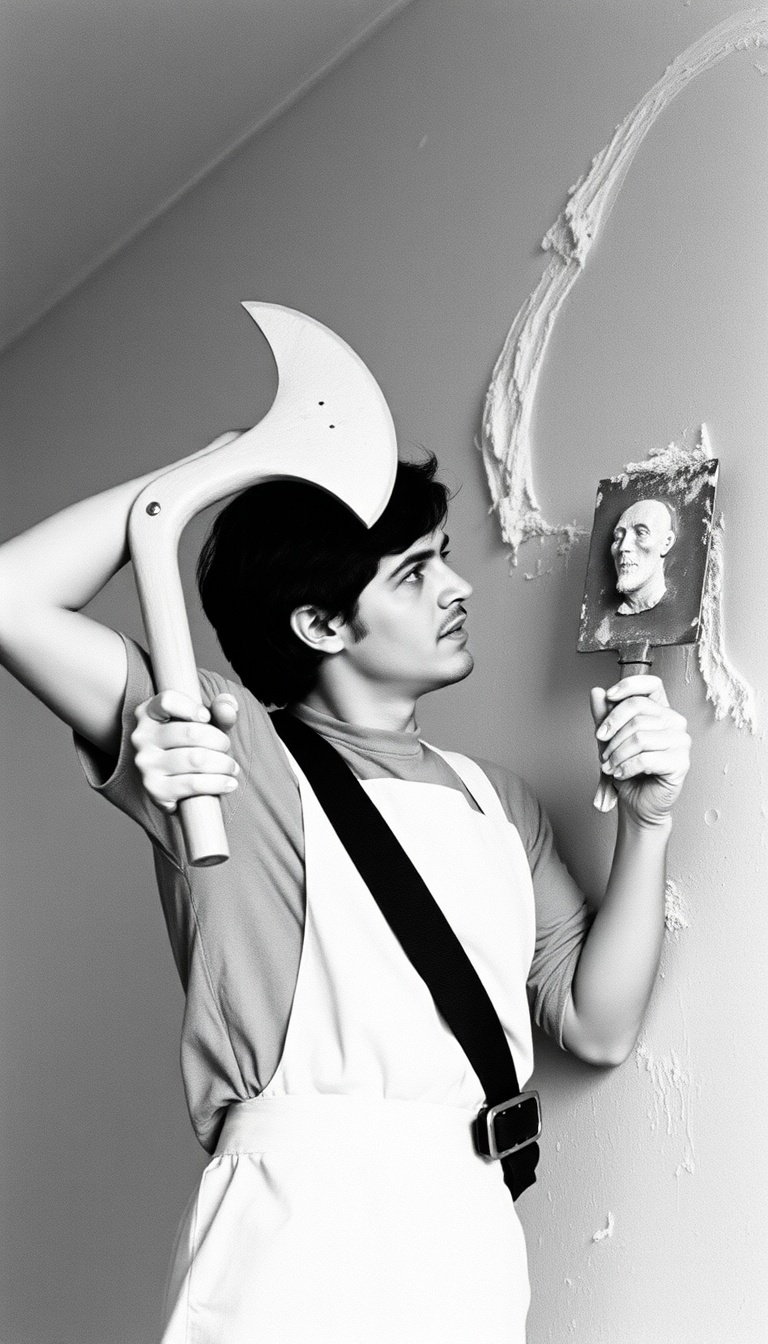
The plaster hawk was a flat square board with a handle underneath. You held the hawk in one hand and the trowel in the other. The hawk held the plaster. The trowel spread it. The hawk was the plate. The trowel was the knife. The plasterer was the waiter serving the wall. The hawk kept the plaster close to the work so the plasterer did not have to bend down to the bucket for every trowel load. The hawk saved a thousand bends a day and a thousand bends saved a back.
The hawk was twelve inches square. Aluminum or magnesium. Light enough to hold for eight hours. The handle was centered underneath and the plasterer balanced the plaster on the flat surface by tilting the hawk slightly toward himself. The tilt kept the plaster from sliding off the far edge. The plasterer scooped plaster from the hawk with the trowel and flipped it onto the wall in one motion. Scoop and flip. Scoop and flip. The motion was a figure eight. The trowel went to the hawk and came back to the wall and the plaster traveled from the hawk to the wall on the curve of the trowel.
The plasterer loaded the hawk from the bucket with the trowel. A full load was about a pound of plaster. Too much and the hawk was heavy and the plaster slid. Too little and the plasterer went back to the bucket too often. The right amount was the amount the plasterer could spread in three passes before it started to set. Plaster set fast. Five minutes from wet to firm. The plasterer worked against the clock. The hawk was the portable clock. When the hawk was empty the time was up and the plasterer loaded again and the clock restarted.
Nobody plasters walls anymore except in restoration work. The old buildings with the horsehair plaster and the three-coat walls. The plasterer comes in with the hawk and the trowel and matches the texture of a wall that was plastered a hundred years ago. The new wall has to look like the old wall or the inspector will not sign off. The plasterer holds the same hawk and uses the same motion and the plaster goes on wet and dries hard and the hundred-year-old wall gains another layer and the layer is indistinguishable from the original because the technique has not changed. The hawk has not changed. The trowel has not changed. The plaster still sets in five minutes. The only thing that changed is who does it and how many are left.
See also: Trowel, Mortarboard