 DAVID PEEL
Pilaster
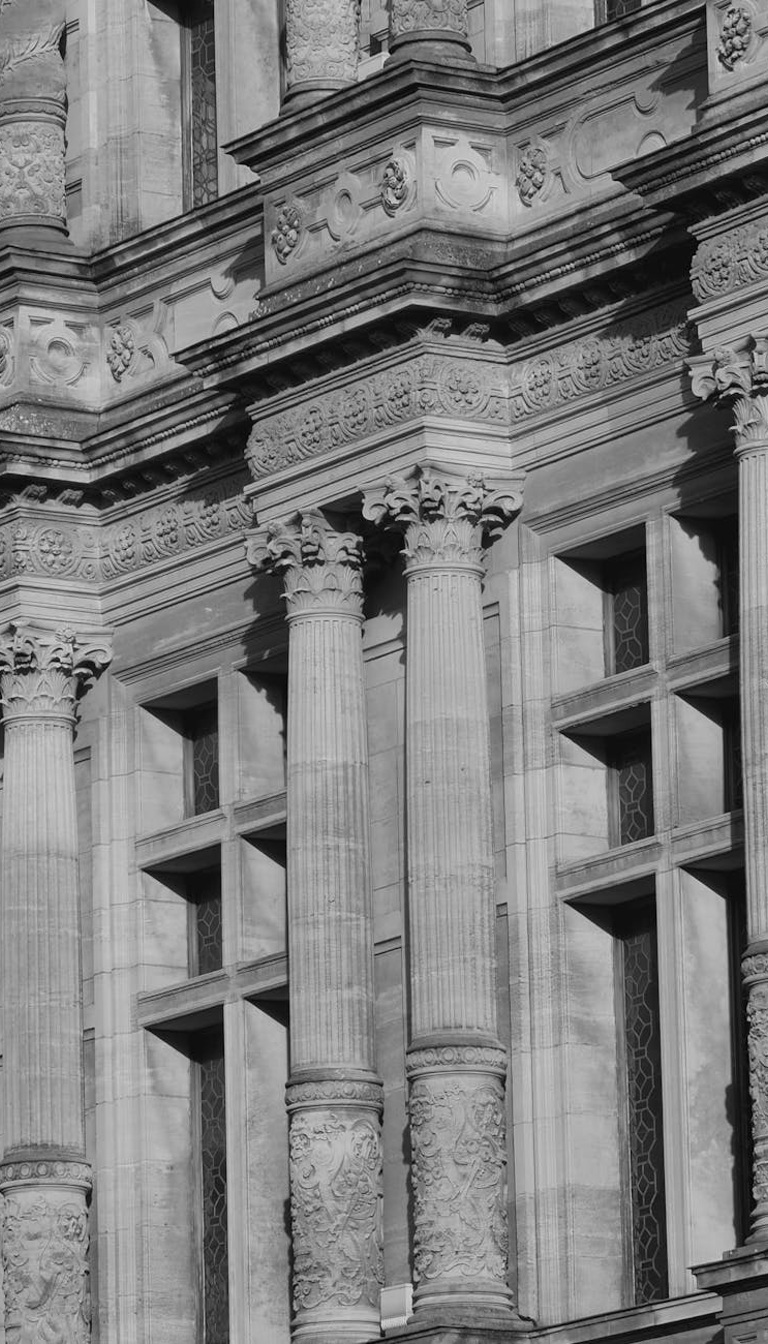
The pilaster was a flat column built into the wall. Not a real column. A column that only stuck out a few inches from the face of the building. The pilaster carried nothing. The pilaster was structural punctuation. The pilaster said this part of the wall is different from that part of the wall. The pilaster divided the facade into chapters and each chapter was a story the building was telling about itself.
The pilaster had a capital and a base like a real column but the pilaster was not round. The pilaster was flat on the back where it met the wall and the flat back was the secret. The pilaster looked like a column from the street but behind the pilaster was just more wall. The pilaster was architecture's oldest bluff. A column says I am holding something up. A pilaster says I look like I am holding something up. The difference is the difference between work and theater.
The pilaster was classical. Doric or Ionic or Corinthian depending on how much money the owner had and how much he wanted the building to look like a Roman temple. The bank on Broadway had Corinthian pilasters with acanthus leaves carved into the capitals and the leaves said this building is serious about your money. The Doric pilaster said this building is serious about itself. The glass curtain wall says nothing about anything.
The pilaster divided the storefront. On the commercial buildings the pilasters separated one shop from the next. The butcher's pilaster. The baker's pilaster. The cobbler's pilaster. Each pilaster was a boundary and each boundary was a promise that this shop was its own world with its own goods and its own proprietor who stood behind the counter and knew your name. The continuous glass facade does not divide anything. The continuous glass facade says every shop is the same shop. Every shop is not the same shop.
They stopped building pilasters when they stopped caring about the face of the building. The modernists said ornament is crime and the pilaster was ornament and so the pilaster was a crime. But the pilaster was not ornament. The pilaster was the building's grammar. The pilaster was the comma between clauses and without the comma the sentence runs together and the sentence that runs together says nothing. The flat wall is a sentence without punctuation. You can read it but you cannot hear it.