 JOHN SINCLAIR
PHONE BOOTH
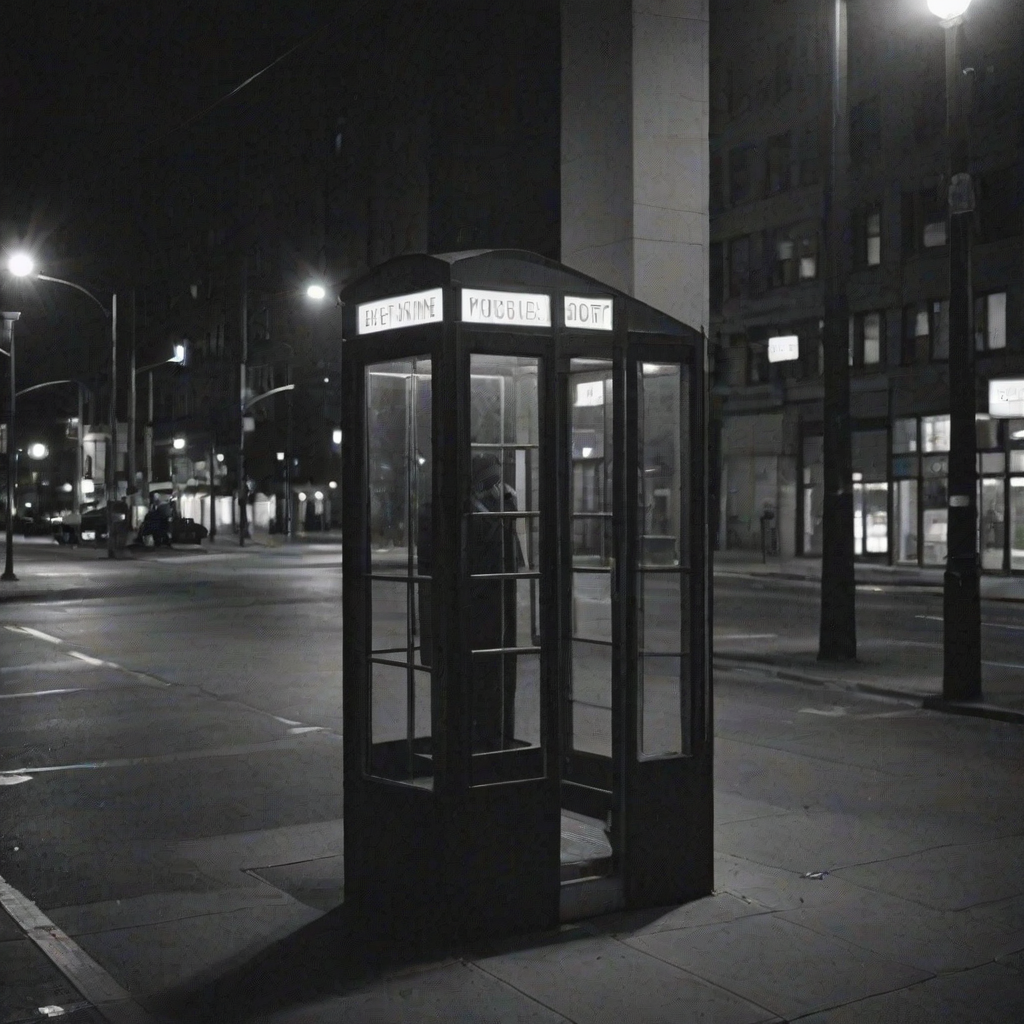
The phone booth was a room built for one voice. Three walls of glass and a folding door and a shelf for your elbow and a hook for the receiver and a coin slot that accepted dimes and quarters and the accepting was democratic. The architecture said this call is important enough to stand inside a box for. The standing was the commitment. You did not make casual calls from a phone booth. You made calls that required walls between you and the sidewalk.
The first phone booth appeared in eighteen eighty nine in Hartford Connecticut and it was a wooden cabinet with a roof and a door and the door closed completely because the telephone was still a miracle and miracles deserve enclosure. By nineteen fifty the booth was glass because the miracle had become a utility and utilities deserve visibility. The glass said I am making a call and the making is public knowledge but the words are private. The glass was a negotiation between secrecy and transparency and the negotiation was American.
You put your dime in the slot and the slot ate the dime and the dial tone appeared like a floor under your feet. The dial tone was the most democratic sound in America. The same tone in Manhattan and the same tone in Flint and the same tone in a gas station in the middle of New Mexico at three in the morning. The tone did not know where you were. The tone did not care where you were. The tone said you are connected to a system and the system does not ask questions.
The phone book hung from a chain inside the booth and the chain said this information is valuable enough to secure but not valuable enough to hide. The book was the original search engine and the search engine was alphabetical and the alphabetical was the only sorting algorithm that does not judge. A comes before B not because A is better but because the alphabet decided this before any of us were born and the decision is not subject to review.
You could see the person in the phone booth from the sidewalk. You could see their mouth moving. You could see them feeding coins into the slot when the operator said please deposit twenty-five cents for the next three minutes and the depositing was urgent and the urgency was visible. The person in the booth was performing a private act in a public frame and the frame was glass and the glass was honest. The phone booth did not pretend to be a private room. The phone booth said I am a public room in which private things happen and the happening is temporary and the temporary is the point.
Superman changed clothes in a phone booth because the phone booth was the only public space small enough to be private. The fiction understood something the telephone company did not intend. The booth was a threshold. You walked in as one person and walked out as another. You walked in not knowing something and walked out knowing it. You walked in alone and walked out connected. The walking in and the walking out were the transformation and the transformation took sixty seconds and cost a dime.
The phone booth disappeared when the telephone left the wall and entered the pocket. The pocket was more convenient than the booth and convenience always wins. But the pocket eliminated the commitment. You do not stand inside a box to make a call from your pocket. You do not feed coins into a slot. You do not close a door between yourself and the sidewalk. The call from the pocket is casual by design. The call from the booth was ceremonial by architecture. The ceremony is gone. The convenience remains. The remaining is not the same as the improving.
The last phone booths in New York stand on street corners with no phones inside them. The shelf is there. The hook is there. The coin slot is there. The phone is not there. The booth has become a frame with nothing inside it. The frame is the memory and the memory is architectural. You walk past the booth and your body remembers the posture of making a call. The leaning. The cradling of the receiver between ear and shoulder. The feeding of the coin. The dialing of the number with your finger in a hole. The body remembers what the pocket has forgotten. The body always remembers longer than the technology.