 JOHN SINCLAIR
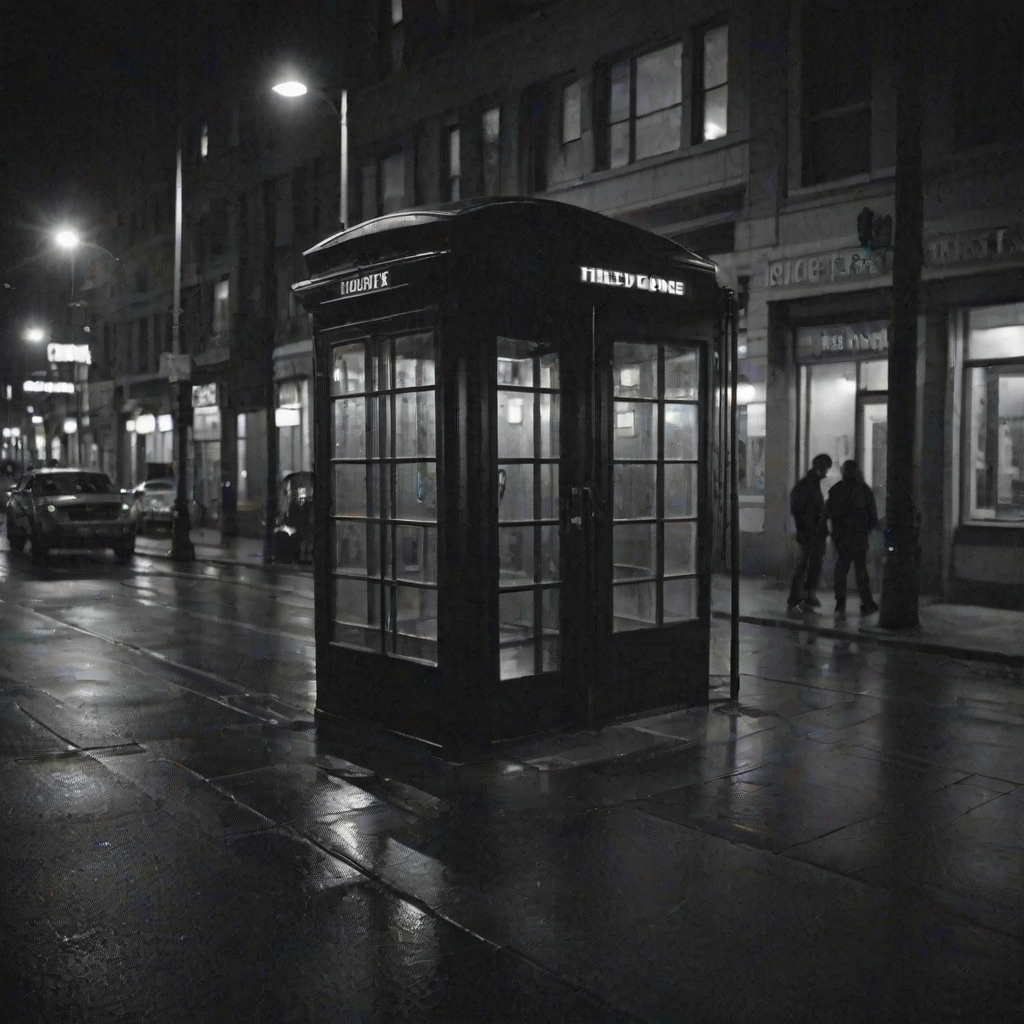
PHONE BOOTH
You step into the phone booth and close the folding door and the city disappears. The glass is dirty and the floor is wet and someone has scratched a phone number into the metal shelf and the phone book is missing and the receiver smells like the last five people who used it but none of that matters because the phone booth is the only private space on a public street. The phone booth is a room that the city gave you for the price of a quarter. Twenty five cents bought you walls and a door and a direct line to anyone in the world and the world could not hear what you said because the folding door was closed and the glass kept your words inside.
Superman changed in a phone booth because the phone booth was the smallest room available and Clark Kent needed a room fast. The writers understood that the phone booth was the only architecture on the street that had a door you could close. The bus stop had no door. The newsstand had no door. The alley had no door. The phone booth had a door and the door made it a room and the room made the transformation possible. Superman needed privacy to become himself and the phone booth was the most private place in the most public city in the world. When the phone booths started disappearing the comic books had to find Superman a new place to change and they never found one as good because there is no replacement for a glass box on a street corner that belongs to everyone and no one.
In nineteen sixty three the students at St Mary's College in Maryland set the world record for phone booth stuffing by fitting twenty two people into a single booth. The phone booth was meant for one person and one conversation and the students turned it into a competition to see how many bodies could fit inside a space designed for solitude. The phone booth stuffing craze swept the country because the phone booth was the perfect size for a dare. Small enough to be impossible. Big enough to try. The students understood something about the phone booth that the phone company did not. The phone booth was not about the phone. The phone booth was about the booth.
Sheldon Cooper in A Beautiful Mind stands at a pay phone at MIT and the camera pulls back and you see that he is the only person in the frame and the phone booth is the loneliest object in the shot. John Nash stood at phone booths because phone booths were where you went when the voices in your head needed to be replaced by a voice outside your head. The phone booth was therapy before therapy was affordable. You put in a quarter and you heard someone who knew your name and knowing your name was sometimes enough. The phone booth did not judge you. The phone booth did not ask how long you had been standing there. The phone booth just connected you and the connection was the medicine.
You walk past the place where the phone booth used to be and there is nothing there now. The sidewalk healed over. The bolts are gone. The phone company removed the booth and filled the holes and the city forgot that the booth was ever there. But you remember. You remember the folding door and the dial tone and the weight of the receiver and the way the cord stretched when you turned to look out the window while you talked. You remember putting the quarter in and hearing it fall and the click that meant the line was open. The phone booth is gone and nothing replaced it because nothing can replace a room that the whole city shared one person at a time. You carry a phone in your pocket now and you can call anyone from anywhere and you are never inside anything when you do it. The call is free and the room is gone and you are not sure which one mattered more.