 DAVID PEEL
PENNY ARCADE
You walk into the penny arcade on Forty-Second Street and the lights hit you before the sound does. A hundred machines blinking in a room that smells like popcorn and electricity. Pinball machines lined up against the walls. Skee-Ball lanes in the back. A claw machine with stuffed animals that nobody has ever won. The penny arcade was the casino of the kid who did not have a dollar. You put a penny in a machine and something happened. A fortune printed on a card. A ball that bounced. A cowboy that shot a target. For one cent something in this world responded to you.
Times Square in the nineteen sixties had three penny arcades on one block. Fascination. Playland. Hubert's Museum and Flea Circus. You could spend an hour in a penny arcade for a quarter. Five pennies on pinball. Five pennies on the grip machine. Five pennies on the peep show viewer. Five pennies on the photo booth. Five pennies on the baseball throw. A quarter bought you twenty-five decisions. Each penny was a choice and each choice was a tiny adventure and you walked out with empty pockets and a paper fortune that said you would meet a tall stranger.
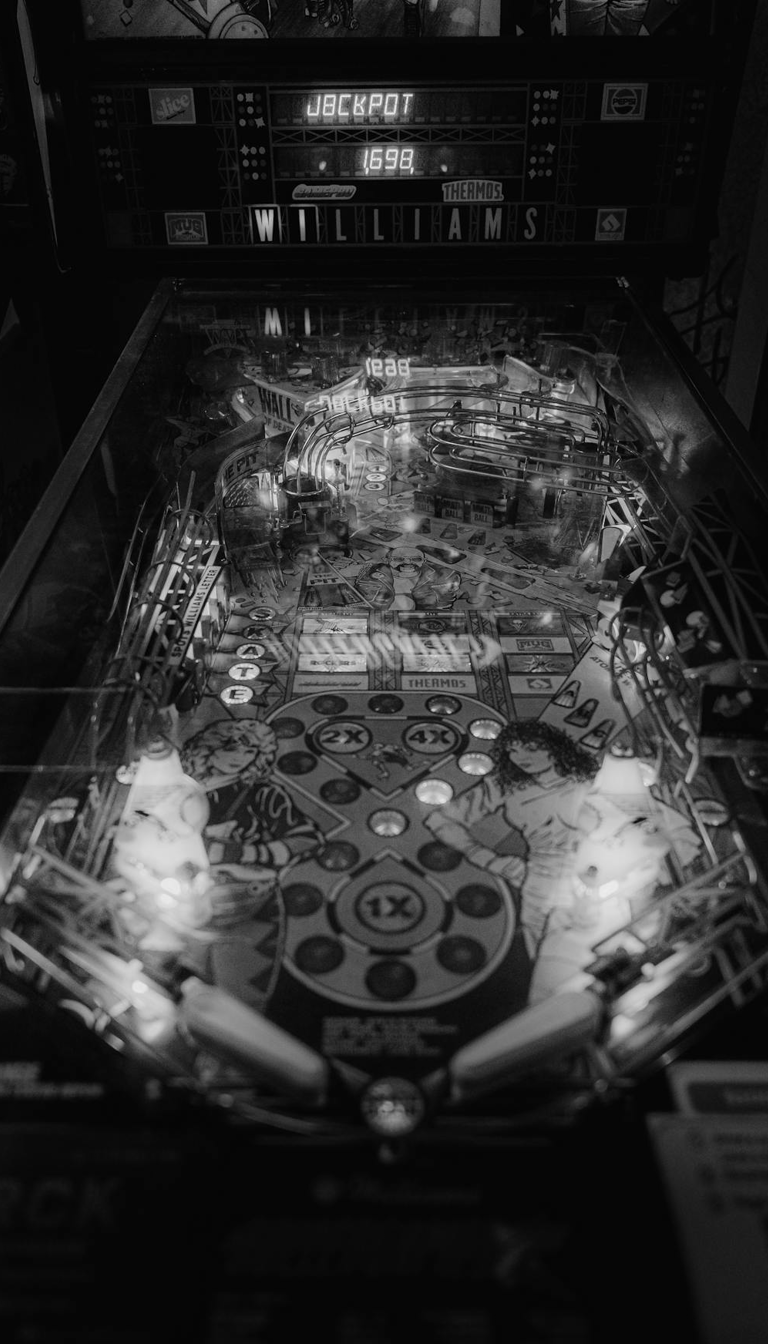
The pinball machine was the king of the penny arcade. You put a dime in and you got five balls and the machine lit up and the bumpers fired and the ball bounced off the rubber and the flippers clapped and the whole machine shook when you tilted it. Pinball was illegal in New York from nineteen forty-two to nineteen seventy-six. The city said it was gambling. It was not gambling. It was skill. A man named Roger Sharpe stood before the city council in nineteen seventy-six and called his shot and the ball went exactly where he said it would and pinball was legal again.
The Skee-Ball machine gave you tickets. Nine balls up the ramp and the tickets came out like a receipt from the universe telling you what your effort was worth. A hundred points got you one ticket. A thousand tickets got you a plastic ring. The plastic ring was worth less than the tickets and the tickets were worth less than the money and the money was worth less than the hour you spent rolling balls up a ramp. But the kid with the plastic ring walked out like a champion. The Skee-Ball machine taught you the most important lesson in New York. The prize is never worth the effort but the effort is always worth the effort.
The penny arcades are gone. Forty-Second Street is a Disney store and a wax museum and a chain restaurant that sells fifteen dollar hamburgers. The machines are gone. The lights are gone. The sound is gone. The fortune that said you would meet a tall stranger is gone. Now the arcade is in your pocket. The phone has a thousand games and none of them cost a penny and none of them light up a room and none of them smell like popcorn. A penny arcade was not a place to play games. A penny arcade was a place to be alive for a penny. That is the cheapest ticket to joy that has ever existed and nobody sells it anymore.