 JOHN SINCLAIR
PAWN SHOP
The pawn shop was the bank for people who did not have a bank. You brought in something you owned and the man behind the counter told you what it was worth and the worth was always less than you thought and the less was the education. The pawn shop taught you the difference between what a thing means to you and what a thing means to the world. Your grandmother's ring meant everything to you. Your grandmother's ring meant fourteen dollars to the man behind the counter. The fourteen dollars was not cruelty. The fourteen dollars was the market. The market does not care about your grandmother. The market cares about gold weight and stone clarity and the condition of the setting and the man behind the counter could assess all three in four seconds because the man had assessed ten thousand rings and every ring came with a story and the man had stopped listening to the stories in his second year because the stories did not change the weight.
The three gold balls hanging above the pawn shop door are the oldest commercial symbol in the Western world. The symbol comes from the Medici family of Florence who used three gold coins on their coat of arms and the Medici were bankers before they were rulers and the banking came first because money always comes first. Saint Nicholas of Myra is the patron saint of pawnbrokers because Nicholas reportedly gave three bags of gold to a man who could not afford dowries for his three daughters and the three bags became three balls and the three balls became the sign that hangs above every pawn shop in the country. The symbol has not changed in six hundred years because the business has not changed in six hundred years. You bring something in. You get money. You come back with more money and you get your thing back. If you do not come back the thing is sold. The transaction is older than banking. The transaction is older than currency. The transaction is as old as the idea that a thing you own has a value that can be borrowed against.
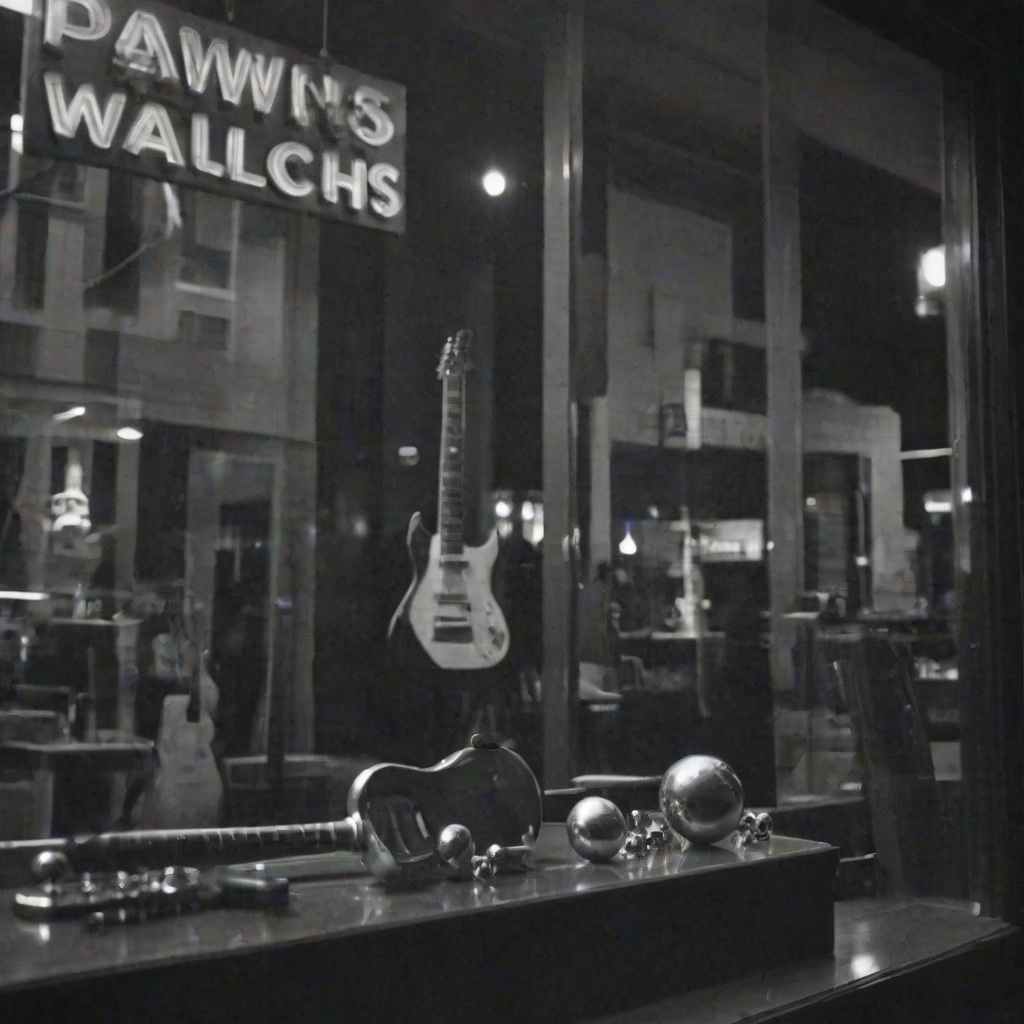
The pawn shop window was the museum of bad luck. The guitar that someone played in a band that did not make it. The television that was new at Christmas and pawned in February. The power tools that represented a project that was started and not finished. The jewelry that was given in love and surrendered in need. Every object in the window had a story and the story was always the same story. I needed money more than I needed this. The window told the economic history of the neighborhood better than any report because the window was real-time. When the window was full of tools the construction workers were out of work. When the window was full of electronics the holiday bills had come due. When the window was full of instruments the musicians were between gigs and between gigs is the musician's way of saying broke.
Edward Lewis opened what is believed to be the first licensed pawn shop in New York City in eighteen fifty seven and the licensing was the city's attempt to regulate a business that had operated without regulation since the Dutch settled Manhattan. The regulation did not change the business. The regulation changed the paperwork. The pawn shop was already doing what the regulation required which was keeping a record of every transaction and every record was a receipt and every receipt was a contract and the contract said I will hold your property for thirty days and if you redeem it you pay me what I lent you plus interest and if you do not redeem it the property is mine. The contract was simple. The contract was honest. The contract did not have fine print because the contract did not need fine print. The terms were spoken aloud across a counter and the speaking was the agreement and the agreement was binding and the binding was enforced not by a court but by the knowledge that if you burned the pawn shop you burned your own lifeline.
The pawn shop is not dead. The pawn shop is thriving. There are more pawn shops in America today than there have ever been. The number passed thirteen thousand in twenty ten and the number keeps climbing because the need keeps climbing. The people who use pawn shops are the people who cannot get a credit card and cannot get a bank loan and cannot get a payday advance because the payday advance store closed and the bank does not have a branch in their neighborhood and the credit card company declined their application. The pawn shop asks for none of this. The pawn shop asks only what do you have and the having is the collateral and the collateral is the trust. The pawn shop trusts objects. The pawn shop does not trust credit scores. The pawn shop is the last financial institution in America that will shake your hand and give you money based on what you are carrying and not on what a computer says about your history. The three gold balls still hang above the door. The door is still open. The man behind the counter still looks at the object before he looks at you. The object tells him everything he needs to know.