 JOHN SINCLAIR
PARKING LOT
You park the car and walk away and the walking away is the parking lot's purpose. The parking lot exists so you can leave. The parking lot is the destination that is not a destination. No one drives to the parking lot. Everyone drives through the parking lot to get to the place next to the parking lot. The parking lot is the margin. The parking lot is the space between the car and the reason you got in the car. The parking lot is the largest piece of architecture in America that no one designed to be beautiful and the no one designing it to be beautiful is the parking lot's honesty.
The parking lot in America covers more land than the state of Connecticut and the more land than Connecticut is the country's confession about what it values. The country values the automobile. The country values the automobile enough to dedicate more land to storing automobiles than to any other single use and the dedicating more land to storing automobiles than to any other single use is the choice and the choice was made in the nineteen fifties when the shopping mall needed parking and the office park needed parking and the hospital needed parking and the airport needed parking and the parking for the parking meant every building in the suburbs was surrounded by asphalt and the asphalt was the moat and the moat was the parking lot.
Joni Mitchell sang they paved paradise and put up a parking lot in nineteen seventy and the paving paradise was not a metaphor. It was Los Angeles. The Royal Hawaiian Hotel in Waikiki had a grove of trees and the grove of trees was torn down for a parking lot and the tearing down trees for a parking lot was the act that moved Joni Mitchell to write the song and the song became the anthem of what is lost when the car wins. They paved paradise. They put up a parking lot. The they is all of us. The paradise is every tree that was cut down for every parking lot in every city. The parking lot is the elegy performed in asphalt.
In Detroit the parking lots outnumber the buildings and the parking lots outnumbering the buildings is the landscape of a city that lost its population but kept its cars. Detroit has more parking spaces per capita than any major city in America and the more parking spaces per capita means the city has more room for cars than for people and the more room for cars than for people is the architecture of abandonment. The buildings left. The parking lots stayed. The parking lots in downtown Detroit are where buildings used to be and the where buildings used to be is the absence made flat and the absence made flat is covered in painted lines and the painted lines organize the emptiness.
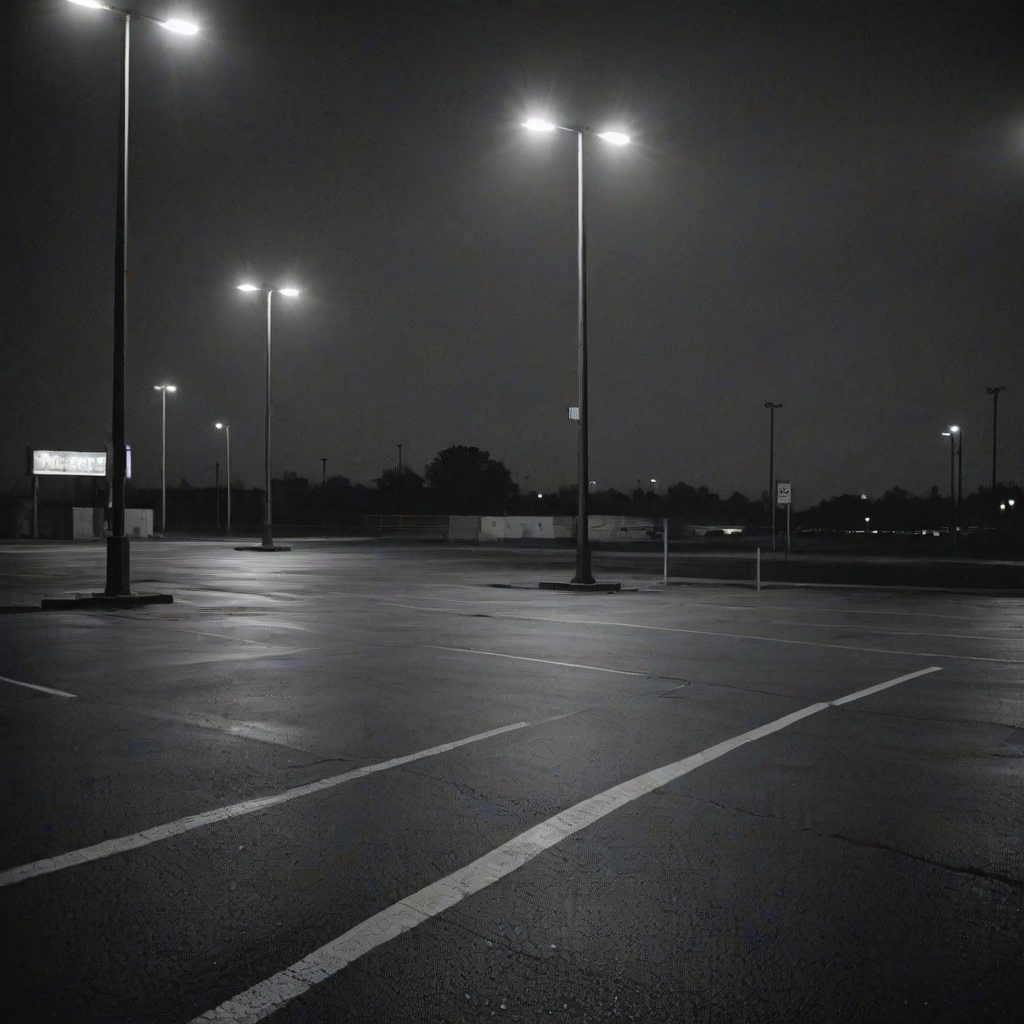
You walk across the parking lot at night and the parking lot at night is the widest loneliest walk in any city. The fluorescent lights buzz on their poles and the buzzing on their poles casts a flat white light that makes everything look like evidence. The parking lot at night looks like a crime scene even when no crime has happened because the flat light and the empty space and the silence create the atmosphere of something wrong. The parking lot at night in the rain is the most cinematic space in any city because every film noir knew that the parking lot was where the danger lived. Not in the building. In the parking lot between your car and the door. The parking lot. Fifty steps of exposure. Fifty steps of nothing between you and the building. Fifty steps of asphalt and painted lines and the painted lines lead nowhere because a parking lot has no destination. The parking lot is the space you cross. The parking lot is the space you survive. The parking lot is the space.