 JOHN SINCLAIR
PARKING GARAGE
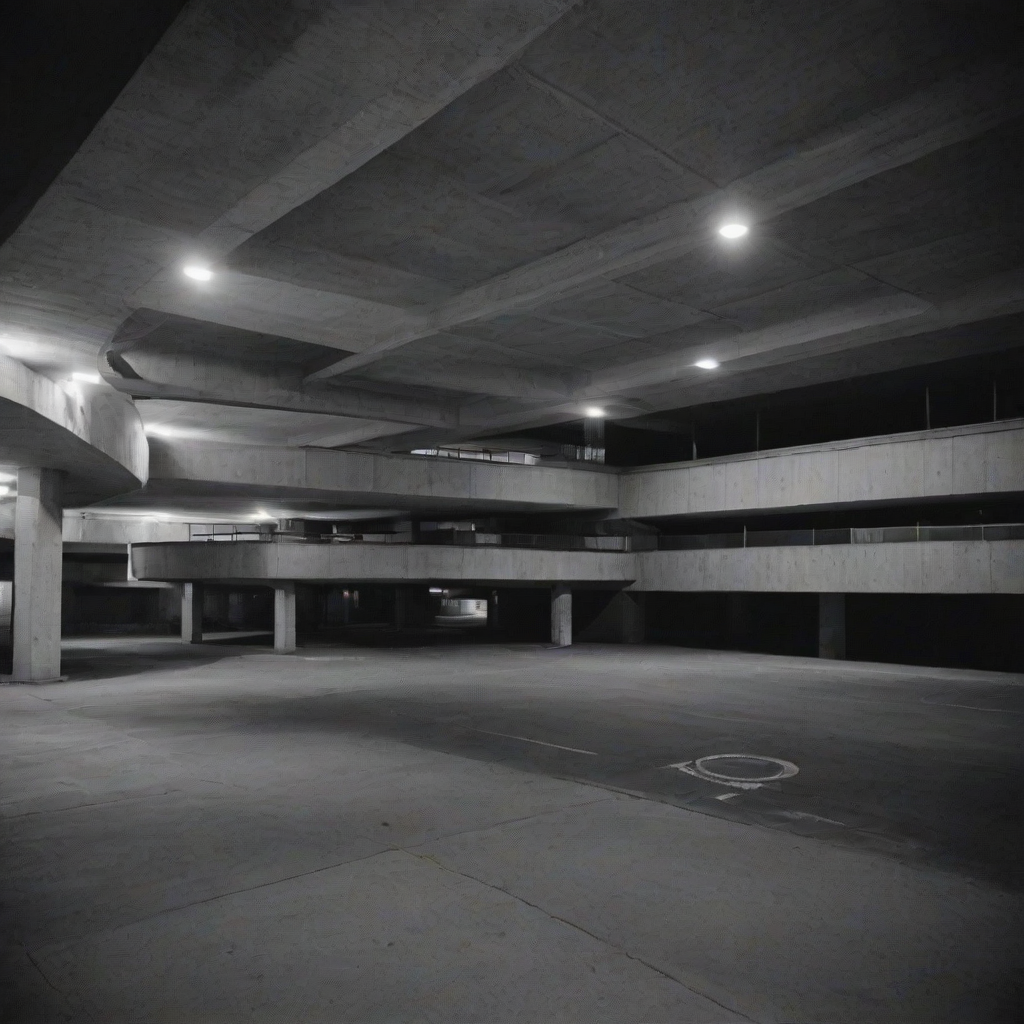
You drive up the ramp and the ramp spirals and every floor looks the same. The concrete is the same. The fluorescent lights are the same. The arrows painted on the floor are the same. You are on the third floor or the fifth floor and you do not know which because the parking garage does not want you to know which. The parking garage wants you to park and leave and come back and pay and the paying is the point. The parking garage is not architecture. The parking garage is storage. You are storing your car the way you store your winter coat and the parking garage has the same relationship to your car that the closet has to your coat. No affection. Just space.
The first parking garage opened in Detroit in nineteen twenty nine and the opening was inevitable because Detroit made more cars than any city had streets for. The car needed a home when it was not being driven and the home was the garage and the garage was vertical because the land was expensive and the vertical was cheaper than the horizontal when you calculated by the square foot. The Hotel La Salle in Chicago had a parking garage in nineteen eighteen but the Detroit garage was the first built only for parking. Only for waiting. The car waits in the garage the way a dog waits at home and the waiting is patient and the patience is mechanical.
Le Corbusier put the parking garage on the roof of the Unite d'Habitation in Marseille in nineteen fifty two because Corbusier believed the car deserved to live where the people lived. The rooftop garage meant you drove your car up the building and parked it in the sky and the sky parking was the future that Corbusier imagined. The future did not arrive. The rooftop became a playground and a gymnasium and the cars were moved to the ground because the ground is where cars belong. Corbusier was wrong about the car. Corbusier was wrong about a lot of things. But Corbusier was right that the parking garage is the building that reveals what a city truly values and what Detroit valued in nineteen twenty nine was the automobile and what every city has valued since is the automobile and the parking garage is the temple.
You lose your car in the parking garage. Everyone loses their car in the parking garage. You walk the rows pressing the key fob and listening for the chirp and the chirp is the car calling to you like a bird in a concrete forest. The parking garage at the airport is the worst because the parking garage at the airport is the size of a neighborhood and the neighborhood has no landmarks and the no landmarks is the cruelty. You have been traveling for twelve hours and you are tired and you cannot find your car and the parking garage does not care because the parking garage has never cared. The parking garage is the most indifferent building in the city. The parking garage does not know your name. The parking garage knows your ticket.
You stand on the top floor of the parking garage at night and the city spreads below you and the spreading is the view that the parking garage gives you for free. The parking garage is the poor person's observation deck. The parking garage rooftop is where teenagers go to look at the skyline and the looking is the dreaming and the dreaming is the city making its pitch. Look at me. Look at what I built. The parking garage shows you the city and then charges you four dollars an hour for the privilege and the four dollars is the price of the view and the view is worth it because the view from the top of a parking garage is the most honest view in any city. No gardens. No restaurant. No velvet rope. Just you and the concrete and the sky and the city below doing what the city does. Moving. Always moving. While your car sits still.