 JOHN SINCLAIR
OVERPASS
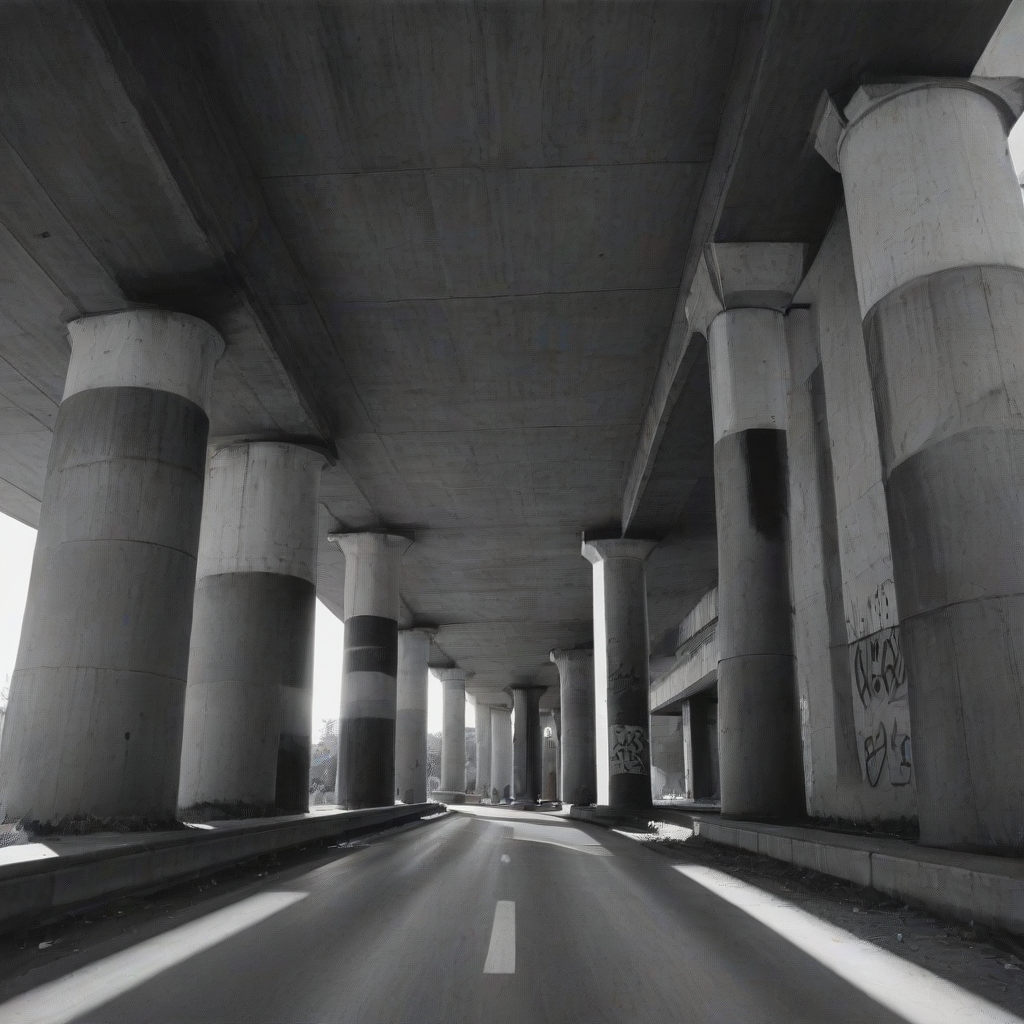
You drive under the overpass and for three seconds you are inside the city's skeleton. The overpass is concrete and steel and rebar and the rebar is the bones and the concrete is the skin and the skin is cracked and stained and the stains are the city's age showing. The overpass does not pretend to be beautiful. The overpass does not pretend to be anything. The overpass carries traffic from one place to another place and the carrying is the only job and the job does not require decoration. You pass under it and you pass over it and neither passing asks you to notice and the not noticing is by design.
Robert Moses built overpasses on the parkways of Long Island in the nineteen twenties and thirties and he built them low. The overpasses on the Southern State Parkway have nine feet of clearance and the nine feet is not enough for a city bus. The bus cannot fit under the overpass and the bus not fitting means the people who ride the bus cannot get to Jones Beach and the people who ride the bus were Black and Puerto Rican and poor and the not getting to the beach was the point. Moses put segregation into concrete. The overpass does not have a sign that says you are not welcome. The overpass just has a height and the height is the policy and the policy is in the infrastructure and the infrastructure outlasts the man who built it. Moses died in nineteen eighty one and the overpasses are still nine feet.
Lee Friedlander spent decades photographing America from the driver's seat. The windshield was the frame and the rearview mirror was in the frame and the telephone poles were in the frame and the overpasses were always in the frame. Friedlander understood that the overpass is the American landscape. Not the mountain and not the meadow. The overpass. The thing you drive under on the way to somewhere else. The overpass is the most honest photograph of America because the overpass is what America actually looks like when America is not posing. America is concrete and lanes and exits and the exits have numbers and the numbers are the only poetry the highway allows.
Under the overpass the homeless build camps because the overpass is a roof that no one owns. The overpass keeps the rain off and the rain not falling on you is the definition of shelter and the shelter is free. The city tries to clear the camps and the camps come back because the overpass is still there and the rain is still there and the need is still there. The overpass that was built to move cars becomes a home for people the cars drive past. The overpass does not choose its tenants. The overpass just stands there and the standing is enough for someone who needs a ceiling.
You drive under the overpass and the shadow crosses your windshield and the shadow lasts one second and then the sun comes back and you are through. The overpass is behind you. The overpass is always behind you. Nobody drives toward an overpass. Everybody drives through one. The overpass is the architecture of between. Not here and not there. The overpass is the hyphen in the city's sentence and the hyphen connects two words that would not touch without it and the touching is the overpass and the overpass does not get credit for the connection. The overpass just holds.