 JOHN SINCLAIR
OPERA HOUSE
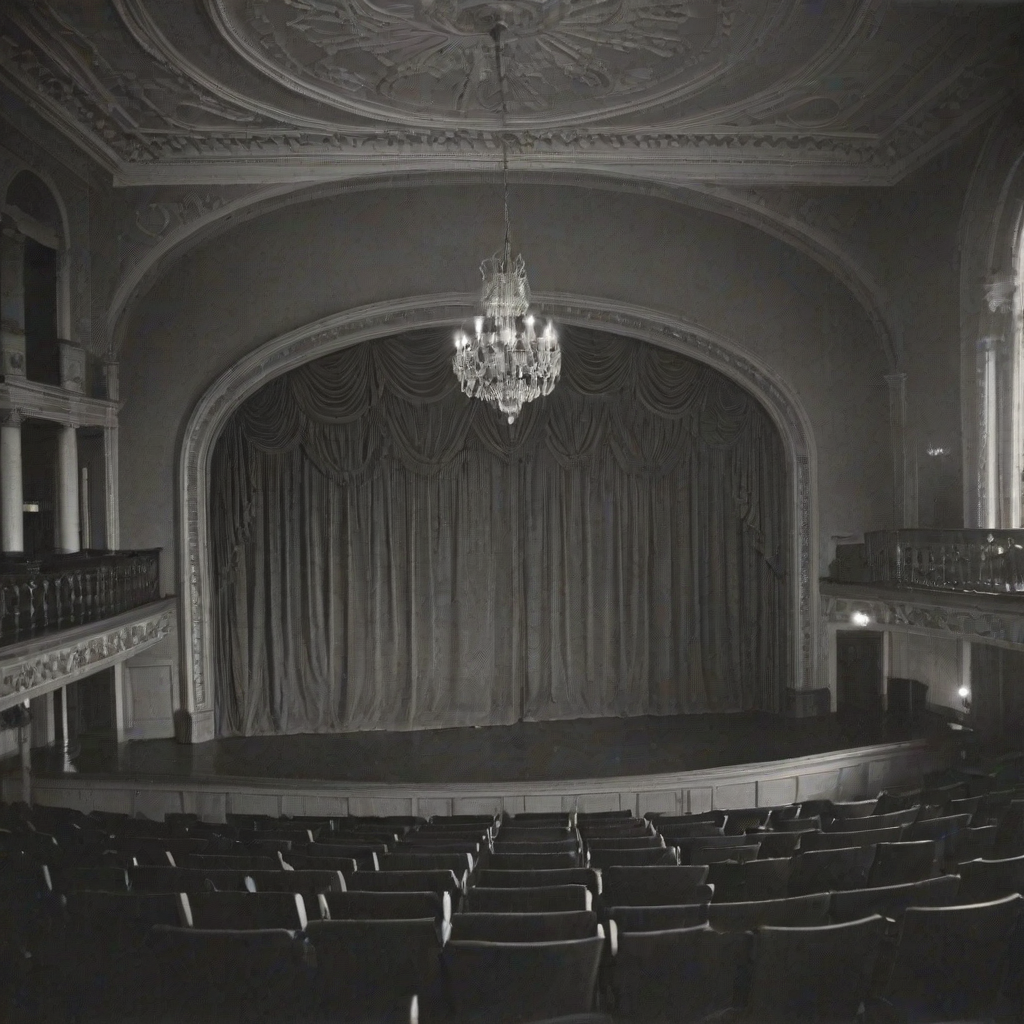
You climbed the stairs and the stairs were narrow and the narrow was the funnel that squeezed a whole town into one room. The opera house was on the second floor above the hardware store or the bank or the general store and the being on the second floor was the elevation and the elevation was the aspiration. The opera house was the room where the town looked up. Every other room in town was functional. The courthouse administered justice. The church administered salvation. The school administered education. The opera house administered wonder and the administering of wonder was the luxury that every town believed it deserved even when the town had three hundred people and the three hundred people had never heard an opera.
The opera house had almost nothing to do with opera. The opera house was the name that small towns in America gave to any room with a stage and a curtain between eighteen fifty and nineteen twenty. There were over nine hundred opera houses in the state of Ohio alone by nineteen hundred and the nine hundred in Ohio meant that a town with a blacksmith and a church and a post office also had an opera house and the having of an opera house meant the town considered itself civilized. The opera house hosted traveling theater companies and minstrel shows and political speeches and high school graduations and boxing matches and medicine shows and revival meetings and the hosting of boxing matches and revival meetings in the same room was the democracy of the opera house because the opera house did not choose sides. The opera house rented to whoever could fill the seats and the filling of the seats was the only standard.
The opera house was where the town performed itself. The church social was in the opera house. The Fourth of July pageant was in the opera house. The spelling bee and the debate tournament and the traveling lecturer who spoke about temperance or phrenology or the wonders of electricity were all in the opera house. The curtain went up and the town watched itself pretend to be something larger than it was and the pretending to be something larger was the culture and the culture was that a farmer who spent his days behind a plow could spend his Saturday night in a room with a proscenium arch and gilt trim and a chandelier that had been ordered from a catalog and the ordering from a catalog was the ambition that the opera house represented. The Chautauqua circuit brought lectures and music to opera houses across the Midwest and the bringing of lectures and music was the adult education that the opera house provided and the providing was free or nearly free because the opera house existed to elevate and the elevating was the mission.
The opera house was built by the merchant class. The richest man in town built the opera house the way the richest man in the city built the concert hall. The difference was that the richest man in town was the owner of the feed store and the owner of the feed store built an opera house that seated two hundred and put his name above the door. Piper's Opera House in Virginia City Nevada. Springer Opera House in Columbus Georgia. Tabor Opera House in Leadville Colorado built by Horace Tabor with silver money in eighteen seventy nine and the building with silver money was the frontier saying we are not savages. We have an opera house. The name above the door was the immortality that the merchant purchased for the price of construction and the price of construction was the philanthropy and the philanthropy was the deal that American capitalism has always offered which is that the rich man builds the room and the town gets to use it and the using it is the gratitude and the gratitude is the power.
The opera house is vanishing. The movie theater killed the opera house because the movie was cheaper than the touring company and the cheaper meant the opera house could not compete with a projector and a screen. The opera houses that survive have been restored by historical societies and the restoring by historical societies is the preservation that happens after the building has been empty long enough to become romantic. The opera house that was once the room where the town saw touring productions of Uncle Tom's Cabin is now the room where the town sees community theater productions of Our Town and the seeing of Our Town in a restored opera house is the nostalgia that proves the opera house is now a museum of itself. But the opera house understood something about small towns that America has forgotten which is that a town of three hundred people deserves a room with a stage and a curtain and a chandelier ordered from a catalog and the deserving is not pretension. The deserving is the belief that every community no matter how small has the right to sit in the dark together and watch the curtain go up and the watching the curtain go up is the gathering and the gathering is the civilization and the civilization starts when the stairs are narrow and the room is on the second floor and the whole town climbs.