 JOHN SINCLAIR
NEWSSTAND
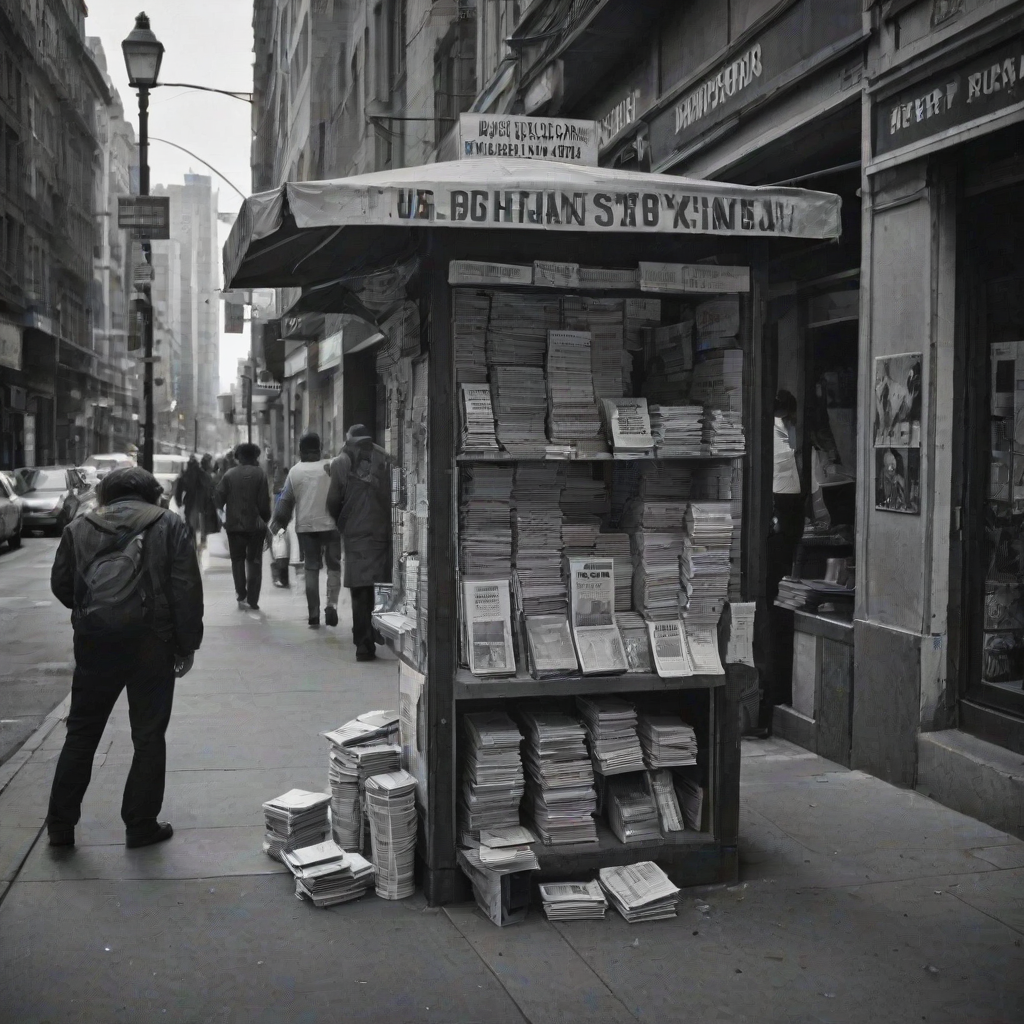
You stop at the newsstand and the whole world is stacked in rows. The newspapers are folded and the magazines are fanned and the candy bars are lined up like soldiers and the gum is in a rack and the cigarettes used to be behind the counter and the lottery tickets are where the cigarettes were and the whole thing is smaller than a parking space. The newsstand is the smallest store in the city and the smallest store sells the most things. You can buy the Times and a pack of Juicy Fruit and a postcard and a bottle of water and an umbrella that will break in twenty minutes and the breaking is fine because the umbrella cost three dollars and the rain will stop before the umbrella does.
The newsstand on Forty-Second Street and Sixth Avenue was the crossroads of print in New York for fifty years. The man inside knew every regular and the regulars came at the same time every morning and the morning was the newsstand's rush hour. The Daily News and the Post and the Times and the Wall Street Journal and they all landed on the counter before dawn and the landing was a thud and the thud was the sound of the news arriving. The man made change without looking at the money because the man's hands knew the coins by weight and the weight was the knowledge and the knowledge was faster than counting. The newsstand was a performance. The folding and the handing and the making change and the next customer and the rhythm never stopped until nine o'clock when the commuters were gone and the newsstand went quiet and the quiet was the intermission.
In Paris the kiosques have been selling newspapers since the eighteen sixties and Hector Guimard designed some of them to look like they grew out of the sidewalk the same way he designed the Metro entrances to look like they grew out of the ground. The kiosque is green and the green is the color of Paris street furniture the way yellow is the color of New York taxis. You buy Le Monde from a kiosque on the Boulevard Saint-Germain and the buying is an act of civilization because the kiosque assumes you want to know things and the wanting to know things is the foundation of a city that works. The kiosque does not ask what you want to know. The kiosque just offers everything and the offering is the democracy.
The newsstand is dying and everyone knows it. The phones killed the newspapers and the newspapers killed the newsstands and the newsstands are disappearing from the sidewalks of every city in the world. In New York there were twelve hundred newsstands in nineteen fifty and there are three hundred now and the three hundred are selling more water than news. The newsstand that sold you the paper now sells you a Snapple and the Snapple is not the same as the paper. The paper told you what happened. The Snapple tells you nothing. The newsstand is becoming a convenience store and the convenience store is not the same thing because the convenience store does not assume you want to know anything.
You pass the newsstand and the headlines face the street and the headlines are screaming because the headlines have always screamed. The headline is the newsstand's voice and the voice has been shouting since the penny press of the eighteen thirties when the New York Sun sold papers for a cent and the cent bought you the whole city's trouble for one day. The newsstand takes the scream and holds it at eye level and the eye level is the invitation and the invitation says stop and read and the stopping and the reading is the last act of a civilization that believed you should know what happened before you got to work.