 DAVID PEEL
Newel Post
The newel post was the first thing you touched when you entered the building. The thick wooden post at the bottom of the banister. You grabbed it and you turned and you went up the stairs. The newel post was the handshake between you and the building. Every tenant grabbed the same post in the same place and the wood was smooth where ten thousand hands had polished it.
The newel post was carved. A ball on top or a pineapple or an acorn or a shape that had no name. The shape was the builder's signature. You could tell who built the building by the newel post the way you could tell who painted a painting by the brushstroke. The newel post was the first impression. The builder spent money on the newel post because the newel post was the introduction.
My building's newel post was mahogany. Dark. Heavy. The ball on top was loose and it spun when you grabbed it. Every kid in the building spun the ball. The ball was the toy the building provided. Free. Permanent. You could not break it and you could not lose it and it was always there when you came home. The spinning ball was the building's way of saying welcome back.
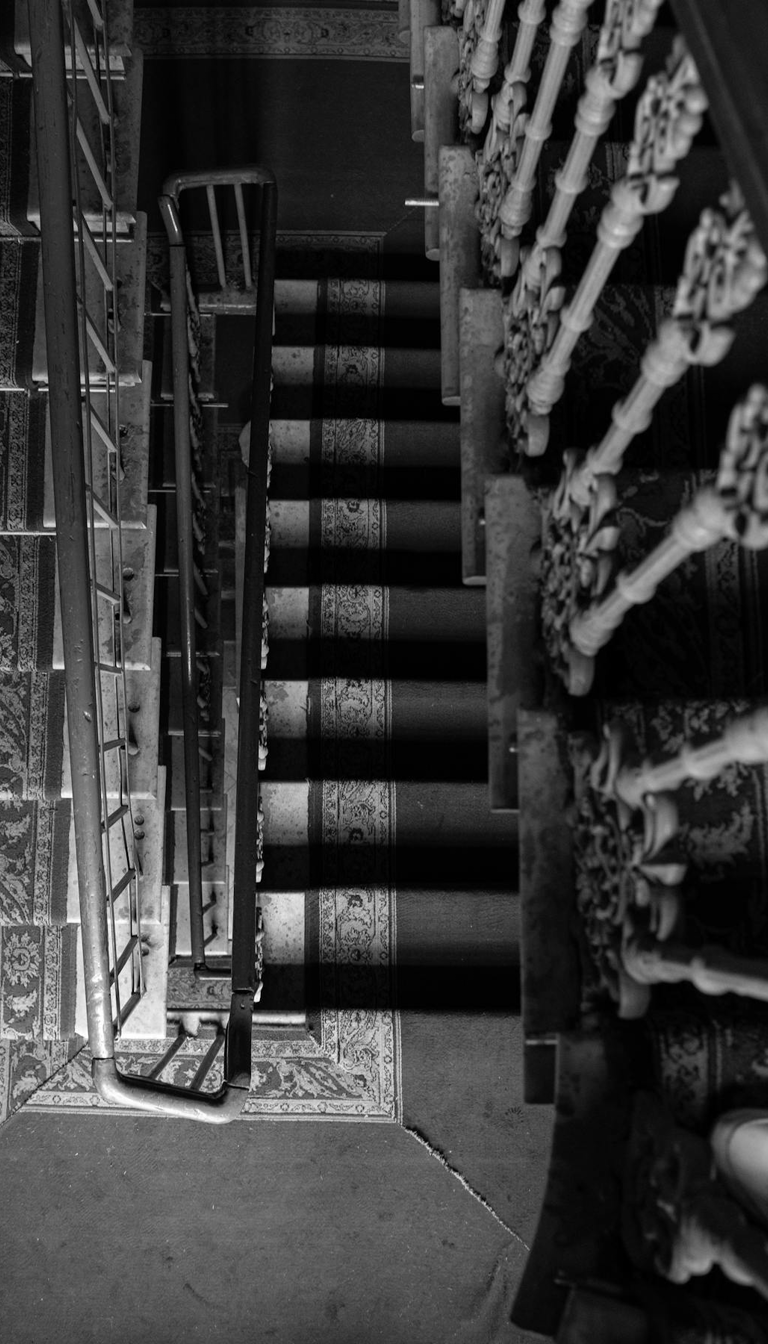
The banister went up from the newel post like a river from its source. Oak railing. Iron balusters. The banister was the highway and the newel post was the on-ramp. Without the newel post the banister had no beginning. Without the beginning the staircase was just stairs. The newel post turned stairs into an ascent.
They do not carve newel posts anymore. The new buildings have metal railings bolted to the wall. No post. No ball. No introduction. You enter the building and there is nothing to grab. The staircase starts without permission. The metal railing is bolted on like an afterthought. The newel post was the building saying I was made by someone who cared about the first thing you touch. The metal railing says nothing.