 JOHN SINCLAIR
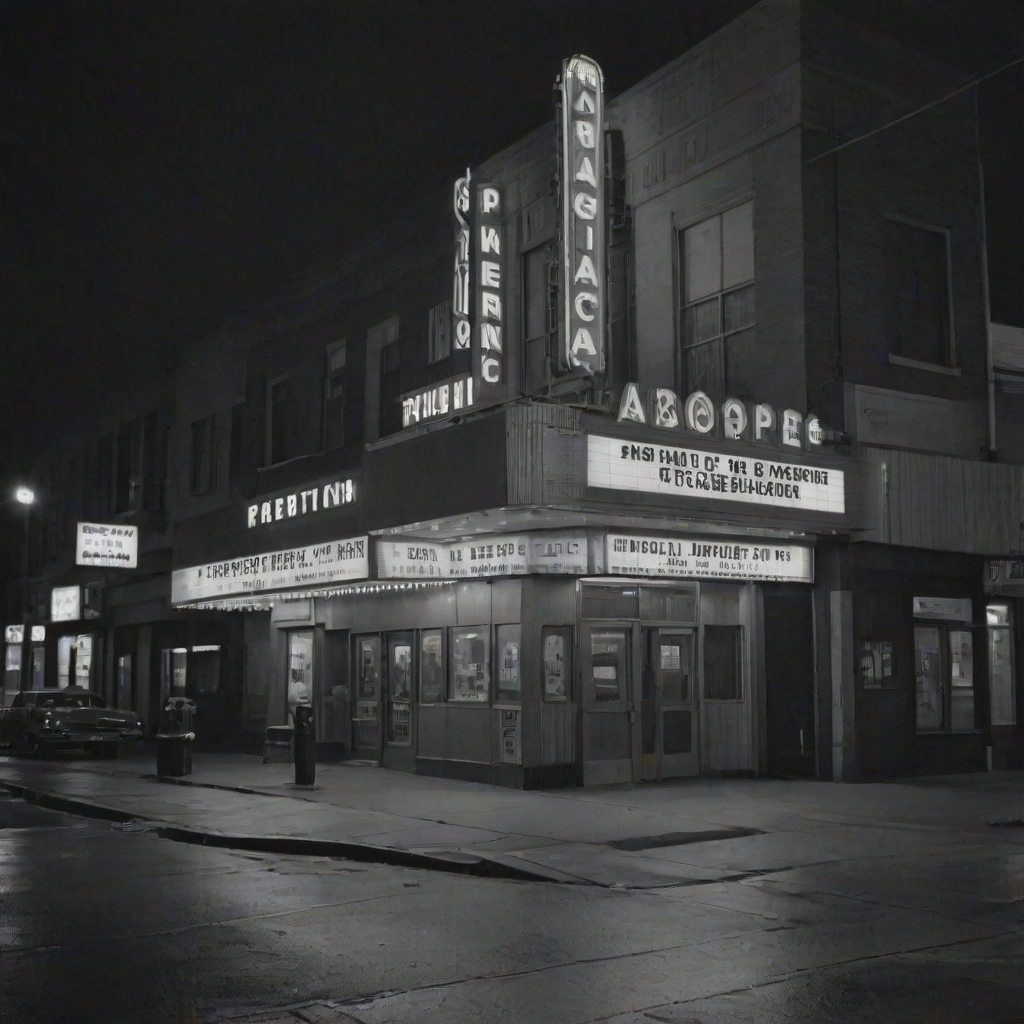
MOVIE THEATER
You walked into the dark and the dark was the agreement. You agreed to sit next to strangers and feel things together and the feeling together was the product. The movie theater did not sell movies. The movie theater sold the permission to be in a room with two hundred people and laugh at the same time or cry at the same time and the same time was the miracle. The screen was bigger than anything you owned and the bigness was the escape and the escape was worth the price of admission which was a nickel and then a dime and then a quarter and then a dollar and then twelve dollars and the twelve dollars was the price at which the agreement began to fail because at twelve dollars you could wait and watch it at home and the watching at home was alone and the alone was the loss that no one measured.
Harry Davis and John P. Harris opened the Nickelodeon in Pittsburgh Pennsylvania on June nineteenth nineteen oh five. The Nickelodeon was not the first place to show movies but it was the first place built to show movies and nothing else. The building had ninety six seats and the admission was five cents and the five cents was the name. Nickel for the coin and odeon from the Greek for theater. Davis and Harris showed The Great Train Robbery on a loop and the loop ran from eight in the morning until midnight and the running from morning to midnight meant you could see a movie whenever you wanted and the whenever was the revolution. Before the Nickelodeon you saw movies at vaudeville houses between acts or at traveling shows that set up in tents and the setting up in tents meant movies were an event. After the Nickelodeon movies were a habit. By nineteen ten there were ten thousand nickelodeons in America and the ten thousand nickelodeons were the first entertainment in history that the poor could afford every week and the every week was the addiction and the addiction built Hollywood.
The movie palace was the poor man's cathedral. S. L. Rothafel opened the Roxy in New York City on March eleventh nineteen twenty seven and the Roxy had five thousand nine hundred and twenty seats and the five thousand nine hundred and twenty seats had velvet cushions and the velvet was the point. The movie palace said you deserve marble and gilt and a ceiling painted with stars and the saying was the lie that felt true for two hours. The Roxy had ushers in uniforms and the uniforms had brass buttons and the brass buttons were the dignity that the ticket purchased. The balcony was the democracy of the movie palace. The balcony was cheaper and farther from the screen and the farther from the screen was the class and the class was visible because you could look down and see the people who paid more sitting closer and the looking down was the vantage that the poor rarely got in America. In the segregated South the balcony was where Black audiences were required to sit and the requiring was the humiliation and the humiliation was architecture. The balcony that was democracy in the North was Jim Crow in the South and the same architectural feature meant freedom in one building and oppression in another and the meaning depended on who built the building and who decided who sat where.
The projectionist was the most important person in the building and the most invisible. The projectionist sat in a booth above the audience and the booth had a small window and through the small window the projectionist controlled everything you saw and heard. The projector was a machine that could kill you. The film was cellulose nitrate and the cellulose nitrate was flammable and the flammable meant that the projectionist was a technician and a firefighter and the combination paid seven dollars a day in nineteen thirty and the seven dollars was not enough for the responsibility but the responsibility was the craft. The projectionist threaded the film and the threading was the ritual and the ritual happened forty times a day and the forty times a day was the repetition that made the projectionist invisible and the invisible was the tragedy because the projectionist was the person without whom the dark room full of strangers was just a dark room.
The single-screen movie theater is vanishing at a rate that exceeds every other gathering place in this series. There were twenty three thousand single-screen theaters in America in nineteen ninety five. There are fewer than five thousand today. The multiplex killed the single-screen by offering choice and the choice was the weapon. Why drive to one screen showing one movie when you could drive to sixteen screens showing sixteen movies. The multiplex was efficient and the efficiency was the murder. The single-screen had a marquee and the marquee had letters that someone climbed a ladder to change by hand and the changing by hand was the announcement and the announcement was the event. The multiplex has a digital sign that changes itself and the changing itself is the automation and the automation does not require a ladder or a person or a hand. The single-screen movie theater is still there in the towns that are too small for a multiplex and too proud to let the building die. The marquee still has letters. Someone still climbs the ladder. The dark is still the agreement. The agreement is still that you will sit next to a stranger and feel something at the same time and the same time is still the miracle that no screen in your pocket has ever replicated.