 JOHN SINCLAIR
MORTAR
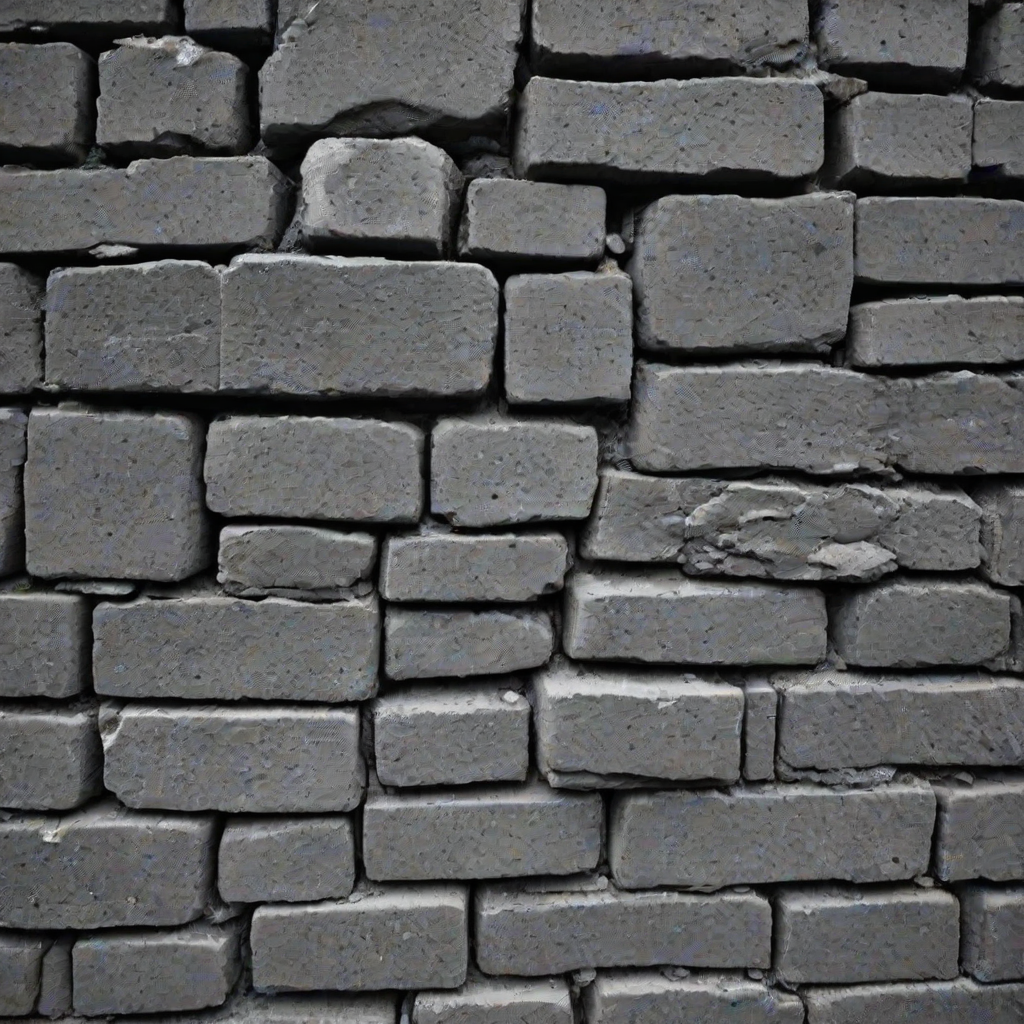
You see the mortar and the mortar is the paste between the stones. The mortar is not the wall. The mortar is the space between the wall. The mortar fills the joints between bricks or stones and the filling the joints binds the units into a single mass that acts as one structure. Without mortar you have a dry stone wall and a dry stone wall relies on gravity and friction alone. With mortar you have a bonded wall and a bonded wall can resist forces that would push a dry wall apart. The mortar is weaker than the brick. The mortar is supposed to be weaker than the brick. When the wall moves the mortar cracks first and the cracking first protects the bricks because replacing mortar is cheap and replacing bricks is expensive.
Roman mortar contained volcanic ash from Pozzuoli near Naples and the volcanic ash is why Roman concrete has lasted two thousand years while modern Portland cement concrete cracks in fifty. The Romans called it pulvis puteolanus after the town of Puteoli and the calling it after the town means every bag of pozzolanic cement carries the name of a Roman port city. The volcanic ash reacts with lime and seawater to form aluminum tobermorite crystals and the forming crystals means the concrete gets stronger over time instead of weaker. The concrete in the harbors at Caesarea and in the Pantheon and in the Colosseum contains this ash. Modern engineers studied cores from Roman breakwaters and found that seawater infiltration actually strengthened the mortar by growing new mineral bonds within the cracks. Roman concrete heals itself. Modern concrete does not. The Romans built a mortar that improves with age and we built a mortar that deteriorates with age and the difference is volcanic ash from a hillside near Naples.
The mortar joints at the Empire State Building total ten million bricks held by sixty two thousand cubic yards of mortar mixed on site during construction. The building went up at a rate of four and a half floors per week in nineteen thirty and the four and a half floors per week meant the masons laid mortar faster than any building project in history. The mortar was lime and Portland cement and sand and the lime and Portland cement and sand was mixed in batches on the steel deck and carried to the masons in buckets. Each mason laid about four hundred bricks a day and each brick required mortar on two faces and the mortar on two faces meant eight hundred applications of mortar per mason per day. Three thousand men worked the site. The mortar dried in the wind at altitude and the drying in the wind meant the masons had to work fast because mortar that dries before the brick is placed will not bond. Speed was the method. The Empire State Building was completed in four hundred and ten days. The mortar set. The bricks held. Ninety six years later the building stands.
Repointing a single brownstone in Brooklyn costs thirty thousand dollars because every joint must be raked and filled by hand. Repointing is the removal of old mortar and the replacement with new mortar and the removing and replacing is necessary because mortar deteriorates before brick. The mason rakes the joint to a depth of three quarters of an inch and the raking to three quarters of an inch gives the new mortar enough depth to bond. The new mortar must match the old mortar in composition and color and hardness and the matching in hardness is critical because mortar that is too hard will crack the brick and mortar that is too soft will wash out. Portland cement mortar is too hard for old brownstone. Lime mortar is what the original builders used. The brownstones of Brooklyn were built with soft lime mortar that breathes and flexes and the breathing and flexing allows moisture to escape through the joints rather than through the stone. Put hard mortar on soft stone and the stone spalls. The mortar must be the servant of the stone. The mortar must be willing to fail first.
You run your finger along the mortar joint and the mortar is rough and gritty and the rough and gritty is the sand and the sand is the skeleton of the mortar. The mortar. The paste between the stones. The Roman volcanic ash that heals in seawater. The sixty two thousand cubic yards at the Empire State. The thirty thousand dollars on a Brooklyn brownstone. The space between. The thing that holds the wall together by being weaker than the wall. The mortar cracks so the brick does not. The mortar fails so the wall survives. That is the arrangement. The mortar serves. The wall stands.