 JOHN SINCLAIR
MILLRACE
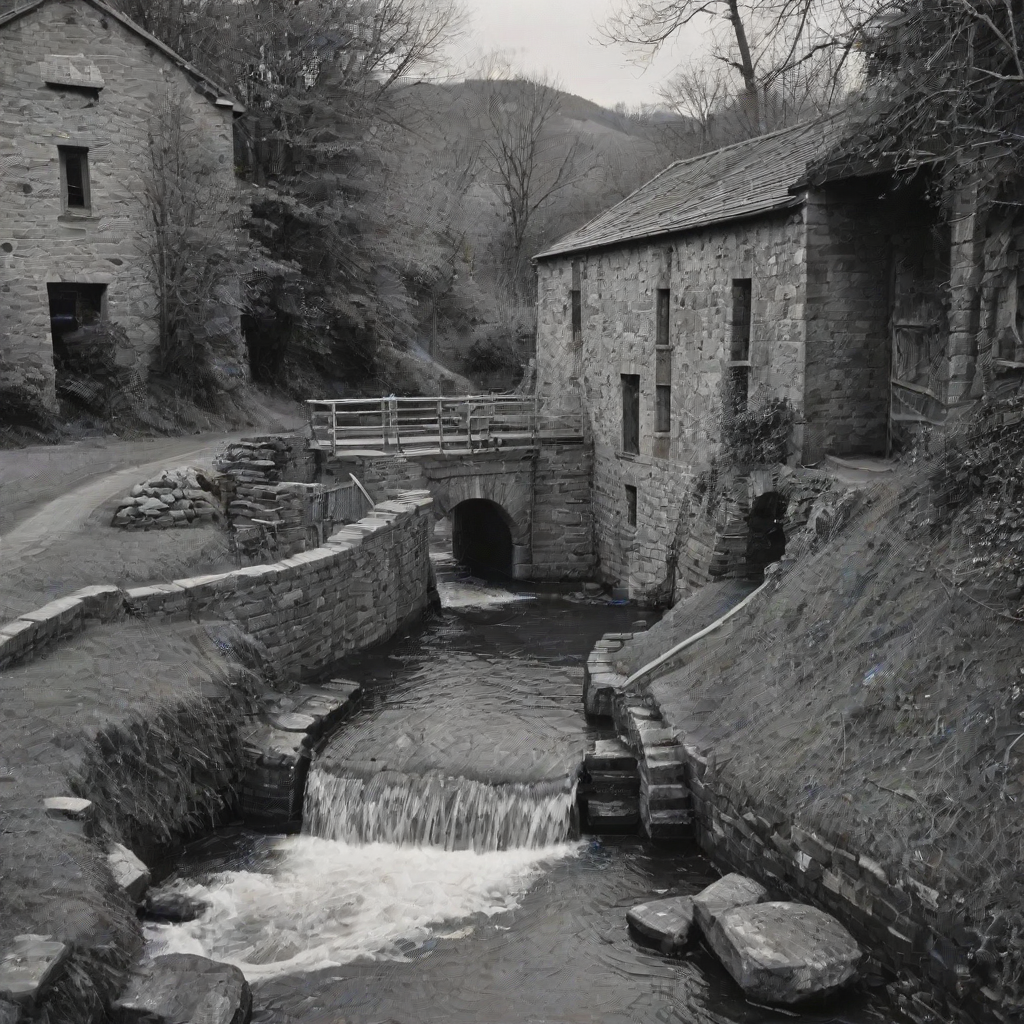
You follow the millrace and the millrace is the channel that carries the river to the wheel. The millrace is not the river. The millrace is a canal dug alongside the river and the canal diverts part of the river's flow and the diverting part of the flow means the millrace controls the water that the river cannot control itself. The river floods. The river dries. The river does what it wants. The millrace does what the miller wants. The sluice gate opens. The water enters the millrace. The water flows at a controlled rate to the wheel. The wheel turns. The mill runs. The millrace is the first step in turning moving water into moving machinery.
The millrace at Lowell Massachusetts powered forty cotton mills and the forty mills employed ten thousand workers in eighteen forty. Francis Cabot Lowell had visited the textile mills of Manchester England and the visiting Manchester meant Lowell understood that water power was the engine of industry. He built the Merrimack Canal to divert water from the Merrimack River and the Merrimack Canal became the most complex system of millraces in America. The canals ran through the city at different levels and the different levels meant the water could be used and reused as it dropped from one millrace to the next. A single river powered an entire city because the millraces multiplied the river's work. The mill girls of Lowell came from the farms of New England to work the looms and the working the looms meant they stood twelve hours a day in rooms where the noise of the machines was so loud they communicated by reading lips. The millrace brought them there. The millrace powered the machines they served.
The millrace at New Lanark in Scotland powered Robert Owen's utopian experiment. Owen bought the cotton mills at New Lanark in eighteen hundred and the buying in eighteen hundred meant Owen inherited a workforce of two thousand people including five hundred children some as young as five. The mills were powered by millraces from the River Clyde and the millraces from the Clyde gave Owen the power to run the largest cotton mill in Scotland. But Owen used the power differently. Owen shortened the working day. Owen refused to employ children under ten. Owen built schools and housing and a cooperative store. The millrace at New Lanark powered a factory that was also a social experiment. The water turned the wheels and the wheels turned the spindles and the spindles produced the cotton that paid for the schools that educated the children that the previous owners had worked to exhaustion. The millrace was the same. The mill was different. Owen proved that the power was neutral. The question was what you did with it.
In the American colonies the millrace was the center of the settlement. The first thing a new town built after the church was the mill and the first thing the mill needed was the millrace. The millrace required a dam and a channel and a wheel and the dam and channel and wheel required a millwright and the millwright was among the most valued tradesmen in colonial America. The millrace at the Slater Mill in Pawtucket Rhode Island powered the first water-powered cotton spinning factory in America in seventeen ninety three and the powering the first factory meant the millrace at Slater Mill started the American Industrial Revolution. Samuel Slater memorized the designs of the English spinning machinery and brought them to America in his head because the British had made it illegal to export the designs. The millrace at Pawtucket carried the river to the wheel that turned the machinery that Slater carried across the Atlantic in his memory.
You stand by the millrace and the water flows. The water is steady. The water does not surge or slow because the sluice gate regulates the flow and the regulating the flow is the millrace doing its work. The millrace. The channel alongside the river. The forty mills at Lowell. The utopian experiment at New Lanark. The first factory at Slater Mill. The leash on the river. The wild water made useful. The sluice opens. The water enters the channel. The wheel turns. The mill runs. The millrace carries the river to the work and the work begins where the water arrives.