 JOHN SINCLAIR
MEDIAN
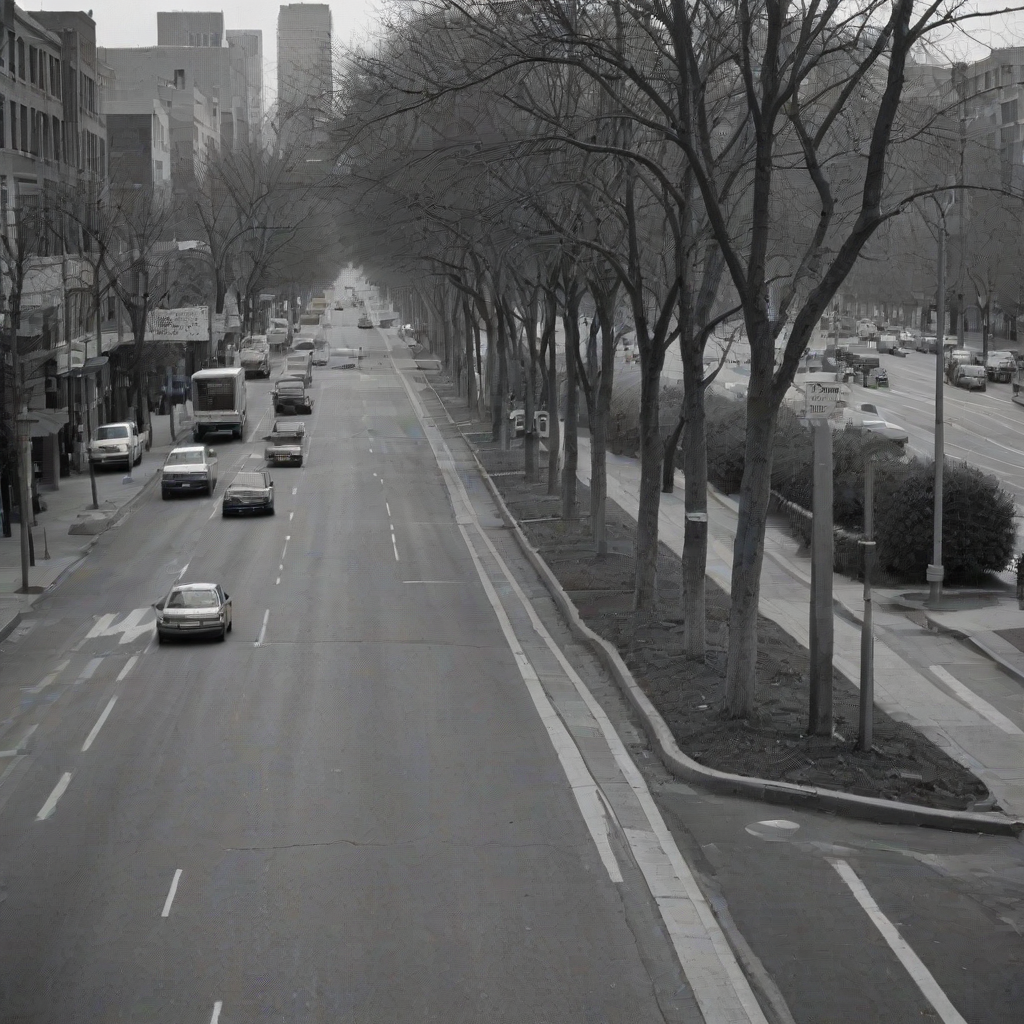
You stand on the median and you are in the middle of the road and the middle of the road is no place for a person. The cars pass on both sides and the passing is the wind and the wind from the cars is the median's weather. The median is three feet wide or thirty feet wide and the width determines whether the median is a refuge or a park and the difference between a refuge and a park is whether you can sit down. The three-foot median is the refuge. You stand there waiting for the light to change and the standing is the stranding. You are stranded in the middle of the road and the stranding is the city's design flaw and the design flaw is that the road is wider than one green light can cross.
Frederick Law Olmsted put medians on Eastern Parkway in Brooklyn in eighteen seventy and the medians were for walking and the walking in the middle of traffic was the promenade. Olmsted believed the median could be a boulevard and the boulevard was a French invention and the French invention was a row of trees between lanes of traffic and the row of trees between lanes of traffic is the most optimistic piece of urban design ever conceived. Trees in traffic. Shade in speed. The idea that you could plant a forest in a road and the forest would survive and the surviving forest would make the road civilized. Eastern Parkway still has its medians and the medians still have trees and the trees are a hundred and fifty years old and the hundred and fifty years is Olmsted's victory over the automobile that had not yet been invented when he planted them.
The median on Park Avenue in Manhattan has tulips in the spring and the tulips cost the city eleven dollars each and the city plants sixty thousand tulips and the sixty thousand times eleven is six hundred and sixty thousand dollars in tulips and the six hundred and sixty thousand dollars in tulips is the price of beauty in traffic. The tulips bloom for two weeks. Two weeks of color between lanes of taxis. The median on Park Avenue is the most expensive garden in New York and the most expensive garden in New York is three feet wide and runs from 46th Street to 96th Street and the running from 46th to 96th is fifty blocks of flowers that no one stops to smell because you cannot stop on Park Avenue. You can only drive past and the driving past the tulips is the glance and the glance is all the median gets.
In Houston they put highways where the medians should be and the putting of highways where medians should be is Houston's answer to every question about urban design. Houston does not have medians. Houston has HOV lanes. Houston does not have boulevards. Houston has frontage roads. The absence of the median in Houston is the absence of the pause and the absence of the pause is the speed and the speed is Houston. The fastest growing city in America and the fastest growing city does not have time for medians because medians slow things down and the slowing down is the median's function and the function is the opposite of what Houston wants. Houston wants to go. The median wants you to wait.
You cross the road and you reach the median and you stop and you stand there and you wait. The median is the halfway point. The median is the intermission in the performance of crossing the street. Act one is the curb to the median. Intermission is the standing. Act two is the median to the other curb. The median divides the crossing into manageable pieces and the manageable pieces are the mercy because the full crossing is too far and the too far is dangerous and the dangerous is why the median exists. The median exists because the road is too wide for one crossing and the too wide is the city admitting that it built the road for cars and then remembered that people need to cross it. The median is the afterthought. The median is the apology. The median is the narrow strip of concrete or grass or tulips that says we know you are here and we are sorry the road is so wide.