 JOHN SINCLAIR
LODGE HALL
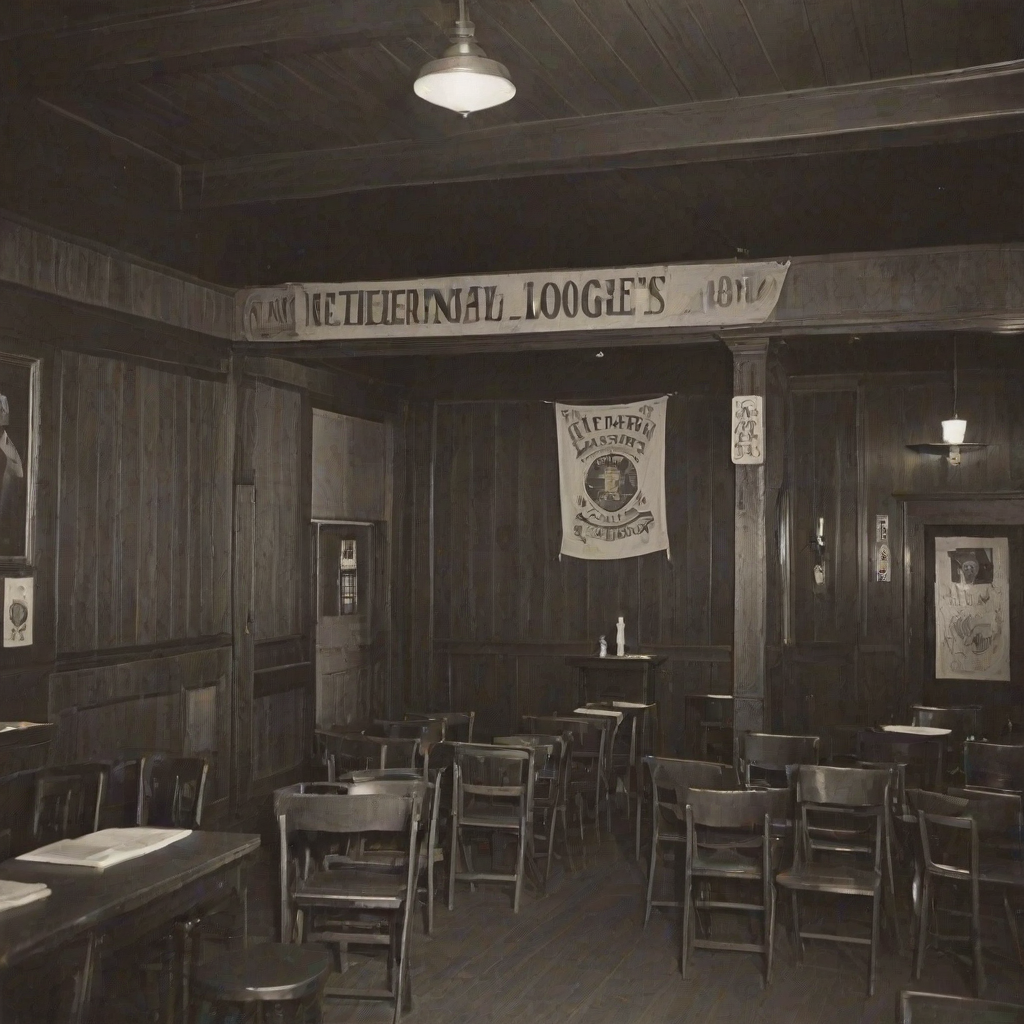
The lodge hall was a room above a store. The room had folding chairs and a lectern and a flag and the flag was not the American flag. The flag was the lodge's flag and the lodge's flag had symbols on it that meant something to the members and nothing to everyone else and the nothing was the point. The lodge was private. The lodge was intentionally private. The privacy was the product. The lodge gave men a room that was not their home and not their workplace and not their church and the not being any of these things was the freedom. The lodge hall was the third place before anyone called it the third place. The sociologist Ray Oldenburg named the concept in nineteen eighty nine but the Elks and the Moose and the Odd Fellows and the Eagles had been operating third places since the eighteen hundreds and the operating did not need a name because the operating was obvious. Men needed a room. The lodge was the room.
The fraternal lodge movement peaked in the nineteen twenties when one in three American men belonged to a lodge. The Freemasons had four million members. The Odd Fellows had three million. The Knights of Pythias had two million. The Elks and the Eagles and the Moose and the Woodmen of the World and the Improved Order of Red Men and the Ancient Order of United Workmen each had memberships in the hundreds of thousands. The memberships were not casual. The memberships required an initiation and the initiation required a ritual and the ritual required secrecy and the secrecy was the glue. You could not tell outsiders what happened in the lodge and the not telling made the lodge special and the special made you special because you belonged to something that not everyone could belong to. The lodge was the opposite of the town hall. The town hall was open to everyone. The lodge was open to members. The openness was the town hall's strength. The exclusivity was the lodge's.
The lodge hall was the first American insurance company. The lodge collected dues and the dues funded a death benefit and the death benefit was paid to the member's widow and the payment was the reason most men joined. The death benefit was not charity. The death benefit was the contract. You paid your dues every month and when you died your family received enough money to bury you and survive the first year and the surviving was the promise. The Odd Fellows called their death benefit the funeral fund. The Woodmen of the World put headstones on their members' graves and the headstones were shaped like tree stumps and the tree stumps are still visible in cemeteries across the South and Midwest and the visibility is the legacy. The lodge invented mutual aid before the government invented social security. Social Security was signed in nineteen thirty five. The Odd Fellows had been paying death benefits since eighteen nineteen. The government was a hundred and sixteen years late.
The lodge hall was the center of Black civic life in every American city from Reconstruction through the civil rights movement. The Prince Hall Masons were founded in seventeen seventy five when Prince Hall and fourteen other free Black men were initiated into a British military lodge in Boston and the initiation was the beginning of the largest and oldest Black fraternal organization in the world. The Prince Hall lodge provided what the white lodge provided and what white America did not provide. Insurance. Meeting space. Leadership training. A network. The network was the power. When a Black man moved from Alabama to Detroit in nineteen twenty three the first thing he did was find the Prince Hall lodge and the finding was the lifeline. The lodge told him where to find work and where to find housing and where not to go and the telling was the survival guide that the city did not publish. The Elks had a parallel Black organization. The Odd Fellows had a parallel Black organization. Every fraternal order in America had a parallel Black organization and the parallel was the segregation and the segregation was the country.
The lodge hall is emptying. The membership rolls have dropped from tens of millions to single digit millions and the dropping has been continuous since the nineteen sixties. The Elks have a million members where they once had two million. The Moose have seven hundred thousand where they once had a million and a half. The Odd Fellows have a hundred thousand where they once had three million. The emptying is the same emptying that Robert Putnam described in Bowling Alone and the description is accurate but incomplete. The lodge did not die because men stopped needing a room. The lodge died because men found other rooms. The bar. The gym. The internet. The rooms are different. The bar does not have a death benefit. The gym does not have a ritual. The internet does not have folding chairs. The lodge hall offered all of these things in one room and the offering was too much for a generation that preferred to choose its own rooms. But the room above the store is still there in most American towns. The folding chairs are still there. The lectern is still there. The flag with the symbols that meant something to the members and nothing to everyone else is still hanging on the wall and the symbols still mean something. They mean that men once gathered in a room every Thursday night and paid their dues and learned a handshake and promised to take care of each other's families and the promise was kept.