 DAVID PEEL
Lintel Bar
The lintel bar was a steel angle iron set into the masonry above a window or a door. The bar carried the weight of the brick above the opening. Without the lintel bar the brick above the window would collapse into the window because brick cannot span an opening on its own. Brick is strong in compression. Brick is weak in tension. The lintel bar was the tension member that the brick could not be. The steel held the brick and the brick held the building and the building held the family.
The lintel bar was an L-shape. Two flanges meeting at a right angle. One flange sat horizontal under the brick. The other flange stood vertical behind the brick. The vertical flange hid behind the facade. The horizontal flange hid under the mortar joint. The lintel bar was invisible from the street. You could not see the steel that held the wall up. The wall looked like it held itself up. The wall was taking credit for the work the lintel bar was doing. The lintel bar did not mind. The lintel bar was not doing the work for the credit.
The lintel bar rusted. Steel rusts. The rust expanded and the expansion pushed the brick out and the brick cracked along the mortar joint directly above the lintel. The crack was horizontal. A horizontal crack above a window or a door meant the lintel bar was rusting. The crack was the symptom. The rust was the disease. The fix was to remove the brick above the opening and replace the lintel bar and relay the brick. The fix was expensive because the fix required access to the part of the wall that was hiding the problem.
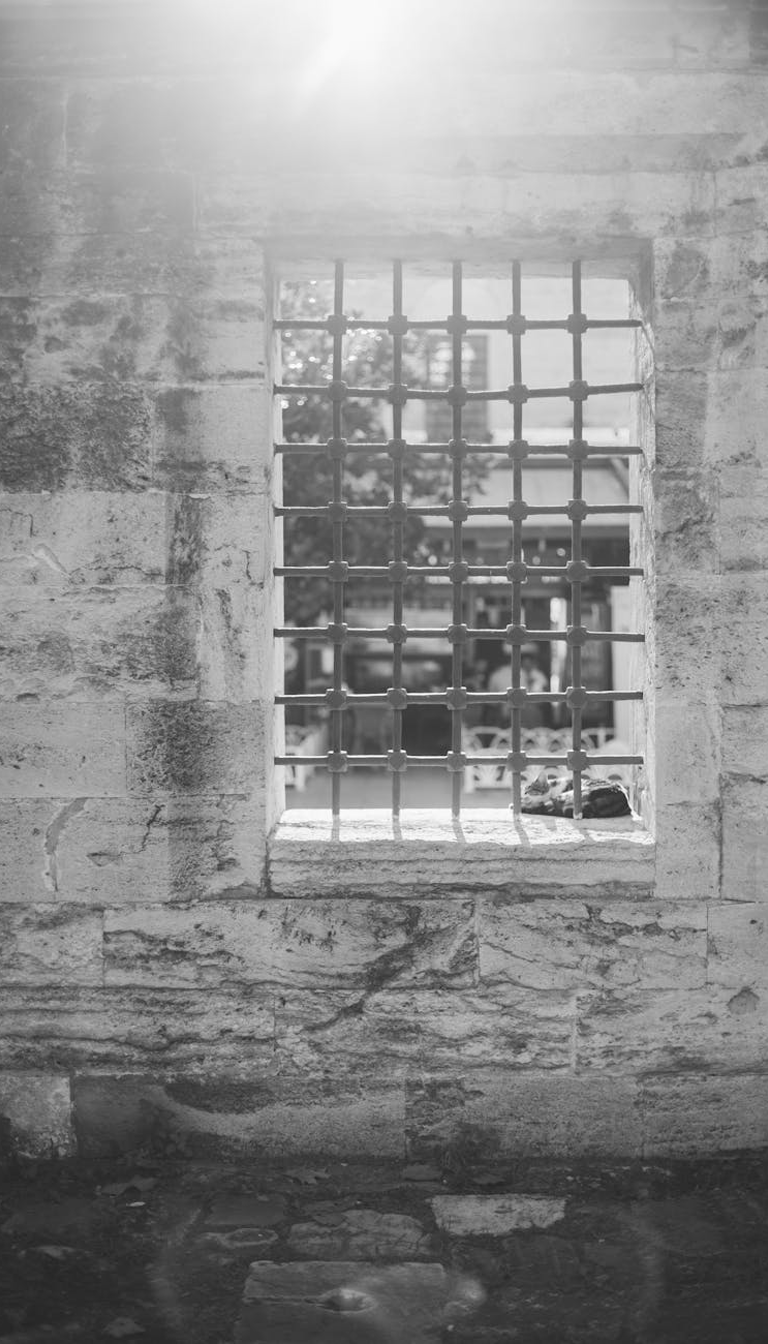
The stone lintel came before the steel bar. A single stone spanning the opening. The stone lintel was the architrave of the window. The stone was heavy and the stone was expensive and the stone cracked if the span was too long. Steel replaced stone because steel could span farther and carry more and weigh less. The stone lintel was honest. You could see the stone. You knew the stone was doing the work. The steel bar was hidden. The building stopped showing you what held it up. The hiding started with the lintel bar.
They use precast concrete lintels now. A reinforced concrete beam cast in a factory and trucked to the site and lifted into place with a crane. The precast lintel is stronger than the steel bar and cheaper than the stone. The precast lintel does not rust because the concrete covers the steel inside it. The concrete is the raincoat. The steel is the skeleton. The precast lintel is a composite — two materials working together to do what neither could do alone. The stone worked alone. The steel worked alone. The precast lintel is a partnership. The partnership is stronger. The partnership is also anonymous. Nobody knows what is inside the precast lintel. The stone told you what it was. The precast lintel keeps its structure private.
See also: Architrave, Voussoir