 DAVID PEEL
Lime Putty
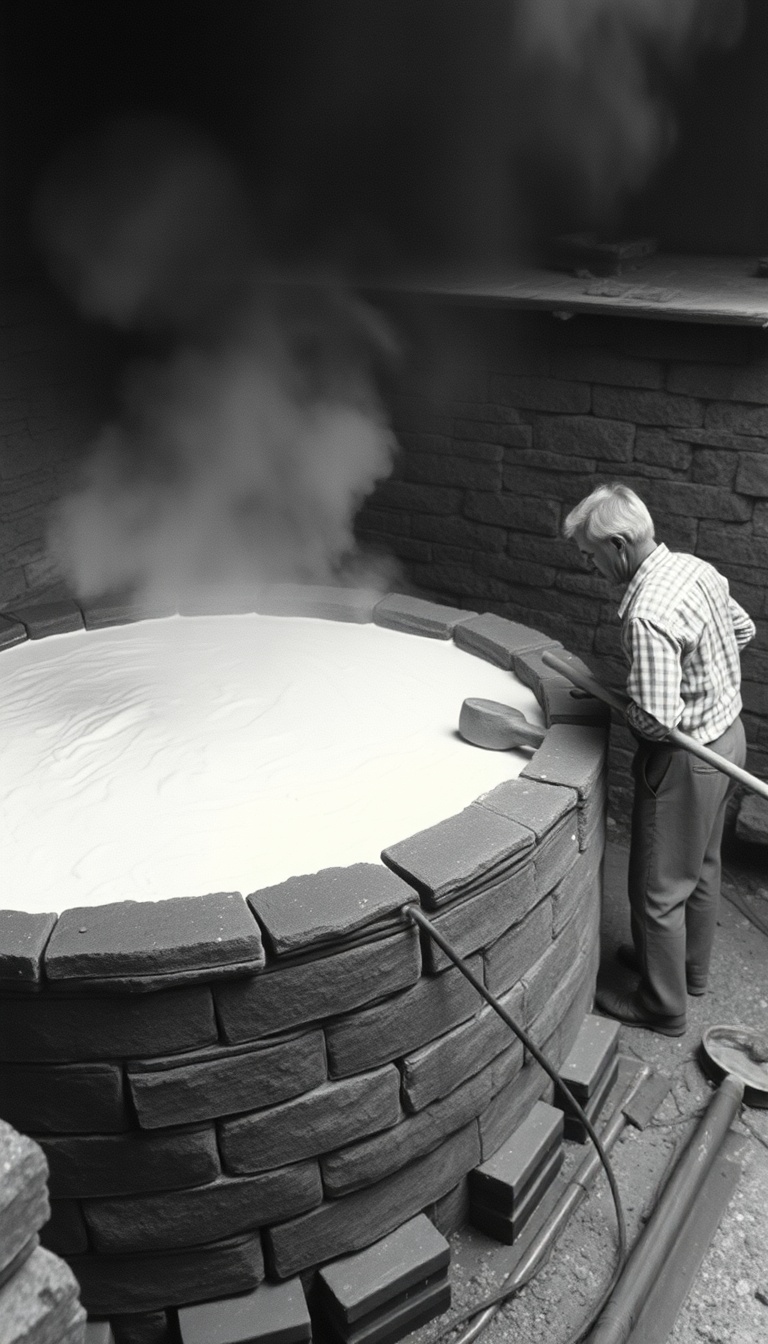
Lime putty was limestone burned in a kiln and slaked in water until it became paste. The paste sat in a pit for months. Sometimes years. The longer it sat the smoother it got. The water worked the calcium and the calcium softened and the soft calcium became the binder that held the mortar together. Old lime putty was better than new lime putty. The pit was the aging room. The aging room was a hole in the ground with water in it. The building material came from a hole in the ground filled with white paste that looked like nothing and became everything.
The lime burner was a trade. He built the kiln and stacked the limestone and lit the fire and watched the temperature. Too hot and the lime was dead. Too cool and the lime was raw. The right temperature drove off the carbon dioxide and left calcium oxide and the calcium oxide was quicklime. Quicklime was dangerous. Quicklime burned skin. Quicklime burned eyes. The lime burner wore nothing to protect himself because there was nothing to wear that worked. He watched the fire and breathed the dust and his lungs were white by fifty.
You slaked the quicklime by adding water. The water hit the quicklime and the quicklime erupted. Steam and heat. The temperature rose to three hundred degrees in seconds. The boiling paste spit and hissed and the slaker stood back and let the chemistry run. When the boiling stopped the paste was lime putty. The putty went into the pit and the pit was covered and the putty waited. The waiting was the curing. The curing was the patience that made the mortar work. Impatient mortar cracked. Patient mortar lasted centuries.
Portland cement replaced lime putty on most jobs by nineteen twenty. Portland was faster. Portland was stronger. Portland did not need a pit or a year of patience. Portland came in a bag and set in an hour. But Portland was rigid. Portland cracked when the building moved. Lime putty was flexible. Lime putty moved with the building. The old buildings survived earthquakes because the lime mortar bent instead of breaking. The new buildings survived earthquakes because the engineers designed them to be rigid enough. The old way bent. The new way resists. Both work. One forgives.