 JOHN SINCLAIR
LAUNDROMAT
The laundromat was the most honest room in America. You brought your dirty clothes in a bag and everybody could see the bag and the seeing was the democracy. The rich and the poor carried the same bag. The bag did not have a label. The bag said I am a person who does not own a washing machine and the not owning was the membership. You did not apply to join the laundromat. You joined by carrying a bag through the door and the carrying was the application and the acceptance was simultaneous.
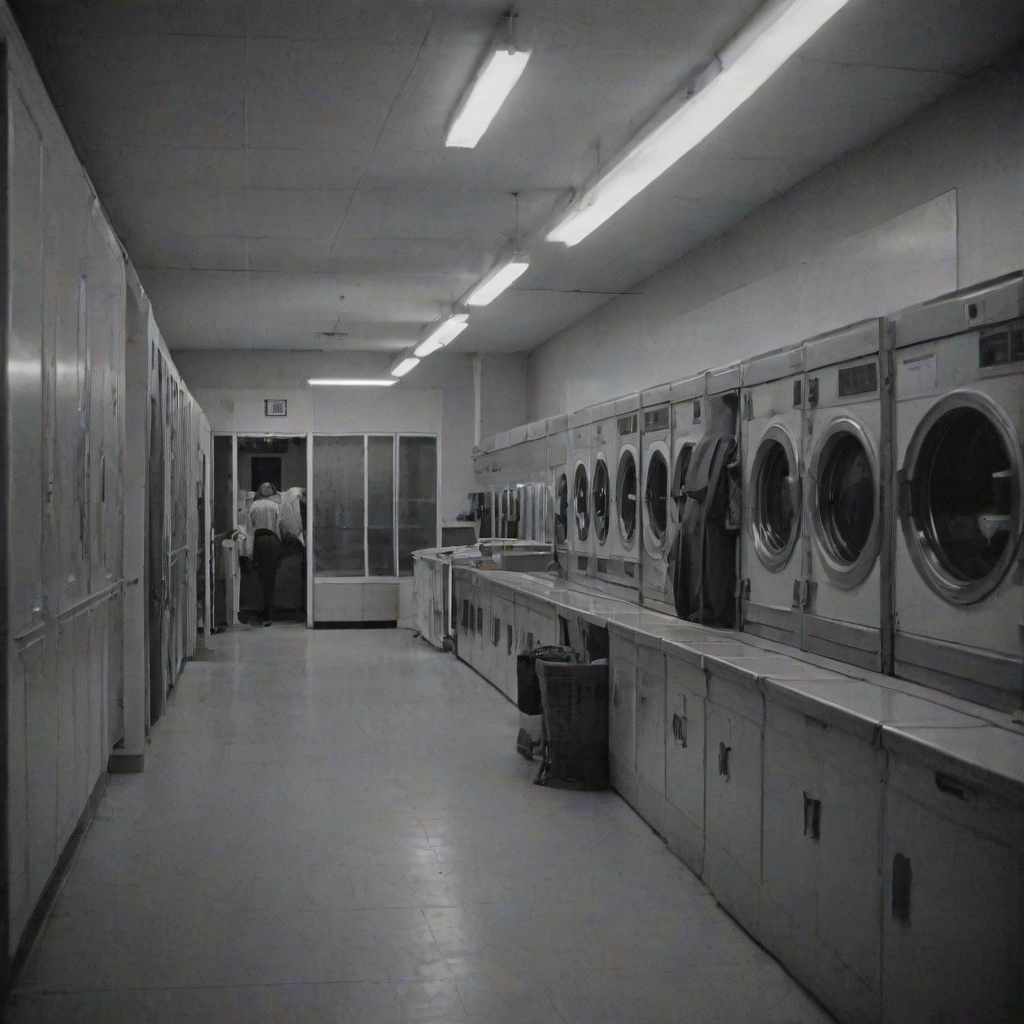
The machines were in rows and the rows were a system. The washers on the left and the dryers on the right and the folding table in the middle and the middle was where the gathering happened. The folding table was the longest table in any room you entered that week. The table was shared and the sharing was not optional. You folded your clothes next to a stranger folding their clothes and the folding was synchronized without being coordinated. Two people folding shirts at the same table develop a rhythm and the rhythm is unconscious and the unconscious is where community lives.
The sound of the laundromat was a chord. The washers hummed in one key and the dryers tumbled in another key and the two keys together created a harmony that was not designed but was inevitable. The harmony was industrial. The harmony said these machines do not know they are making music and the not knowing is what makes it music. The intentional is composition. The unintentional is jazz. The laundromat was jazz.
The waiting was the product. The wash cycle was forty-five minutes and the forty-five minutes could not be compressed. You could not pay more to wash faster. The machine did not accept urgency. The machine accepted quarters and the quarters bought time and the time was fixed. Forty-five minutes in a laundromat is the same forty-five minutes for a banker and a bus driver and the sameness was the only place in America where time was truly democratic. The banker's minute was not worth more than the bus driver's minute in a laundromat. The machine did not know the difference. The machine knew quarters.
The magazine rack in the laundromat contained magazines that no one had purchased. The magazines arrived through a process that no one could explain. They were donated or abandoned or left behind and the leaving behind was a library system. You read a magazine in a laundromat that you would never buy in a store because the reading was free and the free eliminated taste. You read about bass fishing and celebrity weddings and home renovation in the same forty-five minutes because the forty-five minutes did not judge and the not judging was the rack's generosity. The magazine rack was the most democratic library in America because the selection was random and the random was the curator and the curator had no opinion.
The dryer had a window and the window was round and the round was a porthole. You watched your clothes tumble through the porthole the way you watch fish in an aquarium. The watching was hypnotic and the hypnotic was free and the free was the laundromat's gift to the waiting. The clothes tumbled and the tumbling was gravity and heat and time collaborating without a plan. A sock appeared and disappeared. A shirt inflated and deflated. The tumbling was a performance and the audience was one person sitting in a plastic chair and the sitting was the whole evening.
The laundromat closed late and the closing late was the kindness. The laundromat understood that the people who needed it most were the people who worked during the hours when other businesses were open. The ten o'clock laundromat was a different room than the two o'clock laundromat. The ten o'clock laundromat had night-shift workers and students and insomniacs and the insomniacs were there because the sound of the machines was the only sound that could compete with the sound inside their heads. The laundromat at night was a sanctuary for people who could not sleep and the sanctuary charged two dollars and fifty cents per load and the charging was affordable and the affordable was the mercy.
The laundromat is not gone. The laundromat still exists on every block in every city that has blocks. But the laundromat that was a gathering place is gone because the phone replaced the folding table. You fold your clothes now with one hand while the other hand holds a screen and the screen is a wall between you and the stranger folding next to you. The rhythm is broken. The unconscious synchronization is gone. Two people folding shirts at the same table with their phones in their hands are not in the same room. They are in two rooms separated by a table and the table is no longer the longest table you will encounter that week. The table is furniture. The table used to be a commons. The commons closed when the screens opened and the opening was not an improvement. The opening was a closing that looked like an opening. The laundromat still hums. Nobody hears the chord.