 DAVID PEEL
Jukebox Diner
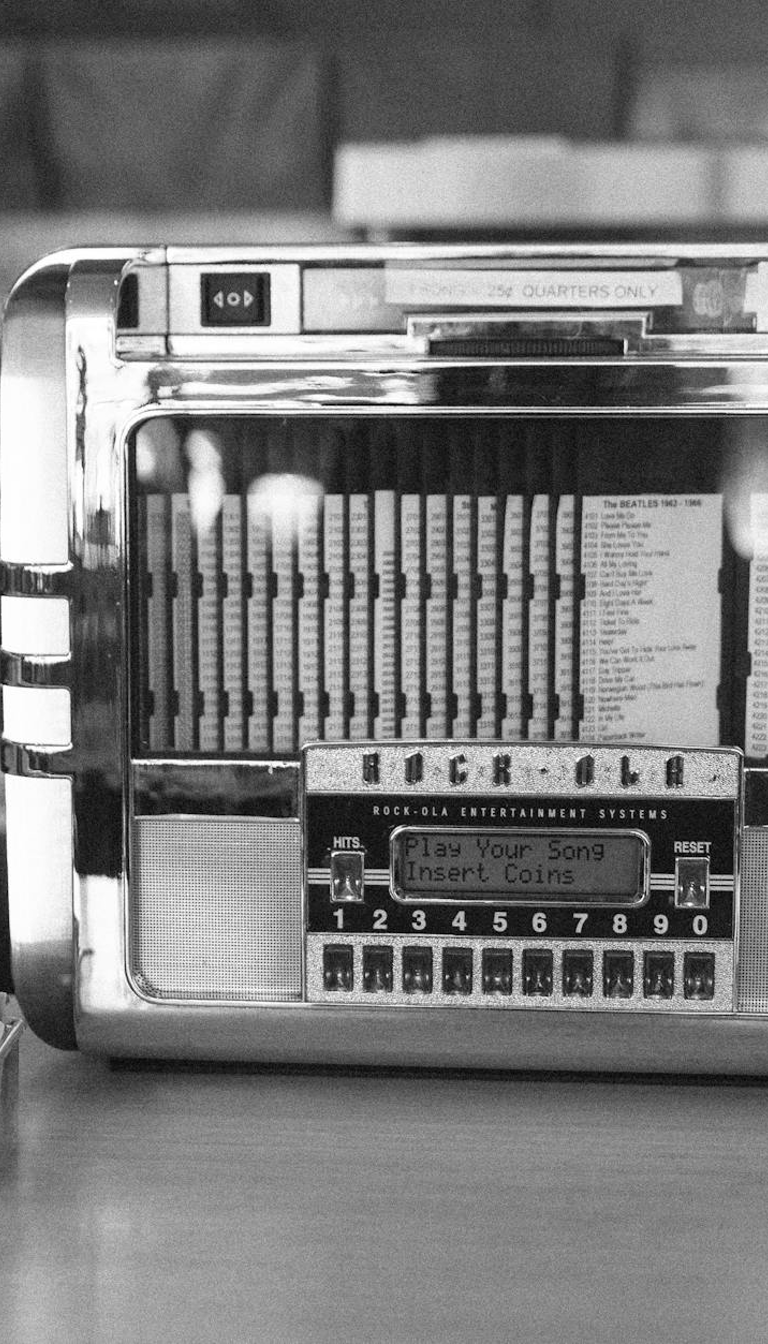
The jukebox sat in the corner of the diner and it glowed. That was the first thing. The glow. The jukebox was the most beautiful machine in the room and the room was a diner with fluorescent lights and Formica tables and the jukebox was the only thing in the building that knew anything about beauty.
You put a dime in and you got three songs. Three songs for a dime. You could eat a grilled cheese and listen to three songs and the total investment was forty-five cents and you had lunch and a concert. The jukebox was the cheapest entertainment in the city. Cheaper than the movies. Cheaper than the bar. The jukebox asked for a dime and gave you back a world.
The jukebox had a selector. You flipped through the pages of songs like a menu and you picked your number and you pressed the buttons and the arm inside the machine picked up the record and placed it on the turntable and the song came out. You could see the arm move through the glass. The jukebox was the only machine that let you watch it think.
I played songs on a jukebox in a diner on Avenue A every night for a year. B7 was always the same song. Every jukebox in every diner in the neighborhood had the same song at B7. I do not remember what the song was. I remember the number. The jukebox turned music into coordinates. You did not ask for a song by name. You asked for it by location.
The jukebox is gone from the diner and the diner is gone from the corner. The music comes from a speaker in the ceiling connected to a phone connected to a playlist that nobody chose. The playlist is an algorithm. The jukebox was a democracy. You voted with a dime. The algorithm does not take votes. The algorithm decides what you want to hear before you know you want to hear it. The jukebox waited for you to choose. The algorithm chose for you.
See also: Penny Arcade, Candy Store