 DAVID PEEL
Iron Railing
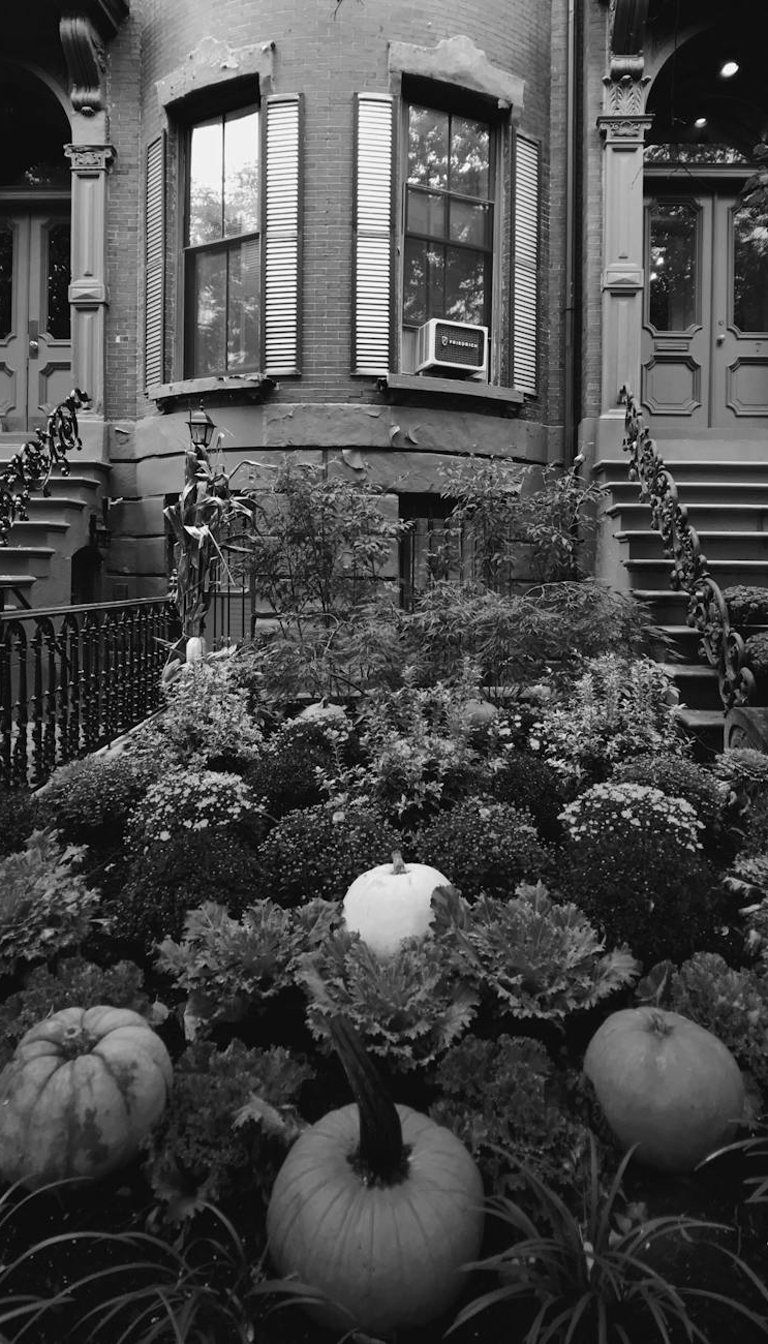
The iron railing ran along the front of the brownstone like a sentence written in metal. Curved at the top. Straight at the bottom. Bolted into the stone steps. The iron railing kept you from falling off the stoop. The iron railing kept the street from climbing up. The iron railing was the boundary and the boundary was beautiful.
The ironworkers made them by hand. Every railing on every block was different. The brownstone on West Eleventh Street had vines. The brownstone on Bank Street had Greek keys. The tenement on Avenue C had nothing but straight bars because the landlord on Avenue C did not pay for decoration. The railing told you the income of the building. The railing was the first line of the building's biography.
I used to sit on the iron railing on East Seventh Street and lean back and play guitar. The railing was cold in the morning and warm in the afternoon and the vibration of the strings went through my back and into the iron and the iron hummed along. The railing was a resonator. The railing was part of the instrument. I never played better than when I played leaning against the iron.
They paint the iron railings black. Always black. The whole city agreed that iron railings should be black without ever having a meeting about it. One brownstone on Bleecker Street painted their railing green and the neighbors talked about it for a year. The black paint chips and the rust shows through and the rust is the same color as the original iron. Under the black paint the railing is the color it was born.
The iron railing is the handshake of the building. You grab it when you climb the steps. You lean on it when you stand on the stoop. You sit on it when you want to watch the street. The iron railing is the most touched part of the building. Thousands of hands. The paint wears at the spots where the hands go. The iron railing knows where people grab. The iron railing remembers every hand.
See also: Stoop, Fire Escape