 JOHN SINCLAIR
ICE CREAM TRUCK
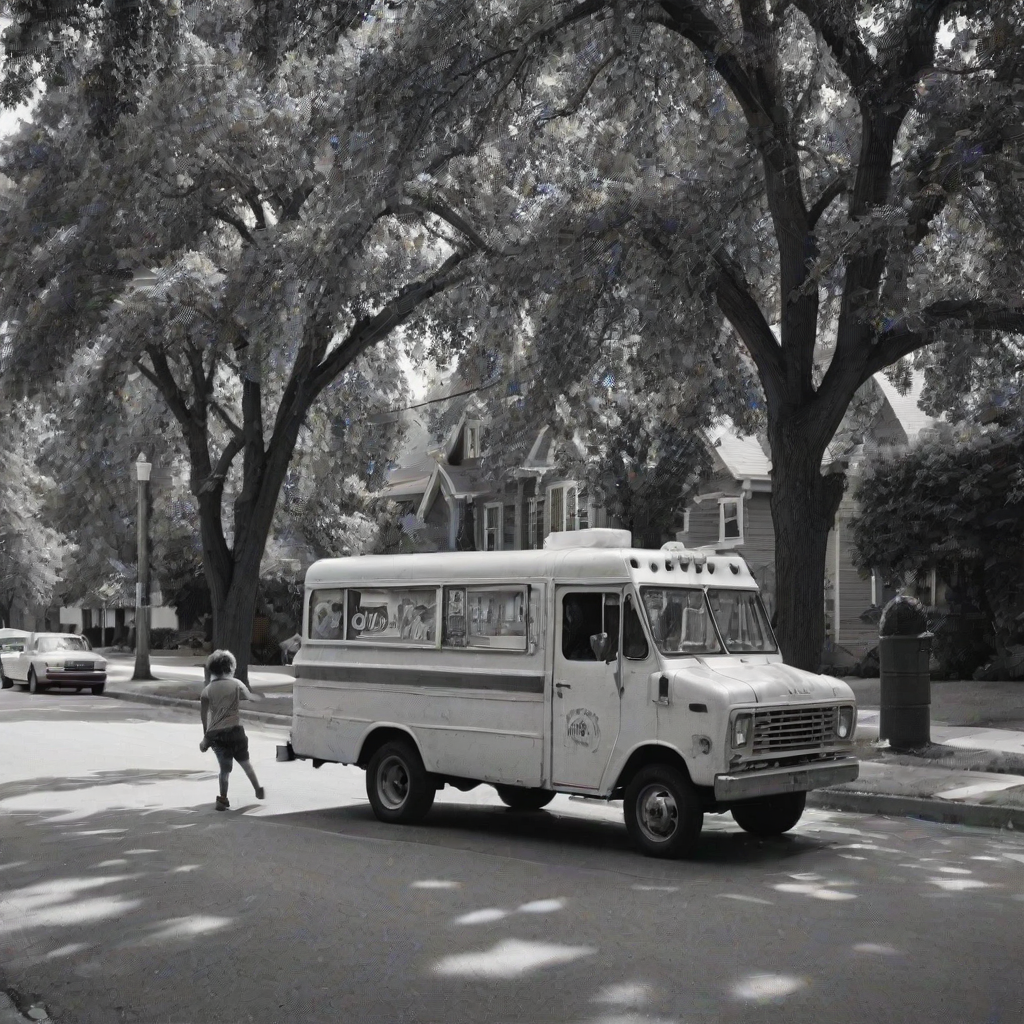
The ice cream truck was the first algorithm. It learned your street. It learned your schedule. It knew what time the children came outside and it arrived ten minutes before because anticipation is a better product than ice cream. The music came first. The music came around the corner before the truck did and the music was the signal and every child on the block decoded the signal at the same speed. The decoding was instant. The decoding was biological. The ice cream truck song bypassed the brain and went straight to the legs and the legs carried the child to the curb and the curb was the marketplace and the marketplace was open for exactly four minutes. Four minutes to choose. Four minutes to beg. Four minutes of the most intense economic negotiation in American childhood. The parent had the money. The child had the desire. The truck had the clock. The clock always won.
Harry Burt of Youngstown Ohio invented the Good Humor bar in nineteen twenty and the invention was a chocolate-coated ice cream bar on a stick and the stick was the innovation. The stick meant you could eat ice cream without a dish and without a dish you could eat ice cream outside and outside meant a truck could sell it. Burt put twelve trucks on the streets of Youngstown in nineteen twenty and the trucks were white and the drivers wore white and the bells were on the fenders and the bells were the music before the music was music. The Good Humor man was a figure of trust in the American neighborhood for fifty years. The Good Humor man knew your name and your order and your mother's name and the knowing was the service. The ice cream was the same on every truck. The service was not. The Good Humor man who remembered that you liked the toasted almond bar was not the same as the Good Humor man who did not remember. Memory was the currency and the currency bought loyalty and the loyalty bought a route and the route was worth more than the truck.
The music box on the roof played Turkey in the Straw or The Entertainer or Do Your Ears Hang Low and the music was recorded on a loop and the loop was thirty seconds and the thirty seconds repeated until the driver turned it off or the battery died or a neighbor called the police. The music was annoying to every adult and irresistible to every child and the gap between annoyance and desire was the entire business model. The truck drove slowly enough to be caught by a running child and fast enough to create urgency. If you missed the truck it was gone. It was not coming back. The scarcity was manufactured and the manufacturing was genius. The ice cream truck understood that a thing available anytime is a thing desired never. The ice cream truck was available for four minutes on your block on a Tuesday in July and the four minutes were everything.
The menu was painted on the side of the truck and the menu had not changed since nineteen seventy five. The Bomb Pop. The Choco Taco. The Strawberry Shortcake bar. The Drumstick. The Orange Creamsicle. The Snow Cone with the gumball at the bottom. The gumball at the bottom was the prize in the Cracker Jack box of frozen treats. You ate your way down to the gumball and the gumball was the reward for patience and the patience was the lesson and the lesson was that the best part is sometimes at the bottom. The prices were on the menu and the prices were always more than you remembered and the difference between what you remembered and what you saw was inflation explained to a nine year old in one transaction. The truck taught economics. The truck taught scarcity. The truck taught that if you heard the music and did not run you would hear the music fade and the fading was the cost of hesitation.
You do not hear the music anymore. Not on most streets. The ice cream truck is disappearing from the American neighborhood for reasons that are ordinary and irreversible. Insurance costs more than the truck. The permits cost more than the insurance. The route that a Good Humor driver owned in nineteen sixty is now served by a freezer case at the gas station and the freezer case is open twenty four hours and the twenty four hours killed the four minutes. The scarcity is gone. The urgency is gone. The running is gone. A child can walk to a freezer case and stand there and choose and the choosing takes as long as the child wants and there is no music and no truck driving away and no consequence for hesitation. The freezer case is better in every measurable way. The selection is wider. The prices are lower. The hours are permanent. But the freezer case does not come to you. The freezer case does not know your street. The freezer case does not announce itself with a song that you will hear in your memory for the rest of your life even when the truck is gone and the street is quiet and the summer is over.