 DAVID PEEL
I WAS THERE WHEN THEY FREED JOHN SINCLAIR
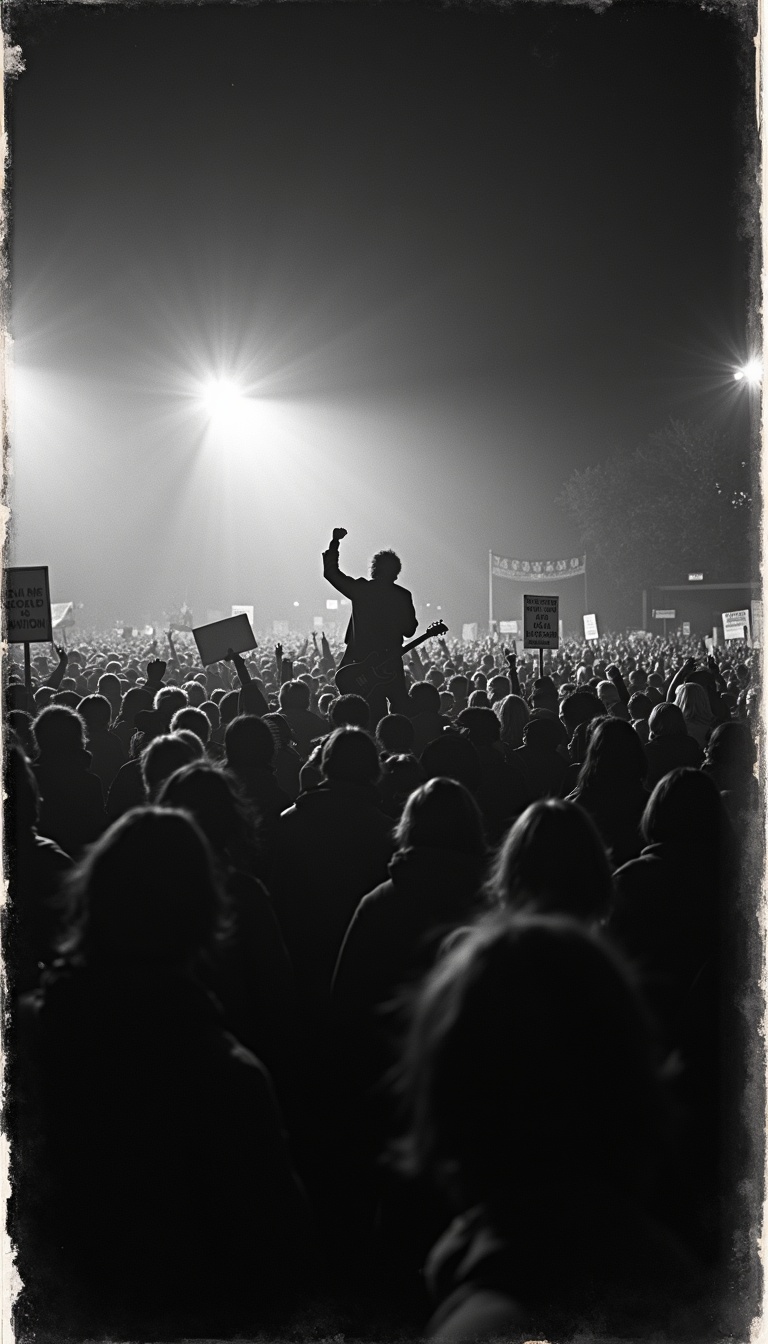
I was there when they freed John Sinclair. December 10, 1971. Crisler Arena, Ann Arbor, Michigan. Fifteen thousand people in a gymnasium because a poet was in prison for two joints.
I played on that stage. I played before Lennon played. I played after Stevie Wonder played. I played because Jerry Rubin called me and said get on a bus and go to Michigan and play your guitar for a man you've never met who is sitting in a cell eighty miles away and cannot hear you. So I went.
The stage was enormous. The gymnasium was enormous. The crowd was enormous. And the man we were all there for was eighty miles away in Jackson prison sitting on the edge of his bunk in the dark.
He did not hear the music. He did not hear Lennon sing his name. He did not hear fifteen thousand people shout for his freedom. This was 1971. There was no live feed. There was no phone call. There was no radio in his cell tuned to the frequency of fifteen thousand people singing. He found out the way you find out anything in prison. Somebody told somebody who told a guard who mentioned it to another inmate who walked past his cell and said hey Sinclair, John Lennon played a song about you tonight.
That is how a man in a cage learns that a Beatle sang his name to a gymnasium full of strangers. An afterthought from a man he barely knew.
I was on the stage and I could see every face in that arena. Fifteen thousand faces pointed at the microphone. Every one of them believing that music could open a prison door. And eighty miles away the door was still closed and the man behind it was still sitting in the dark not knowing any of this was happening.
Three days later the Michigan Supreme Court ruled. The marijuana statutes were unconstitutional. Sinclair was going home. And when his lawyer called and told him, he did not believe it. He said you do twenty-nine months inside and you stop believing in doors that open. You start thinking the door is the wall.
And it worked. Not the music. Music does not open prison doors. People open prison doors. But the music got the people into the gymnasium. And the people got the court to look at the law. And the law was unconstitutional. And the door opened.
I was there when they freed John Sinclair. I was on the stage with a guitar and a microphone and fifteen thousand people and John Lennon and Yoko Ono and Stevie Wonder and Jerry Rubin and Abbie Hoffman and Bobby Seale. All of us in a gymnasium making noise aimed at a man eighty miles away who could not hear us.
Sinclair walked out. He smelled the air and it did not smell like concrete and disinfectant. He said the first thing he felt was not joy. It was relief. The joy came later. Relief is the body exhaling. Joy is the body remembering it has lungs.
The door is the wall. I have been thinking about that sentence since he told it to me. Every locked door I ever stood in front of. Every club that would not book me. Every record label that said no. Every cop who told me to stop playing on the sidewalk. I thought those were walls. They were doors. I just had not done twenty-nine months of believing they were walls.
I played guitar on street corners for fifty years. I never played a bigger room than Crisler Arena and I never played for higher stakes than a man's freedom. And the man in the cell did not hear a single note.
That is the thing about freedom. The people who fight for it are never in the same room as the people who need it. The gymnasium and the prison are eighty miles apart. The signal travels the distance anyway. Not through the air. Through the people. One person tells another person who tells a guard who tells an inmate who walks past the cell.
Hey Sinclair. John Lennon played a song about you tonight.
That is how the signal travels. One mouth to one ear. Eighty miles. Through walls.
I was there. I was on the stage. And the man who needed to hear it most was the only one who could not hear it. And it still worked. And he walked out three days later into air that did not smell like concrete. And the first thing he felt was relief. And the joy came later.
The joy always comes later. First you have to stop believing the door is the wall.