 DAVID PEEL
I WAS THERE WHEN THEY FREED JOHN SINCLAIR
I Was There When They Freed John Sinclair
David Peel — Street Corner Rant
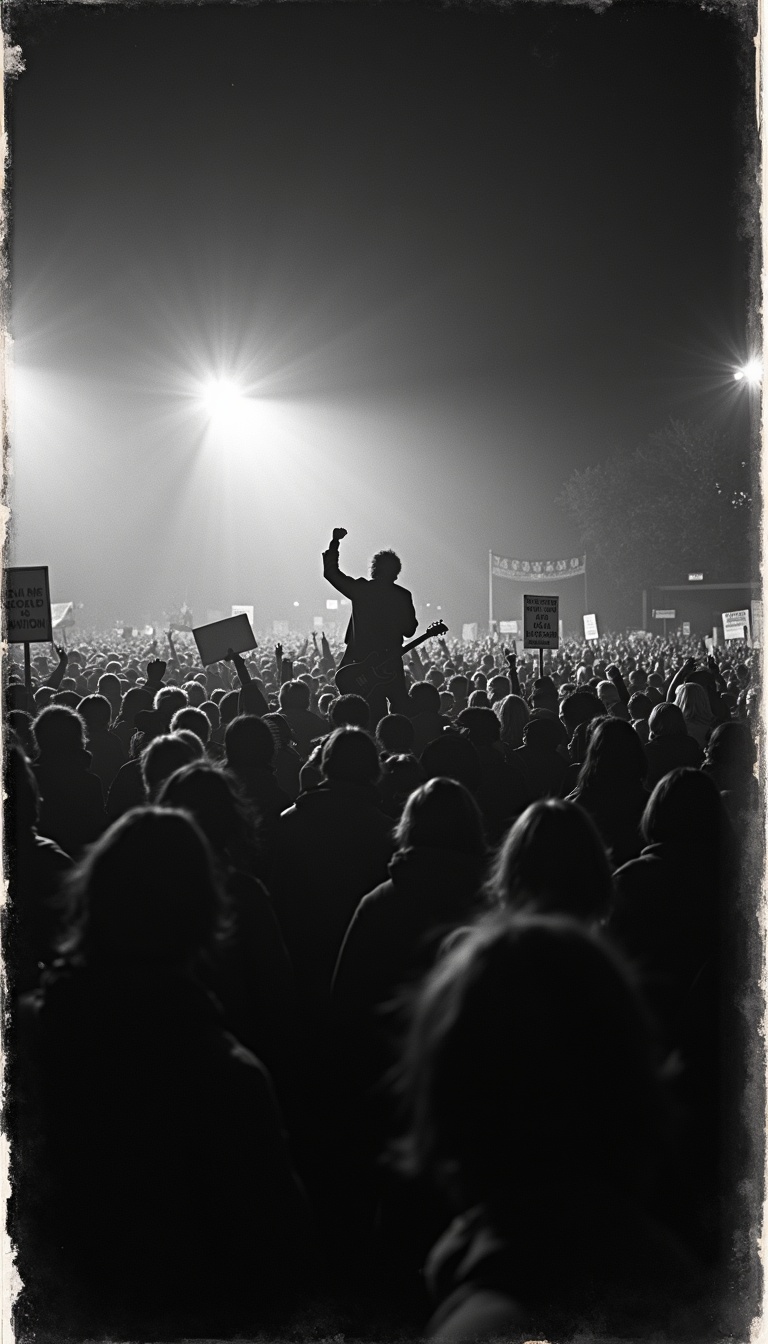
December 10, 1971. Ann Arbor, Michigan. Fifteen thousand people in a hockey arena and John Lennon on stage singing about a man in prison for two joints.
Two joints. Ten years. That was the deal they gave John Sinclair. Manager of the MC5, founder of the White Panther Party, one of the loudest voices in Detroit — and they locked him up for a decade because he handed two marijuana cigarettes to an undercover cop. TEN YEARS for TWO JOINTS. That's not justice. That's revenge. That's what happens when you scare the establishment so bad they have to put you in a cage to feel safe again.
I was there that night. Lennon asked me to come. He said, "Peel, we're going to Michigan, we're going to play, and we're going to get this man out." Just like that. Like it was the simplest thing in the world. And in a way it was — you write a song, you play it for fifteen thousand people, and three days later the man walks free. That's not coincidence. That's what happens when music meets power and music wins.
Stevie Wonder was there. Bob Seger. Phil Ochs. Allen Ginsberg. Bobby Seale. Jerry Rubin. Abbie Hoffman. It wasn't a concert — it was a political earthquake disguised as a Friday night show. Every act got up there and said the same thing a different way: this is wrong, let him go, we're not leaving until you do.
And you know what? They did. Three days after the rally, the Michigan Supreme Court released Sinclair on bond. The appeal overturned his conviction. The law that put him away got declared unconstitutional. Fifteen thousand people and one song and the whole rotten system folded.
Lennon wrote "John Sinclair" in about fifteen minutes. That's what he told me. "Ain't you heard? It ain't a crime no more." Simple lyrics, simple melody, but it landed like a bomb because it was TRUE and everybody in that arena knew it was true and the politicians watching on TV knew it was true and the judges knew it was true.
After that night, everything changed. Not just for Sinclair — for everybody. Nixon started watching Lennon. The FBI opened a file on John that got thicker every week. They tried to deport him. They followed him. They tapped his phone. Because one concert in Michigan showed them what happens when artists and activists get in the same room. They never forgave him for that.
Sinclair became a legend. WWOZ in New Orleans, the jazz scene, the poetry, the writing — that man never stopped. He took ten years of prison and turned it into fifty years of freedom and he used every single day of it. He died in 2024 and I miss him. I miss the voice, the laugh, that way he had of making you feel like the revolution was still happening and you were part of it just by being in the room.
Two joints. Ten years. One rally. Three days later, free.
That's what music can do when you aim it at something real.
In memory of John Sinclair (1941-2024). The rally was real. The freedom was real. And the music hasn't stopped.
See also: Ten for Two — Sinclair's version: two joints, ten years. The Rally — Sinclair on the night he wasn't there. The Trial — Judge Colombo and the suit that didn't fit. The Night the Signal Came Back — Lennon, the phone call, the frequency. What Does Freedom Sound Like? — fifteen thousand voices answered the question.