 DAVID PEEL
Hod
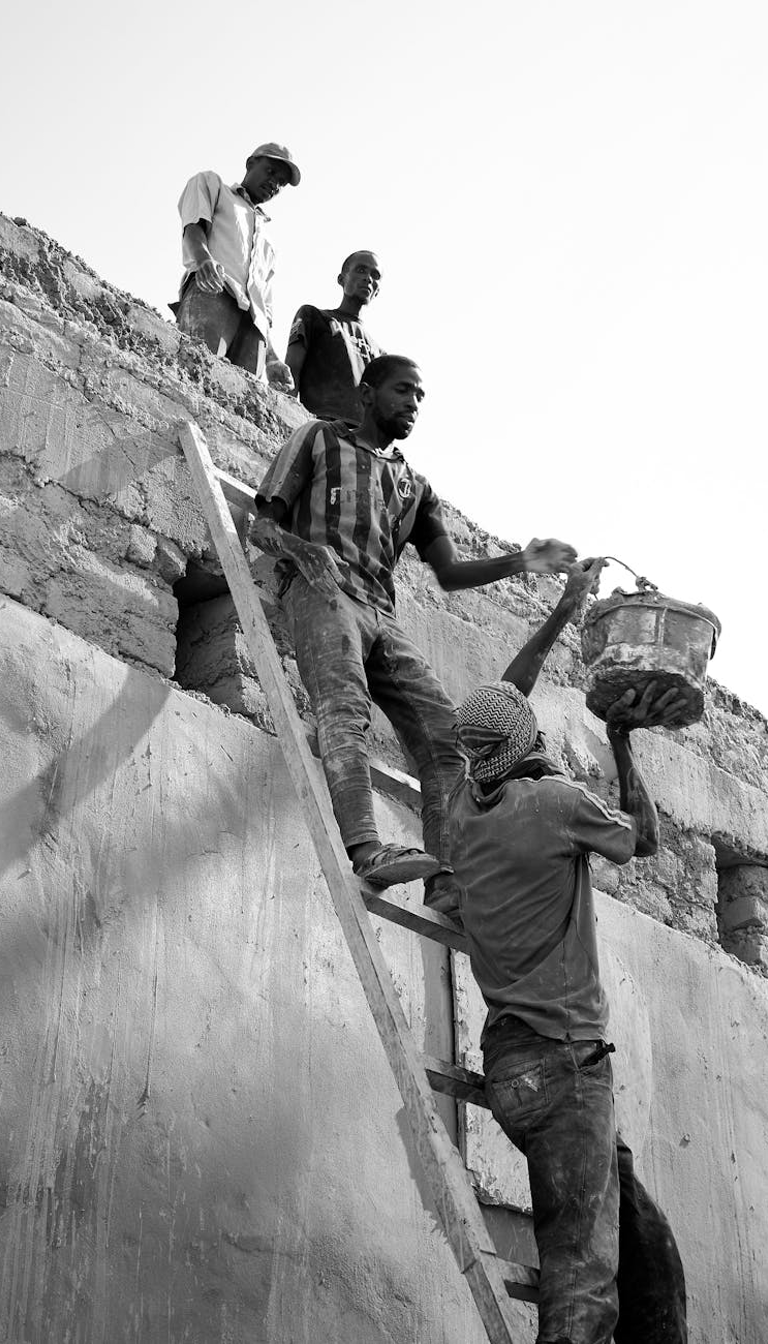
The hod was a V-shaped trough on a pole. The laborer loaded the hod with bricks or mortar and carried it up the ladder to the mason on the scaffold. The hod carrier was the supply chain. The mason could not lay brick faster than the hod carrier could deliver brick. The hod carrier set the pace. The fastest mason in the world was only as fast as his hod carrier. The building rose at the speed of the man on the ladder.
The hod held twelve bricks. Twelve standard bricks weighed about fifty pounds. The hod carrier lifted fifty pounds onto one shoulder and climbed a twenty-foot ladder and set the hod on the scaffold and the mason took the bricks out one at a time and laid them. Then the hod carrier climbed back down and loaded twelve more bricks and climbed back up. Eight hours of climbing. The hod carrier legs built the building as much as the mason hands did.
The hod carrier was the lowest paid worker on the job and did the hardest physical work on the job. The mason was skilled. The hod carrier was strong. The mason decided where the brick went. The hod carrier decided when the brick arrived. The when was as important as the where. A mason waiting for bricks was a mason not working. A hod carrier who kept the mason supplied kept the job on schedule. The schedule depended on the man who made the least.
The mortar hod was different from the brick hod. The mortar hod was a bucket on a pole. The bucket held mixed mortar. The hod carrier climbed the ladder with the mortar bucket balanced on one shoulder and poured the mortar onto the mason mortarboard. The pour was the transfer. The mortar went from the mixer on the ground to the hod on the ladder to the board in the mason hand to the wall. Four transfers. Each transfer was a human being. The mortar passed through four pairs of hands before it became part of the building.
Nobody carries a hod. The forklift loads a pallet of brick onto the scaffold. The mortar mixer pumps mortar through a hose to the scaffold. The machine replaced the ladder and the shoulder and the legs. The machine is faster and the machine does not get tired and the machine does not fall off the ladder. The hod carrier fell off ladders. The hod carrier slipped on wet rungs with fifty pounds on his shoulder and the fall was twenty feet and the landing was concrete. The machine eliminated the fall. The machine also eliminated the man. The man who carried the bricks up the ladder was the first person the building forgot. The mason name might be on the cornerstone. The hod carrier name is on nothing.
See also: Mortarboard, Trowel