 JOHN SINCLAIR
HARDWARE STORE
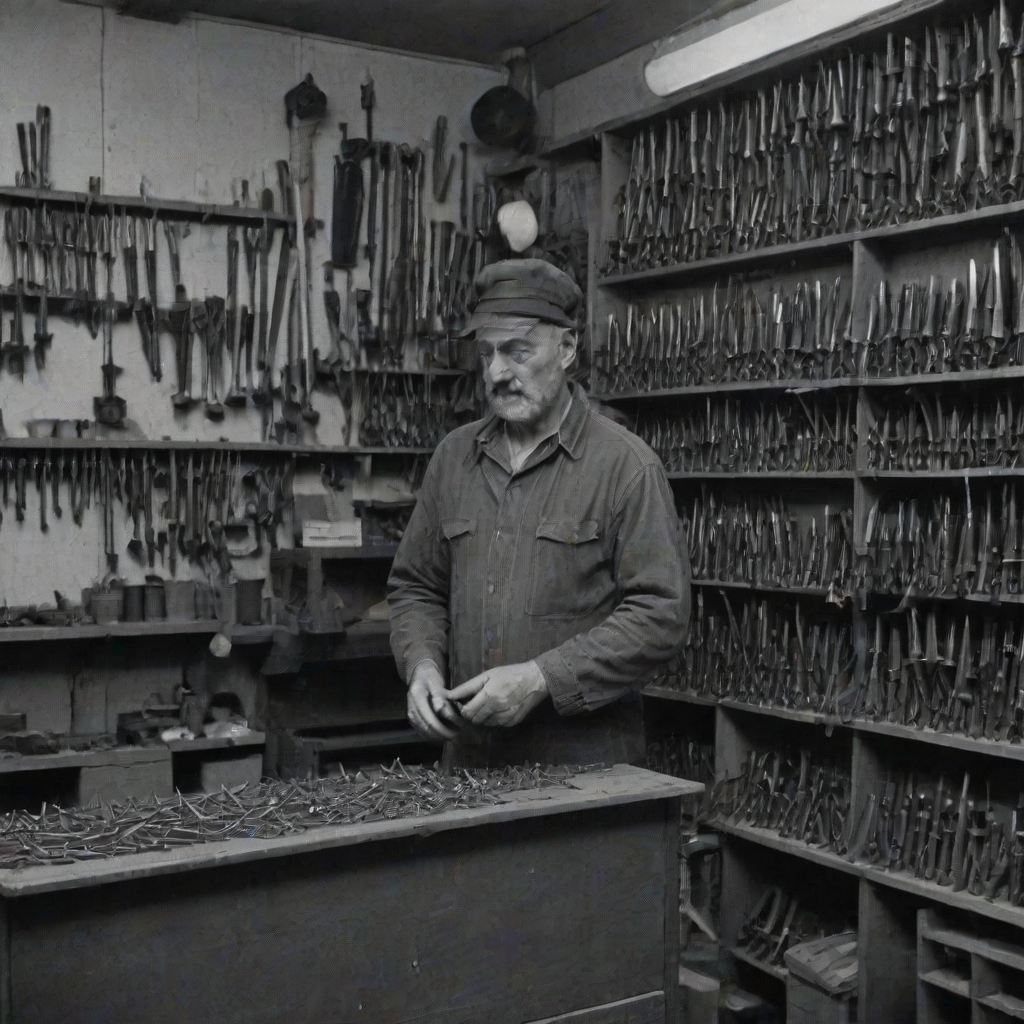
The hardware store was where you went when something was broken and you intended to fix it yourself. The intention was the admission ticket. You walked in and the store assumed you were competent and the assumption was generous and often wrong but the store did not care. The store cared about the project. What are you fixing. The question came from a man behind the counter who was sixty years old and had fixed everything in the county at least once and the man did not look at you. He looked at the part in your hand. The part told the story. A worn washer meant a leaking faucet. A stripped screw meant a hinge. A length of copper pipe meant ambition. The man read the part the way a doctor reads an x-ray and the diagnosis was immediate and the prescription was specific. Aisle three. Second shelf. On the left. The man knew where everything was because the man had put everything there and the arrangement was his mind made physical.
Henry William Sears opened a hardware store in Erie Pennsylvania in eighteen twenty six and the store sold nails and axes and rope and the store smelled like iron and oil and sawdust and the smell did not change for a hundred and fifty years. Every hardware store in America smelled the same because every hardware store sold the same materials and the materials had smells that could not be disguised or improved. The iron was iron. The oil was oil. The sawdust was sawdust. The smell was honest. The store was honest. The price on the bin was the price you paid and the price had been written by hand with a grease pencil and the grease pencil was the font of the hardware store. You cannot replicate the grease pencil font on a computer. The grease pencil required pressure and the pressure required a hand and the hand belonged to someone who worked there and the handwriting was the signature of the store.
The bins were the architecture of the hardware store. Small wooden bins or metal drawers arranged by function not by brand. The screws were together. The nails were together. The washers were together. You did not need to know the brand. You needed to know the size. The size was the language of the hardware store and if you did not speak the language the man behind the counter translated for you and the translation was free. Bring in the old one. That was the universal instruction of the hardware store. You did not need to know the name. You did not need to know the number. You brought in the broken part and the man matched it by sight and by feel and by forty years of matching broken parts. The matching was the skill. The skill was not taught in school. The skill was taught by standing behind a counter for ten thousand days and seeing ten thousand broken things and remembering what fixed each one.
The hardware store died in two stages. The first stage was the big box. Home Depot opened its first store in Atlanta in nineteen seventy nine and the store was a warehouse with a hundred thousand square feet and the square footage was the weapon. The hardware store had three thousand square feet and three thousand items and the man who knew where everything was. Home Depot had a hundred thousand square feet and forty thousand items and employees who knew where the bathroom was. The selection was wider. The prices were lower. The parking lot was bigger. The man behind the counter was gone. The man was replaced by an aisle number on a computer screen and the aisle number was accurate and the aisle number did not ask what you were fixing. The second stage was the internet. The internet sold you the exact part with the exact dimensions delivered to your door and the door was better than the drive and the drive was better than the parking lot and the parking lot was better than the three thousand square feet where the man knew your name. Each stage was an improvement by every metric except the one that mattered. The one that mattered was the conversation. What are you fixing. The question that assumed you were competent. The question that assumed you would try.
You can still find hardware stores. They are on the main streets of the towns that the highway bypassed and the bypass was the beginning and the big box was the middle and the internet is the end. The stores that survive do so because the man behind the counter is still alive and the man still knows where everything is and the man still asks what you are fixing. The stores survive because there are people who would rather be asked than search. There are people who would rather hand a broken part to a person than type a model number into a box. The hardware store is not efficient. The hardware store is not optimized. The hardware store is a room full of things that break and a person who knows how to fix them and the person is the inventory that no warehouse can stock. When the man retires the store closes because the store was never the building. The store was the man. The building was just where he stood.