 DAVID PEEL
Gravel
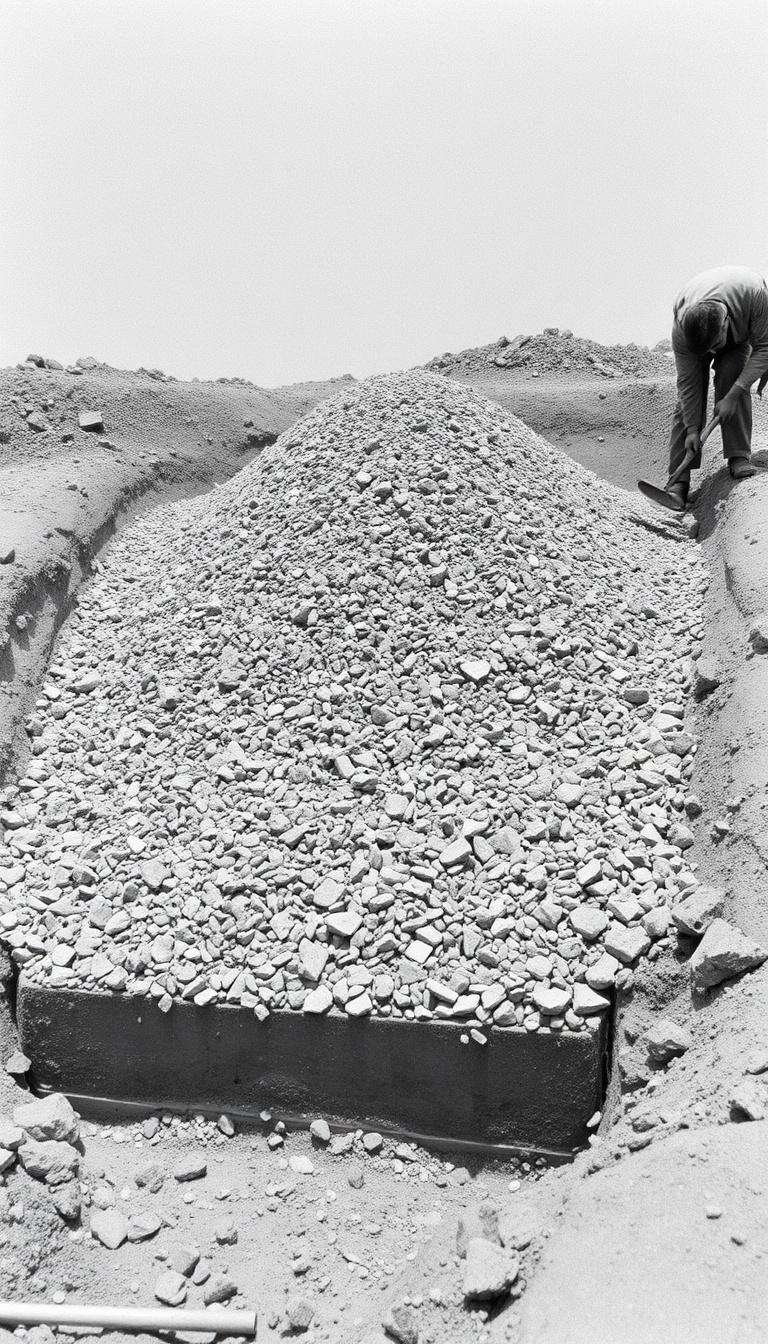
Gravel was the first thing in the hole. Before the concrete. Before the rebar. Before the formwork. Gravel. You dug the hole and you put gravel in the bottom and you tamped it flat and the gravel was the base that everything else sat on. The gravel did not look like a foundation. The gravel looked like a pile of rocks in a ditch. But the gravel was doing the work that made the foundation possible. The gravel drained the water. The water went through the gravel and away from the concrete and the concrete stayed dry and the dry concrete lasted a hundred years.
The gravel came in sizes. Three-quarter inch was the standard for foundations. The stones were angular. Crushed. Not smooth river rock. The angular stones locked together when you tamped them. The corners of one stone caught the corners of another stone and the interlocking stones made a solid mass. Smooth stones rolled against each other. Smooth stones were for decoration. Angular stones were for work. The difference between a decorative stone and a working stone was the edge. The edge was where the strength lived.
You ordered gravel by the ton. A dump truck backed up to the hole and raised the bed and the gravel poured out in a gray heap. The heap was wrong. The heap needed to be flat. You spread the heap with a rake and a shovel and the tamper. Four inches at a time. Spread. Tamp. Spread. Tamp. The gravel went from a pile to a plane. The plane was the beginning of level. Everything above the gravel depended on the gravel being level. If the gravel was wrong the footing was wrong. If the footing was wrong the wall was wrong. If the wall was wrong the building was wrong. The building started with gravel and a rake.
The sound of gravel under a boot was the sound of the job site. The crunch. Every step was a crunch and the crunch told you the gravel was loose or tight. Loose gravel crunched loud. Tight gravel crunched quiet. When the crunch got quiet the gravel was ready for concrete. The ear was a tool. The foot was a tool. The builder used every part of himself to read the ground because the ground was talking back through the gravel and the gravel was saying ready or not ready and the builder who listened built on solid ground.