 JOHN SINCLAIR
GRAIN SILO
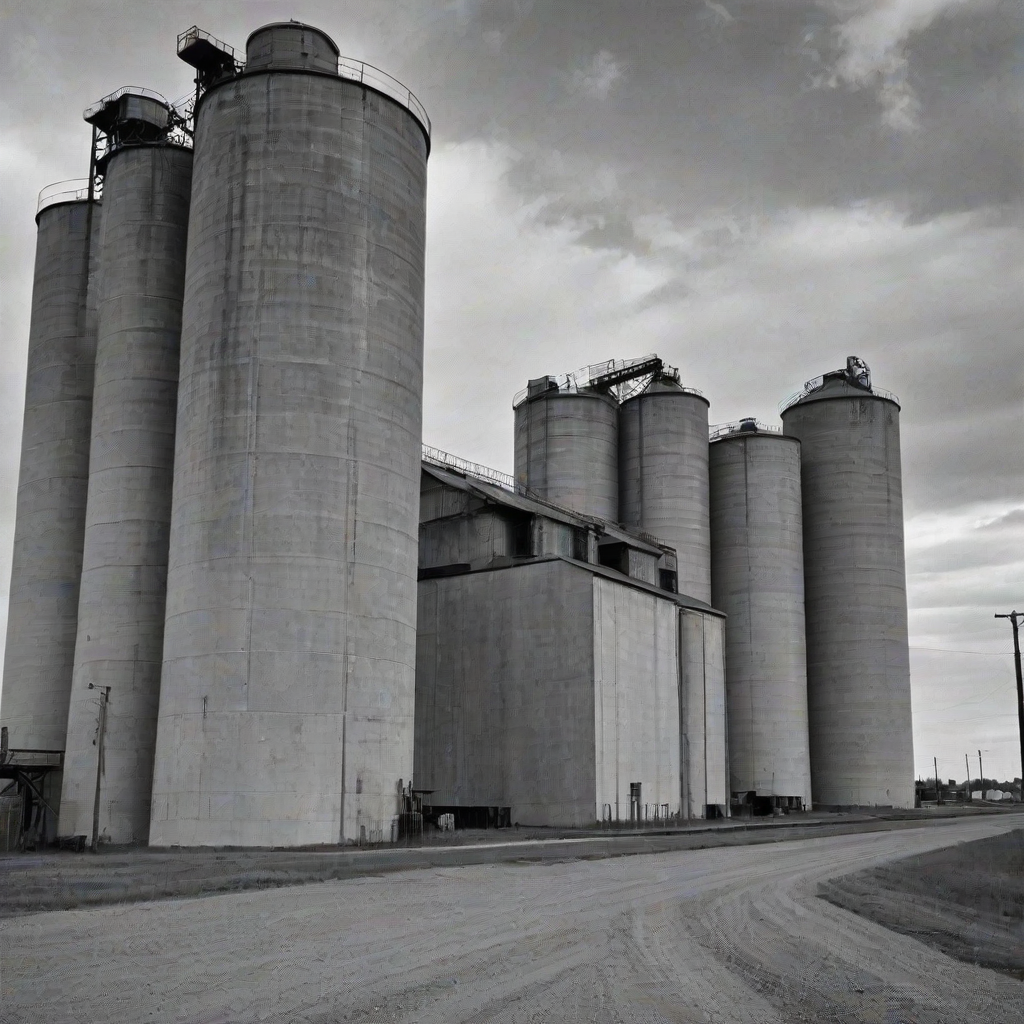
You stand at the base of the grain silo and the silo is the tallest thing in the county because the county grows wheat and the wheat needs somewhere to wait. The silo is a cylinder. The silo is concrete or steel or sometimes wood and the cylinder holds the grain and the holding the grain is the storage and the storage is the pause between the harvest and the market. The farmer cuts the wheat and the wheat goes into the silo and the silo holds the wheat until the price is right or the train comes or the truck arrives and the holding until is the silo's purpose which is patience. The silo is the building that waits.
The grain elevators of Buffalo New York processed two hundred million bushels a year in the early nineteen hundreds and the two hundred million bushels made Buffalo the largest grain port in the world. The grain came from the Great Lakes on ships and the ships docked at the elevators and the elevators lifted the grain from the holds by steam-powered bucket conveyors and the lifting by steam-powered bucket conveyors was the invention that made Buffalo rich. Joseph Dart built the first steam-powered grain elevator in Buffalo in eighteen forty two and the first steam-powered grain elevator changed everything because before Dart men carried the grain in sacks on their backs and the carrying in sacks on their backs meant a ship took a week to unload and Dart's elevator unloaded a ship in hours. Buffalo had thirty eight grain elevators by nineteen hundred. The waterfront was a wall of silos. Then the Saint Lawrence Seaway opened in nineteen fifty nine and the ships bypassed Buffalo and the bypassing Buffalo killed the grain trade and the killing the grain trade left the elevators standing empty along the waterfront like monuments to a city that used to matter.
The concrete grain elevators of the Great Plains were the first modernist architecture and nobody knew it. Le Corbusier published photographs of American grain elevators in nineteen twenty three and called them the magnificent first fruits of the new age. Walter Gropius showed them to his Bauhaus students. The architects of Europe looked at the cylinders and the rectangles and the clean surfaces and saw the future of building and the future of building had been standing in Kansas and Nebraska and Saskatchewan for decades before any architect noticed. The farmers who built the elevators did not know they were building modernism. The farmers built what the grain needed which was a cylinder because a cylinder has no corners where the grain can rot and the no corners where the grain can rot is the function and the function made the form and the form was beautiful and the beautiful was accidental.
In Sinclair's Midwest the grain elevator was the landmark. You drove across the flatland and the first thing you saw of the next town was the grain elevator because the grain elevator was the tallest structure and the tallest structure on the prairie is visible from twenty miles. The elevator told you a town was coming. The elevator told you the town had a railroad because the elevator existed to load grain onto trains and the loading grain onto trains was the town's connection to the world. Towns without elevators were towns without railroads and towns without railroads were towns that died. The elevator was the proof of commerce. The elevator meant the wheat had somewhere to go. In Kansas the grain elevators are called the cathedrals of the prairie and the cathedrals of the prairie is right because the elevator is the tallest thing and the thing the town was built around and the thing that gives the town its purpose.
You look up at the silo and the silo is silent. The grain inside does not move. The grain sits in the dark and the sitting in the dark is the waiting and the waiting is the storage and the storage is the silo's work. But the silo is dangerous. Grain dust explodes. Grain dust in the right concentration with a spark becomes a fireball and the fireball destroys the elevator and the destroying the elevator has happened hundreds of times. The Westwego grain elevator explosion in Louisiana in nineteen seventy seven killed thirty six workers. Grain dust is more explosive than coal dust. The silo holds the harvest and the harvest can detonate. The silo. The cylinder. The patience. The cathedral of the prairie. The tallest thing in the county. The first modernism. The building that waits for the wheat and the wheat waits for the world. Twenty miles away you see it. The town is coming. The grain is there.