 JOHN SINCLAIR
GRAIN ELEVATOR
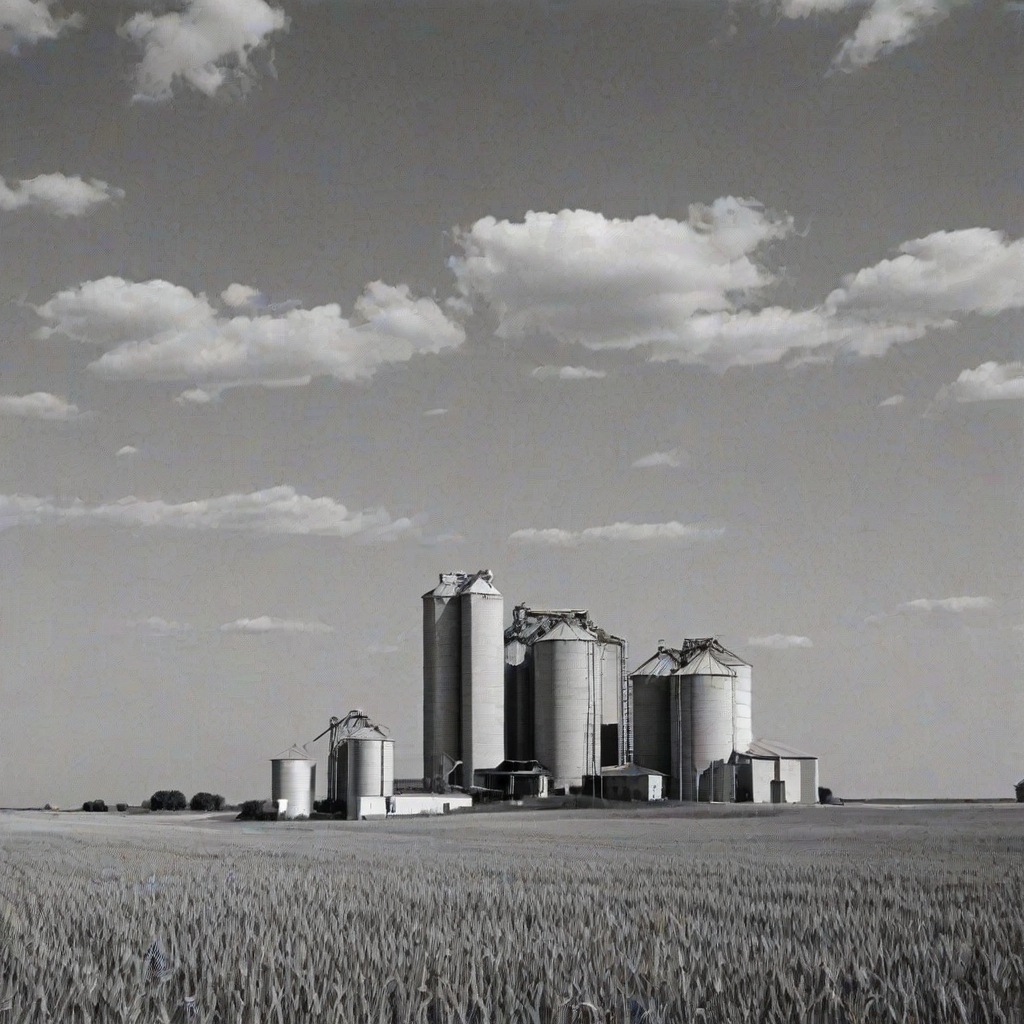
You see the grain elevator from ten miles away and the ten miles is the flatness telling you something vertical exists. The grain elevator rises out of the prairie like a fist and the fist holds wheat. The grain elevator is a building that exists to store what the ground grew and the storing of what the ground grew is the most ancient function of any building. Before there were temples there were granaries. Before there were cities there were places where the harvest waited. The grain elevator is the granary made industrial and the industrial granary is the thing that turned farming into commerce and commerce into empire.
The grain elevators in Buffalo New York were the first skyscrapers and the first skyscrapers held wheat not people. Joseph Dart built the first steam-powered grain elevator in Buffalo in eighteen forty two and the steam power meant the grain moved up instead of being carried by men and the moving up instead of carrying was the invention of vertical storage and vertical storage was the invention of the modern world. Buffalo sat at the end of the Erie Canal and the end of the Erie Canal meant the wheat from the plains arrived by water and the water delivered the wheat to the elevators and the elevators held the wheat until the ships came and the ships took the wheat to the world. Buffalo had thirty grain elevators by nineteen hundred and the thirty grain elevators made Buffalo the grain capital of the world and the grain capital of the world looked like a city of concrete towers rising from the waterfront and the concrete towers were beautiful and no one built them to be beautiful.
Le Corbusier saw photographs of the Buffalo grain elevators in nineteen nineteen and called them the first fruits of the new age. Le Corbusier put the photographs in his book Vers une Architecture and the book changed architecture because Le Corbusier looked at a building designed to hold wheat and saw the future of all buildings. The smooth concrete. The cylindrical forms. The absence of ornament. The grain elevator had no decoration because wheat does not care about decoration and the wheat not caring about decoration was the honesty that Le Corbusier wanted all buildings to have. Walter Gropius saw them too. Erich Mendelsohn saw them too. The European modernists looked at American grain elevators and saw what America could not see which was that the plainest buildings in America were the most revolutionary.
In Hutchinson Kansas the grain elevator stands alone on the prairie and the standing alone on the prairie is the only cathedral the plains ever needed. The elevator in Hutchinson is half a mile long and the half mile long holds fourteen million bushels and the fourteen million bushels are the harvest of a thousand farms compressed into concrete and steel. The farmers bring the wheat in trucks and the trucks line up in August and the lining up in August is the ritual and the ritual is as old as harvest. The wheat goes in. The wheat is weighed. The wheat is graded. The wheat disappears into the building and the disappearing into the building is the trust and the trust is that the building will hold your wheat until the price is right and the price being right is the market and the market is the reason the grain elevator exists.
You drive through the small town and the grain elevator is the tallest building and the tallest building being a grain elevator means the town exists because of the ground. The town exists because the soil is good and the soil being good meant someone planted and the planting meant someone needed a place to store what was planted and the place to store what was planted is the grain elevator and the grain elevator is the reason the town has a Main Street and a post office and a school. The grain elevator came first. The town came second. The grain elevator is the founder. You see it from the highway and the shape is unmistakable. The cylinders. The headhouse. The leg that lifts the grain to the top and the grain falling down through the building by gravity and the gravity is free. The grain elevator. The plainest building. The most necessary. The cathedral of wheat on the prairie where the wheat is the congregation and the congregation feeds the world.