 JOHN SINCLAIR
GENERAL STORE
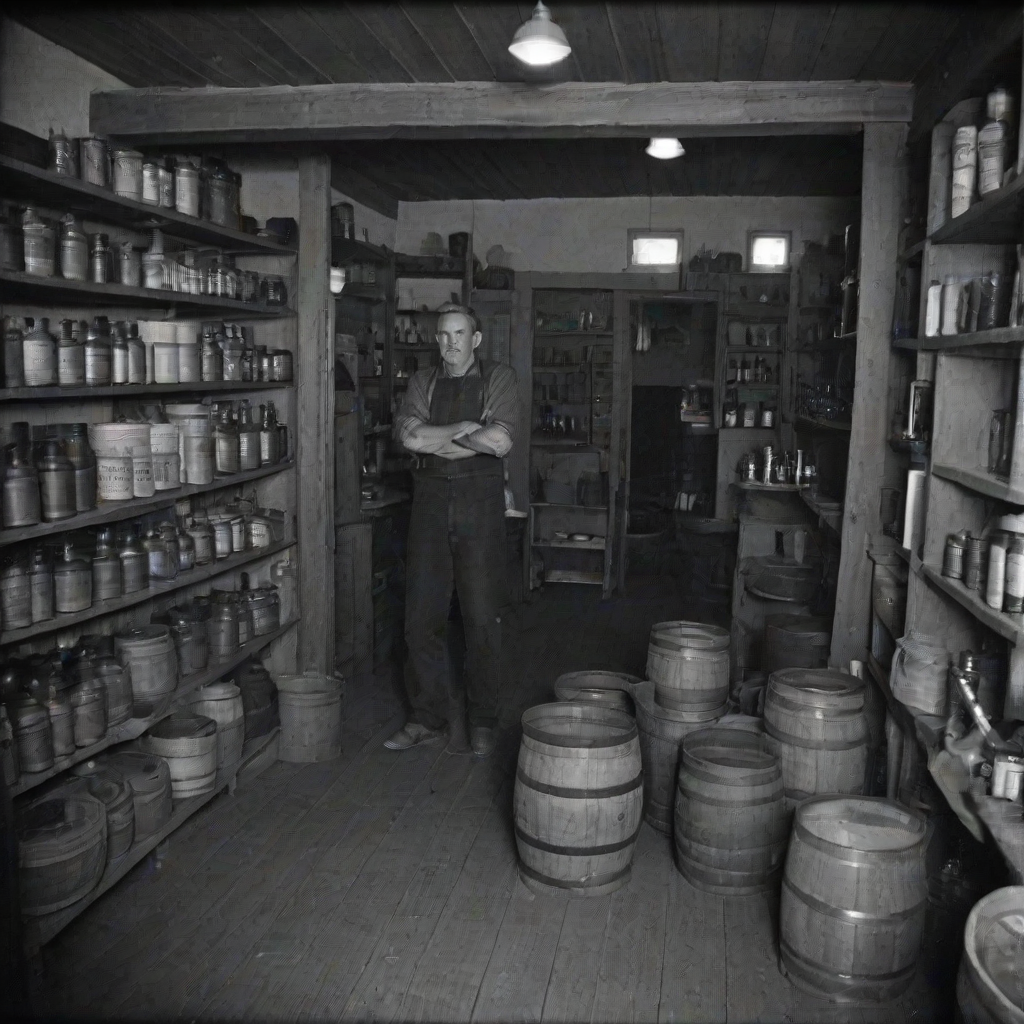
The general store sold everything because the nearest other store was twenty miles away and twenty miles was a day's travel and a day's travel meant you bought everything in one place or you did not buy it at all. The store was general because life was general. You needed flour and nails and fabric and medicine and news and the store sold all of it from the same counter in the same room with the same man weighing the flour on the same scale he used to weigh the nails. The general store was not a business model. The general store was a geographic fact. When you are the only store you sell everything. When you sell everything you become the center. The general store was the center of every small town in America for two hundred years and the center held because there was nowhere else to go.
The first general stores appeared in the American colonies in the seventeen hundreds and the stores were often the first permanent structure in a settlement after the church. Sometimes the store came first. The store meant trade and trade meant the settlement was real. The store was built at the crossroads because the crossroads was where the traffic was and the traffic was the business. The storekeeper extended credit because the farmers had no cash until harvest and the credit was the contract between the store and the community. The farmer owed the store and the store owed the farmer and the owing was the relationship and the relationship was the town. If the storekeeper left the town often died. If the town died the storekeeper was the last to leave because the storekeeper had the most to lose. The storekeeper had inventory on the shelves and debts in the ledger and the ledger was the social record of the town. Who owed what. Who paid when. Who could be trusted.
The cracker barrel was not a metaphor. The cracker barrel was a real barrel that sat near the stove in the general store and the barrel was full of soda crackers and the crackers were free and the free crackers were the reason men gathered around the stove on winter afternoons. The stove was the engine of the general store. The stove heated the room and the room was the only heated public space in town and the heat drew people and the people drew conversation and the conversation drew more people and the cycle was self-sustaining. The men sat on barrels and nail kegs and the conversation was about weather and crops and politics and the conversation was the original social network. No profile. No algorithm. No feed. Just men around a stove eating free crackers and arguing about the price of wheat. The storekeeper let them argue because the arguing kept them in the store and the staying kept them buying. A man who came for crackers left with tobacco. A man who came for tobacco left with a new axe handle. The general store understood that attention was the first product and everything else was the second.
The mail came to the general store. Before rural free delivery began in eighteen ninety six the post office was inside the general store and the mail was the reason everyone came at least once a week. The storekeeper was often the postmaster and the postmaster knew everything. The postmaster knew who was writing to whom and from where and how often and the knowledge was power and the power was quiet. The storekeeper never told your business but the storekeeper knew your business and the knowing shaped every interaction. The storekeeper knew that the widow was corresponding with a man in Ohio before the widow told anyone. The storekeeper knew that the farmer's son had stopped writing home from the city. The storekeeper knew these things because the mail was physical and the physical cannot hide. When rural free delivery put a mailbox at the end of every farm road the farmers stopped coming to the store for mail and the visits dropped and the cracker barrel conversations thinned and the first thread in the fabric of the general store was pulled.
The general store was killed by the automobile and the automobile's children. The car made twenty miles a fifteen minute drive and the fifteen minute drive made the general store unnecessary. The specialized stores in the county seat had better selection and lower prices and the car delivered the customer to the competition. The Sears catalog had been competing with the general store by mail since eighteen ninety three but the catalog could not replace the stove and the conversation and the credit extended on a handshake. The car could. The car took the customer out of the store and the customer did not come back. The stores that survived into the twentieth century became gas stations or bait shops or antique stores selling the artifacts of the life they used to serve. The cracker barrel is now a restaurant chain and the restaurant chain has a gift shop and the gift shop sells nostalgia for the thing the chain replaced. You can buy a replica of a general store sign in a restaurant that killed the general store. The irony is not on the menu but it should be.