 JOHN SINCLAIR
GATEHOUSE
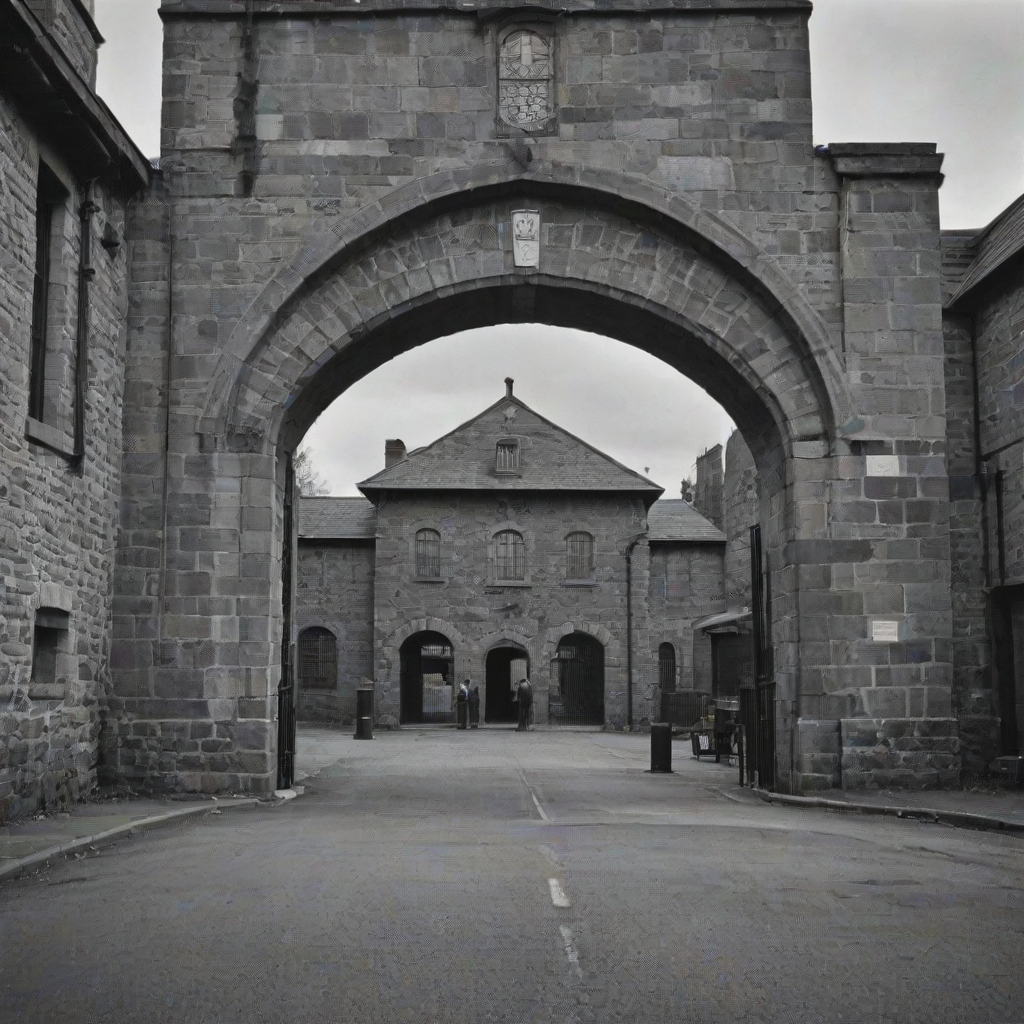
You approach the gatehouse and the gatehouse decides whether you enter. The gatehouse is the threshold. The gatehouse stands between you and what is behind the gatehouse and the standing between is the gatehouse's function which is to sort. The gatehouse sorts the allowed from the denied. The gatehouse sorts the worker from the visitor. The gatehouse sorts the citizen from the foreigner. The gatehouse is not a wall. The wall says no to everyone. The gatehouse says maybe. The gatehouse has a door and the door can open or close and the opening or closing is the decision and the decision belongs to whoever controls the gatehouse.
The gatehouse at Hampton Court Palace has controlled who passes for five hundred years. Henry the Eighth built the gatehouse in the fifteen thirties and the building in the fifteen thirties means the gatehouse has outlasted every monarch who walked through it. The gatehouse is red brick. The gatehouse has two towers flanking the entrance and the two towers are not decorative. The towers are defensive. The towers gave the guards a vantage point and the vantage point meant the guards could see who was approaching before the approaching person reached the gate. The gatehouse at Hampton Court has a portcullis and the portcullis could drop and the dropping portcullis meant the gate closed in seconds. The king controlled the gatehouse and the controlling the gatehouse meant the king controlled who entered his presence. The architecture of access. The architecture of the audience. The architecture of the king deciding who was worthy.
The factory gatehouses of Detroit clocked one hundred thousand workers through the Rouge in a single shift. The Rouge River plant was the largest factory complex in the world and the largest factory complex needed a gatehouse that could process an army. The workers arrived by bus and streetcar and car and on foot and the arriving by every means meant the gatehouse was the bottleneck. The workers showed their badges. The badges were checked. The workers passed through and the passing through meant the shift had started and the shift starting meant the factory was alive. The gatehouse at the Rouge was not ornamental. The gatehouse at the Rouge was industrial. Steel and concrete and turnstiles and guards. The gatehouse counted the workers in and counted the workers out and the counting in and out was the factory's accounting of its labor force.
The Ellis Island gatehouse processed twelve million immigrants between eighteen ninety two and nineteen fifty four and the processing twelve million immigrants meant the gatehouse decided who became American. The immigrants arrived by ship and the ship docked at the island and the immigrants climbed the stairs to the Great Hall and the climbing the stairs was the first test because the doctors watched the immigrants climb and the watching the climb was the medical inspection. If you limped the doctors marked your coat with an L. If you coughed they marked a C. If you seemed confused they marked an X for mental defect. The marks determined whether you passed through the gatehouse or were detained. The gatehouse at Ellis Island let eighty percent through and detained twenty percent and deported two percent and the two percent were sent back across the ocean and the sent back across the ocean was the gatehouse saying no.
You stand at the gatehouse and the guard looks at you and the looking at you is the assessment. The guard has a list or a rule or a badge reader or a memory and the list or rule or badge reader or memory determines whether the gate opens for you. The gatehouse is the oldest form of access control. The castle had a gatehouse. The city had a gatehouse. The factory has a gatehouse. The military base has a gatehouse. The gated community has a gatehouse. The gatehouse persists because the need to control who enters persists. The gatehouse. The threshold. The two towers. The portcullis. The turnstile. The badge. The guard who looks at you. The door that opens or does not. The architecture of permission. The building that stands between where you are and where you want to be. The gatehouse decides. You wait.