 JOHN SINCLAIR
FURNACE
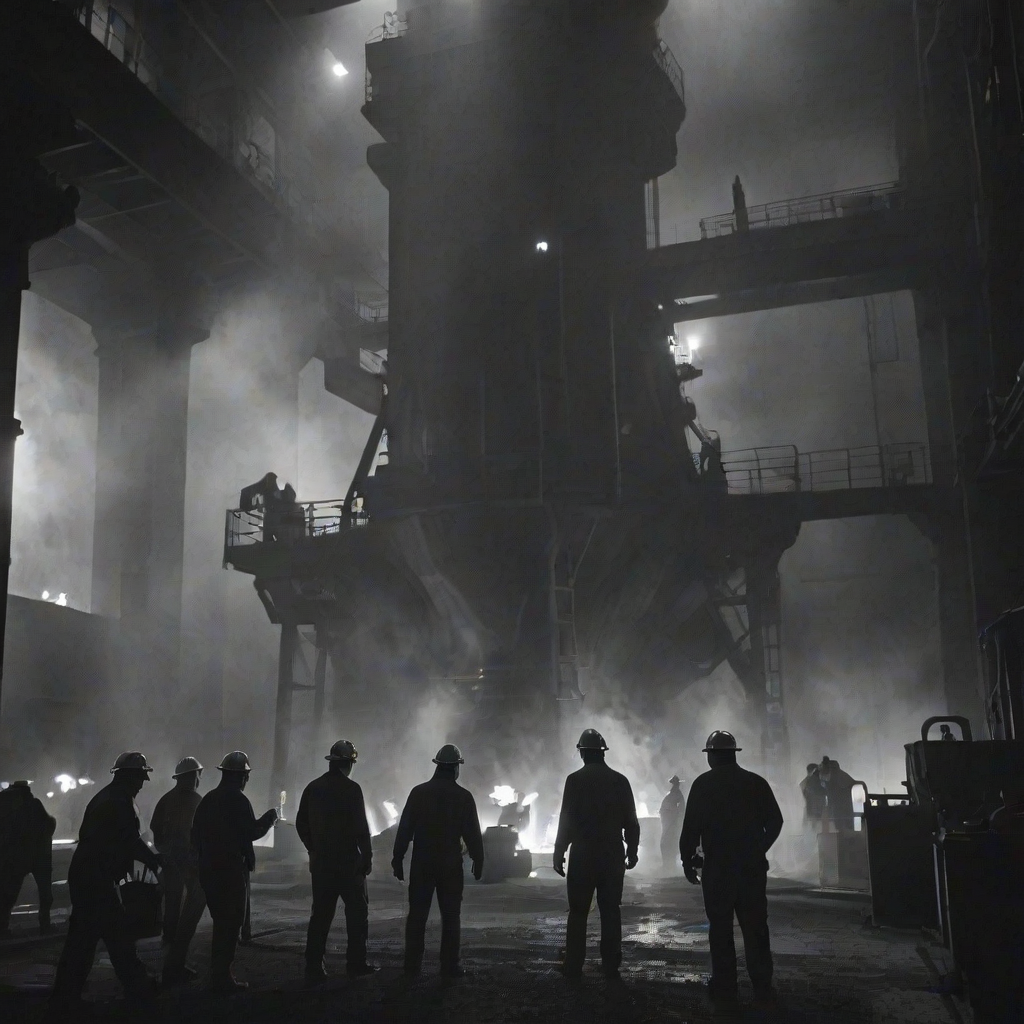
You feel the furnace before you see it and the feeling is the heat that bends the air. The furnace is the center of the mill. The furnace is the mouth that eats the ore and breathes out steel. The furnace stands a hundred feet tall and the hundred feet is the height of the chemical reaction that turns rock into metal. The ore goes in at the top. The coke goes in at the top. The limestone goes in at the top. The blast of hot air enters at the bottom and the blast of hot air is two thousand degrees and the two thousand degrees melts everything and the melting everything separates the iron from the slag and the separating the iron from the slag is the furnace doing what the furnace has done since Abraham Darby lit the first coke furnace in seventeen oh nine.
The blast furnaces at Gary Indiana produced seven million tons of steel a year and the seven million tons built the cars and bridges and buildings of midcentury America. U.S. Steel built Gary in nineteen oh six and the building in nineteen oh six meant the city was built for the furnace. The furnace did not come to Gary. Gary came to the furnace. The city was named after Elbert Gary who was the chairman of U.S. Steel and the naming after the chairman was the company claiming the city as its own. The furnaces at Gary ran twenty four hours a day and the running twenty four hours meant the sky over Gary was orange at night and the orange at night was the furnace light reflected off the clouds. The workers lived in the shadow of the furnace. The workers breathed the furnace air. The workers' lives were measured by the shifts and the shifts were measured by the furnace and the furnace never stopped.
The Bessemer converter blew air through molten iron for twenty minutes and the twenty minutes changed iron into steel and steel into the modern world. Before Bessemer making steel took days. The crucible process melted iron in small batches and the small batches meant steel was expensive and the expensive meant steel was used only for tools and weapons. Bessemer's converter could process thirty tons of iron in twenty minutes and the thirty tons in twenty minutes was a thousand times faster than the crucible process. The converter was a pear-shaped vessel that tilted on an axis and the tilting on an axis meant the molten iron could be poured in and the steel poured out. The air blast burned out the carbon and the burning out the carbon was the chemistry and the chemistry was the conversion and the conversion was the birth of the steel age. After Bessemer the price of steel dropped from forty pounds per ton to seven and the dropping from forty to seven meant steel could be used for everything. Rails. Ships. Buildings. Bridges. The modern world is the Bessemer world.
In Sinclair's Detroit the furnaces at the Rouge were the beginning of the car. The blast furnaces at the Rouge River plant took in ore from the Mesabi Range and the ore from the Mesabi Range entered the furnace and became iron and the iron entered the Bessemer converter and became steel and the steel entered the rolling mill and became sheet and the sheet entered the stamping plant and became a fender or a door or a hood. The furnace was the first step. Henry Ford wanted to control every step from the ore to the car and the controlling every step was vertical integration and vertical integration began at the furnace. The Rouge had four blast furnaces and the four blast furnaces produced enough steel to build every Ford car made in America. The furnace fed the factory and the factory fed the dealership and the dealership fed the road and the road was full of cars that began as ore in a furnace.
You stand before the furnace and the heat pushes you back and the pushing back is the furnace's boundary. You cannot get closer. The furnace does not allow closer. The furnace is three thousand degrees at the core and three thousand degrees dissolves the boundary between solid and liquid and the dissolving the boundary is the work. The taphole opens. The molten iron flows in a river of orange light and the river of orange light fills the ladle and the ladle holds fifty tons of liquid metal at two thousand five hundred degrees. The furnace. The heat. The ore going in and the iron coming out. The Bessemer blast. The Gary sky orange at midnight. The Rouge feeding Ford. The furnace where everything that will become anything must first pass through the fire. The raw surrenders. The metal emerges. The furnace burns.