 JOHN SINCLAIR
FRONT PORCH
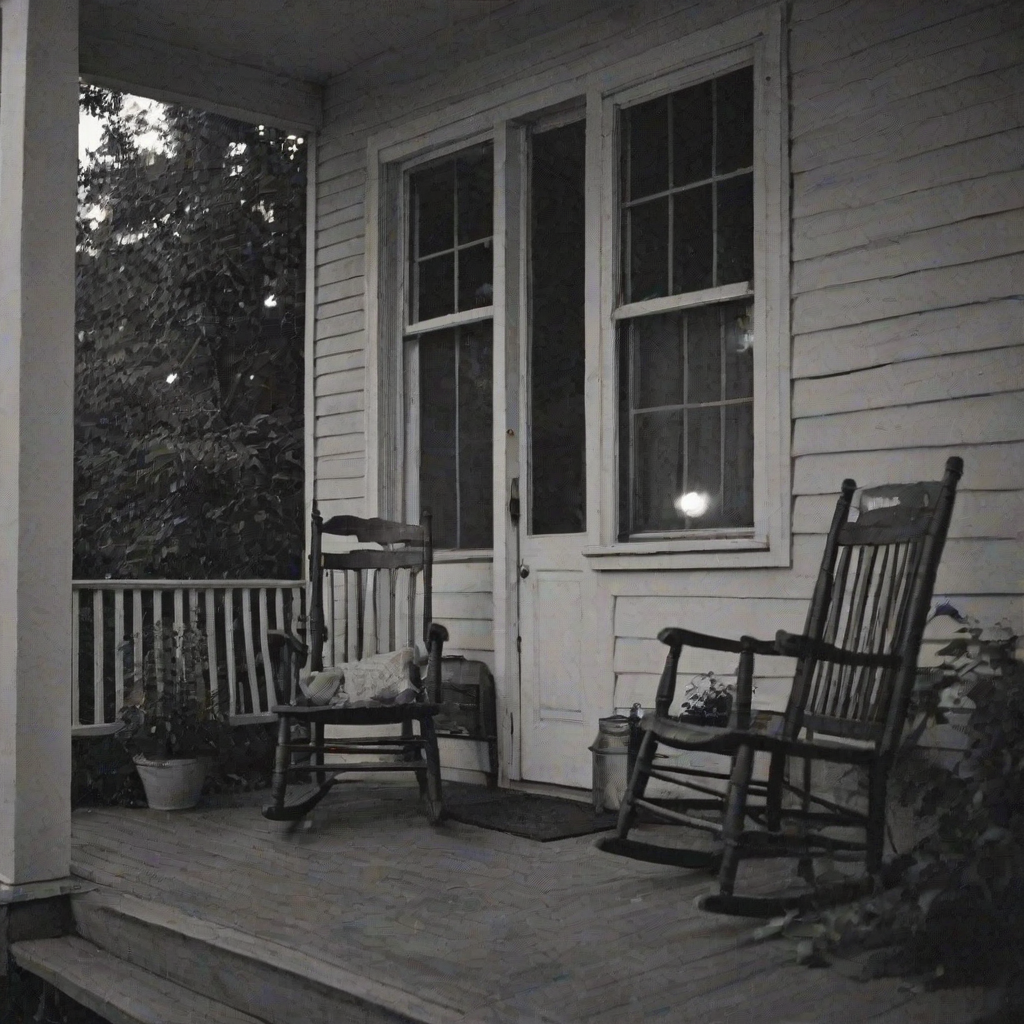
The front porch was the first social network. You sat on it and the neighborhood came to you. You did not have to go anywhere. You did not have to join anything. You sat in a chair that was yours on a porch that was yours and the world walked by and some of it stopped to talk. The front porch was public and private at the same time. It was your property but it faced the street. You owned the space but you shared the view. The porch was the deal that Americans made with each other for two hundred years. I will sit where you can see me and you will sit where I can see you and that is how we will know we are neighbors.
Andrew Jackson Downing published The Architecture of Country Houses in eighteen fifty and the book told Americans that the front porch was a moral structure. The porch connected the family to the community. The porch said we are home and we are not hiding. Downing believed that architecture was character and the front porch was the architectural equivalent of an open hand. The Victorians built porches that wrapped around the entire front of the house because the Victorians wanted to be seen from every angle. The porch was wide enough for a swing and the swing was long enough for two people and the two people were visible from the sidewalk and the visibility was the point. Courting happened on the porch because the porch was supervised without being intrusive. The parents were inside. The neighbors were across the street. The couple was alone in the most public room of the house.
The Sears Roebuck catalog sold entire houses by mail order from nineteen oh eight to nineteen forty. Seventy thousand houses shipped in pieces on railroad cars and assembled by the buyer and almost every model had a front porch because the catalog understood that a house without a front porch was a house that did not trust its neighbors. The porch was standard equipment. The porch came with the house the way the engine came with the car. You did not order a porch as an upgrade. You ordered a house and the porch was included because a house without a porch was not a house. It was a box with a door.
Air conditioning killed the front porch. Willis Carrier invented modern air conditioning in nineteen oh two but it did not reach the average American home until the nineteen fifties. Before air conditioning you sat on the porch in the evening because the house was too hot. The porch was cooler than the living room because the porch had a breeze and the living room did not. When the air conditioner arrived the living room became cooler than the porch and the family moved inside and the television was inside and the two forces combined to empty the porch in a single generation. By nineteen seventy the front porch was disappearing from new construction. The builders replaced it with a back deck. The deck faced the yard. The yard had a fence. The fence said we are home and we are hiding.
You can still find front porches in the old neighborhoods. The shotgun houses of New Orleans. The brownstones of Brooklyn. The Victorians of San Francisco. The houses were built before air conditioning and the porches are still there and on the right evening the porches are still occupied and the people on the porches still wave at the people on the sidewalk. The wave is the oldest technology on the porch. The wave says I see you. The wave says you are not a stranger here. The wave costs nothing and takes less than a second and the wave is the entire social contract compressed into a gesture. You cannot wave from a back deck. The back deck does not face anyone. The back deck faces the fence and the fence does not wave back.