 JOHN SINCLAIR
FORGE
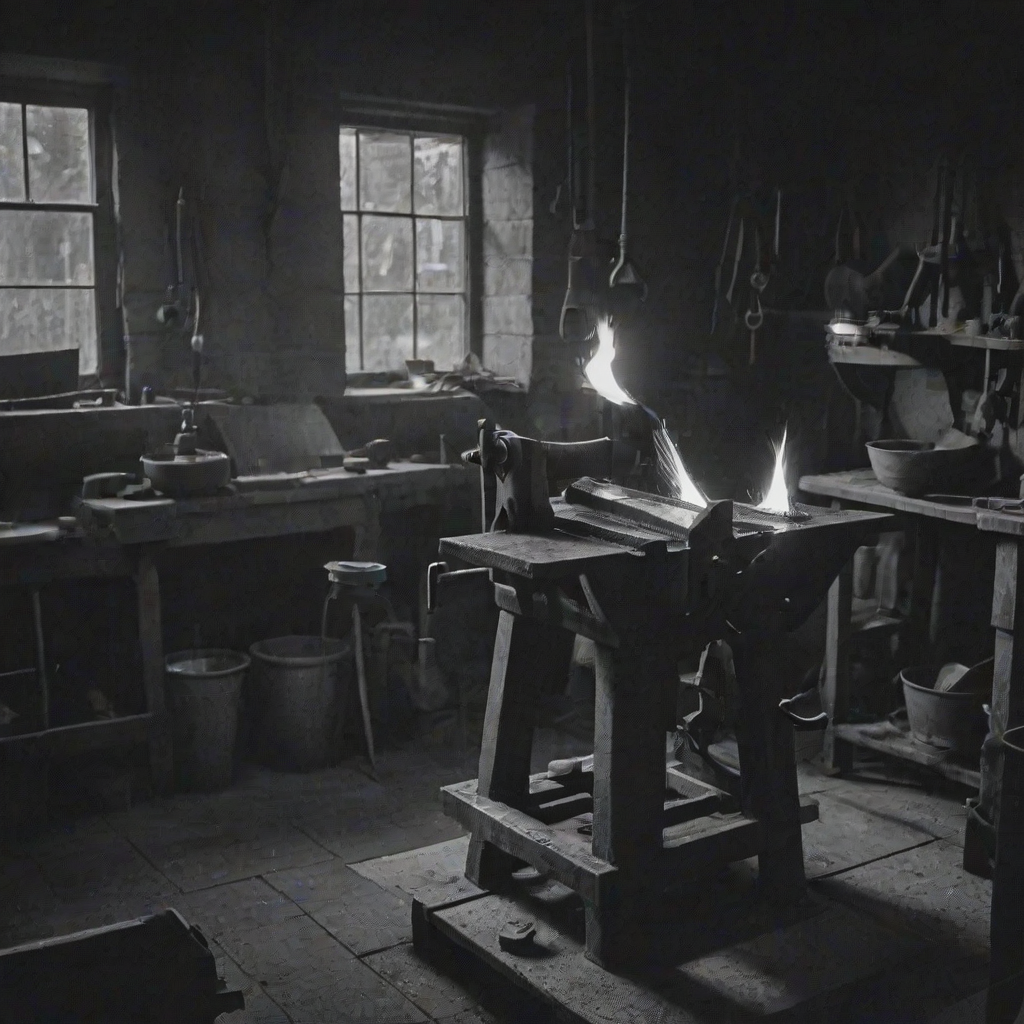
You hear the hammer before you see the forge and the hammer on the anvil is the oldest industrial sound on earth. The sound is a ring. The ring carries across the village. The ring has carried across villages for three thousand years because the forge has been in the village for three thousand years. The forge is a fire and a bellows and an anvil and a hammer and a man who knows what heat does to metal. The fire heats the iron. The bellows feeds the fire. The iron turns red and then orange and then white and the turning white means the iron is ready and the ready means the hammer falls and the falling hammer shapes the iron and the shaping is the forging and the forging is the work.
The village forge made every nail and hinge and horseshoe and tool that the village needed and the making everything the village needed meant the blacksmith was the most important tradesman in any settlement. The blacksmith made the plowshare that cut the earth. The blacksmith made the axe that felled the tree. The blacksmith made the chain that held the gate and the latch that locked the door and the pot that hung over the fire. The blacksmith shod the horses and the shoeing the horses meant the blacksmith was the mechanic. Every six weeks the horse needed new shoes and the needing new shoes every six weeks meant the blacksmith had steady work and the steady work meant the forge was always burning. In colonial America the blacksmith was one of the first tradesmen in any new town because without the blacksmith there were no tools and without tools there was no town.
The Krupp forge in Essen Germany built a steam hammer that weighed fifty tons and the fifty-ton steam hammer forged the cannons that armed Prussia and the arming Prussia changed the balance of power in Europe. Alfred Krupp inherited a small steel forge from his father in eighteen twenty six and turned it into the largest arms manufacturer in the world. The Krupp steam hammer could forge a cannon barrel from a single ingot and the forging from a single ingot meant no seams and no seams meant the cannon would not burst and the not bursting meant Krupp cannons were the best in the world. The Franco-Prussian War of eighteen seventy was won by Krupp steel. Bismarck unified Germany with Krupp cannons. The forge at Essen employed seventy thousand workers by nineteen hundred and the seventy thousand workers made Essen the forge of the German empire.
In Japan the sword forge was sacred. The swordsmith purified himself before beginning. The forge was blessed by a Shinto priest. The steel was folded and hammered and folded and hammered and the folding and hammering happened hundreds of times and the hundreds of times created the layers and the layers created the grain and the grain created the blade that could cut through armor. The katana took weeks to forge. The swordsmith watched the color of the steel in the fire and the watching the color was the reading of the temperature because the swordsmith had no thermometer. The swordsmith knew by sight. Orange meant one thing. Cherry red meant another. White meant the steel was ready for the quench and the quench was the plunge into water and the plunge into water hardened the blade. The Japanese forge produced the finest edged weapons in the history of metallurgy.
You stand at the forge and the fire is hot and the hot pushes you back. The blacksmith stands close. The blacksmith has stood close to the fire every working day and the standing close every working day is the endurance and the endurance is the trade. The forge is simple. The forge has not fundamentally changed in three thousand years. Fire. Air. Metal. Hammer. Anvil. The five elements of the forge. The blacksmith pulls the iron from the fire and the iron glows and the glowing iron meets the anvil and the hammer falls and the ring fills the shop. One strike. Another. The iron moves. The iron bends. The iron becomes the thing the blacksmith sees in the iron before the iron knows what it will be. The forge. The fire. The ring. The oldest factory. The first place where raw became refined. The hammer falls. The metal yields. The shape emerges. The forge.