 JOHN SINCLAIR
FIVE AND DIME
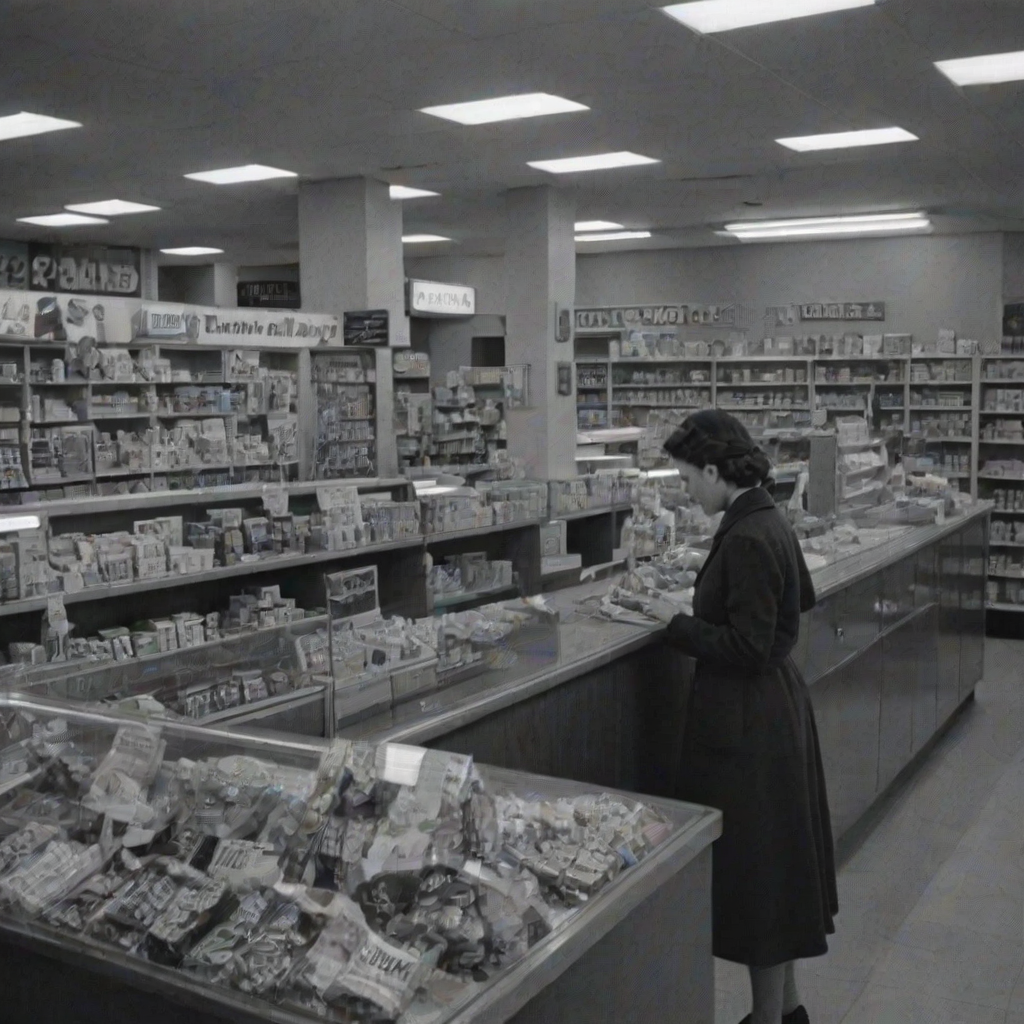
The five-and-dime was a store where everything cost a nickel or a dime and the costing was the democracy. You walked in with a quarter and you walked out with something. The something did not matter. The walking out with something mattered. The five-and-dime was the first store in America that assumed you were poor and treated the assumption as a business model. The department store assumed you were rich. The department store greeted you and measured you and wrapped your purchase in tissue paper. The five-and-dime assumed you had thirty cents and displayed everything on open counters and the open was the invitation. You could touch anything. You could pick it up and turn it over and put it back and the putting back was not an insult. The putting back was expected. The five-and-dime knew that looking was the first act of buying and the looking was free and the free was the genius.
Frank Winfield Woolworth opened the first successful five-and-dime store in Lancaster Pennsylvania on June twenty first eighteen seventy nine. Woolworth was twenty seven years old and he had already failed once. The first store in Utica New York lasted five months. The Lancaster store lasted a hundred and eighteen years. Woolworth's idea was simple and the simplicity was the revolution. Buy goods in bulk for less than a penny and sell them for a nickel. The margin was enormous. The volume was the strategy. Woolworth did not need you to buy one expensive thing. Woolworth needed you to buy seven cheap things and the buying of seven cheap things felt like abundance and the feeling of abundance was the product. By nineteen thirteen Woolworth had opened seven hundred and forty five stores and the seven hundred and forty five stores earned enough money to build the Woolworth Building in Manhattan and the building was the tallest in the world and the tallest building in the world was built with nickels.
The lunch counter inside the five-and-dime was where America ate. The Woolworth's lunch counter served more meals per day than any restaurant chain in the country and the meals were simple and the simple was the comfort. A grilled cheese sandwich and a cup of tomato soup and a cherry Coke and the bill was under a dollar and the under a dollar was the threshold that separated eating from dining. Eating happened at the five-and-dime. Dining happened somewhere else. The lunch counter at the Woolworth's in Greensboro North Carolina is where four freshmen from North Carolina Agricultural and Technical State University sat down on February first nineteen sixty and ordered coffee and were refused and the refusing was the beginning of the sit-in movement and the sit-in movement was the beginning of the end of legal segregation in American retail. Ezell Blair Junior and David Richmond and Franklin McCain and Joseph McNeil sat at a counter designed to sell grilled cheese sandwiches and turned it into a counter that changed the country. The counter is now in the Smithsonian. The grilled cheese is not.
The five-and-dime understood impulse better than any store that came before it or after it. The merchandise was arranged to catch your eye. The candy was at the front. The toys were at eye level for children. The cosmetics were near the mirror. The arrangement was not random. The arrangement was psychology and the psychology was the science of want and the science of want was the five-and-dime's contribution to American retail. Every dollar store and big box discount chain in America today is a descendant of the five-and-dime. The DNA is the same. Sell more for less. Display everything. Let the customer touch. Trust the volume. The Dollar Tree and the Family Dollar and the Dollar General are Woolworth's grandchildren and the grandchildren have forgotten the grandfather but the grandfather built the house.
The last Woolworth's closed on July seventeenth nineteen ninety seven. There were four hundred stores left and the four hundred stores were not enough to survive the Walmart and the Target and the Kmart and the surviving required scale that Woolworth's no longer had. The five-and-dime died because the five-and-dime's children grew bigger than the five-and-dime. The children learned everything from the parent and then replaced the parent and the replacing was not cruelty. The replacing was capitalism. But the children lost something the parent had. The parent had a lunch counter. The parent had a woman behind the counter who knew the names of the children who came in after school and the knowing of the names was the relationship and the relationship was worth more than the merchandise. The Dollar Tree does not have a lunch counter. The Dollar Tree does not know your name. The Dollar Tree does not have a woman behind the counter who gives your child an extra cherry in the Coke because the extra cherry is the kindness that the margin can afford. The five-and-dime could afford kindness because kindness cost a cherry and a cherry cost nothing and the nothing was the wealth.