 DAVID PEEL
Fire Barrel
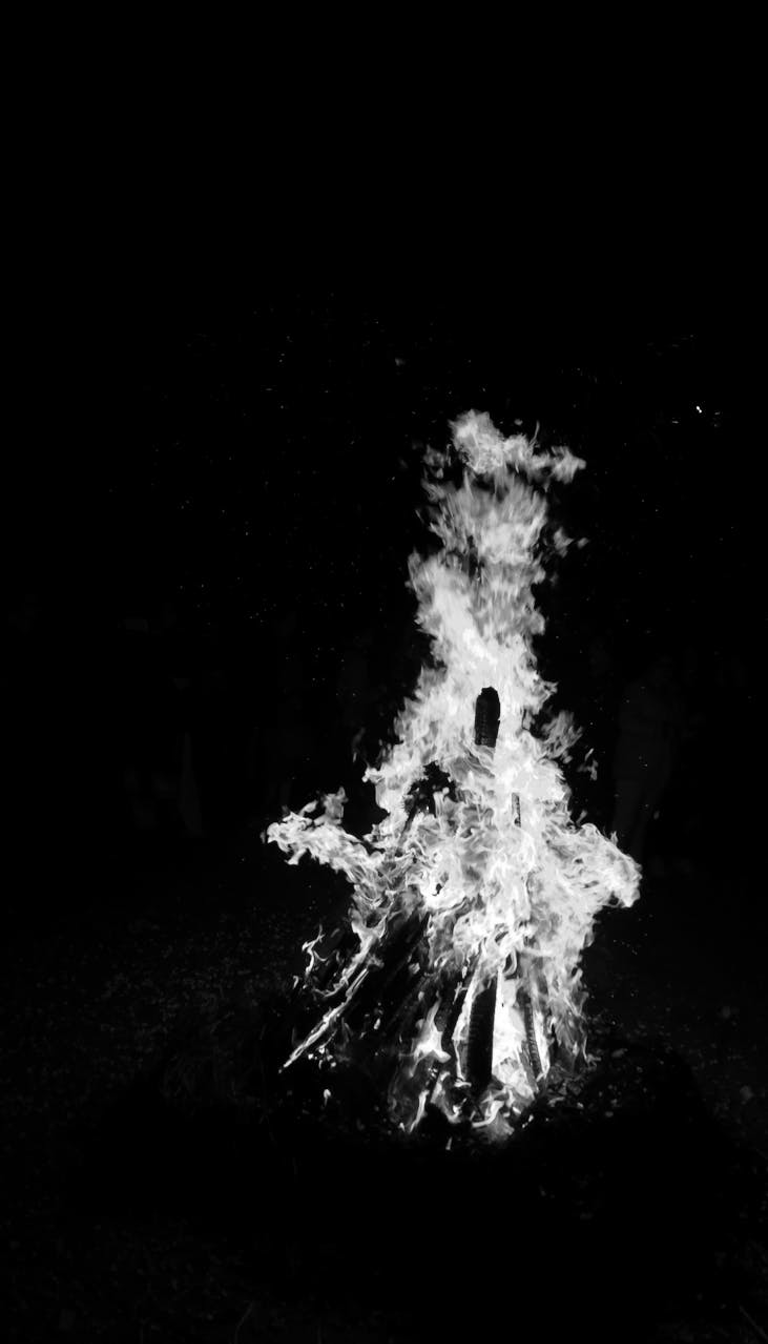
The fire barrel was a fifty-five gallon drum with holes punched in the side and a fire burning inside it on the corner of the street in January. You stood around it with four strangers and you held your hands over the flames and nobody talked and nobody needed to because the fire was the conversation. The fire said it is cold. The fire said we are all cold. The fire said stand here until you are warm enough to keep moving. The fire barrel was the oldest social network in the city.
The construction workers used fire barrels. The night watchmen used fire barrels. The homeless used fire barrels. The kids who had nowhere else to go used fire barrels. You could not own a fire barrel. It belonged to whoever was standing around it. The fire did not check your ID. The fire did not ask where you lived or what you did for a living or whether you had a right to be warm. The fire said come here. That was the whole invitation. Come here. Be warm. Leave when you are ready.
I stood around a fire barrel on the Bowery in February of 1971 with a man who had not spoken in three days. He told me that. Three days without speaking to another person. He stood at the barrel and he said that is the first thing I have said in three days. And then he did not say anything else and we stood there for twenty minutes watching the fire and that was enough. Sometimes presence is the conversation. The fire barrel understood that. You did not have to perform. You did not have to explain why you were there. The fire was the reason. Cold was the reason.
The fire barrel smelled like burnt wood and garbage and winter. That smell meant survival. You followed it down the block like a signal. You could be lost in the city at two in the morning in January and you would see the glow and smell the smoke and you would walk toward it because the fire barrel meant people and people meant safety. Not always. But mostly. The fire barrel was a lighthouse for the freezing. A signal that said somebody is here and the somebody has fire and fire is enough.
They do not allow fire barrels anymore. Open flame. Emissions. Liability. The city that once warmed its poorest citizens with a drum and some scrap wood now fines you for the drum and confiscates the scrap wood. The warming centers are indoors now. Fluorescent lights. Folding chairs. A man with a clipboard. The warming center is a service. The fire barrel was a community. The difference is that nobody ran the fire barrel. Nobody administered it. Nobody applied for a grant to operate it. Somebody found a drum. Somebody found wood. Somebody lit a match. And everybody was warm.
See also: Trash Can, Steam Pipe